On the morning of 2/1, Elena, a Russian tourist staying at a villa near Khem Beach, reported that the shoreline was inundated with trash, primarily drifting water hyacinths. She refrained from swimming despite having stayed there for about 10 days. Before her trip, Elena had been warned by other travelers that trash often washes ashore during this period, but the sight still shocked her. On 1/1, Elena observed many European tourists participating in beach cleanups alongside locals, yet the situation remained unfavorable for swimming.
"I love this island; the beach is beautiful, but it's a shame about the trash," she said. "Despite this, I will definitely return."
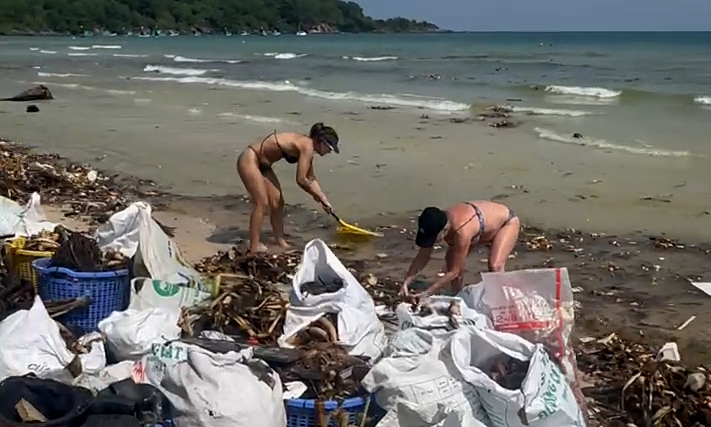 |
International visitors participated in cleaning trash at Khem Beach on 1/1. *Photo: Elena* |
Since late 12, Juanito, a tourist from the Philippines, also visited Khem Beach and found it "very bad, with trash everywhere." Along Khem Beach, staff from some resorts focused on cleaning, but they only cleared the area directly in front of their properties, with other sections largely neglected, according to Juanito.
The tourist stated that Khem Beach is very popular, making the current situation "truly regrettable." He suggested that both tourists and residents need to improve their awareness of protecting this beautiful Phu Quoc beach.
The situation at Sao Beach was similar to Khem Beach. On the morning of 2/1, several tourists reported thick layers of water hyacinths drifting onto the beach.
"Instead of sunbathing and enjoying the poetic scenery of the beach, I saw environmental staff busy cleaning up trash all around me," a foreign visitor remarked.
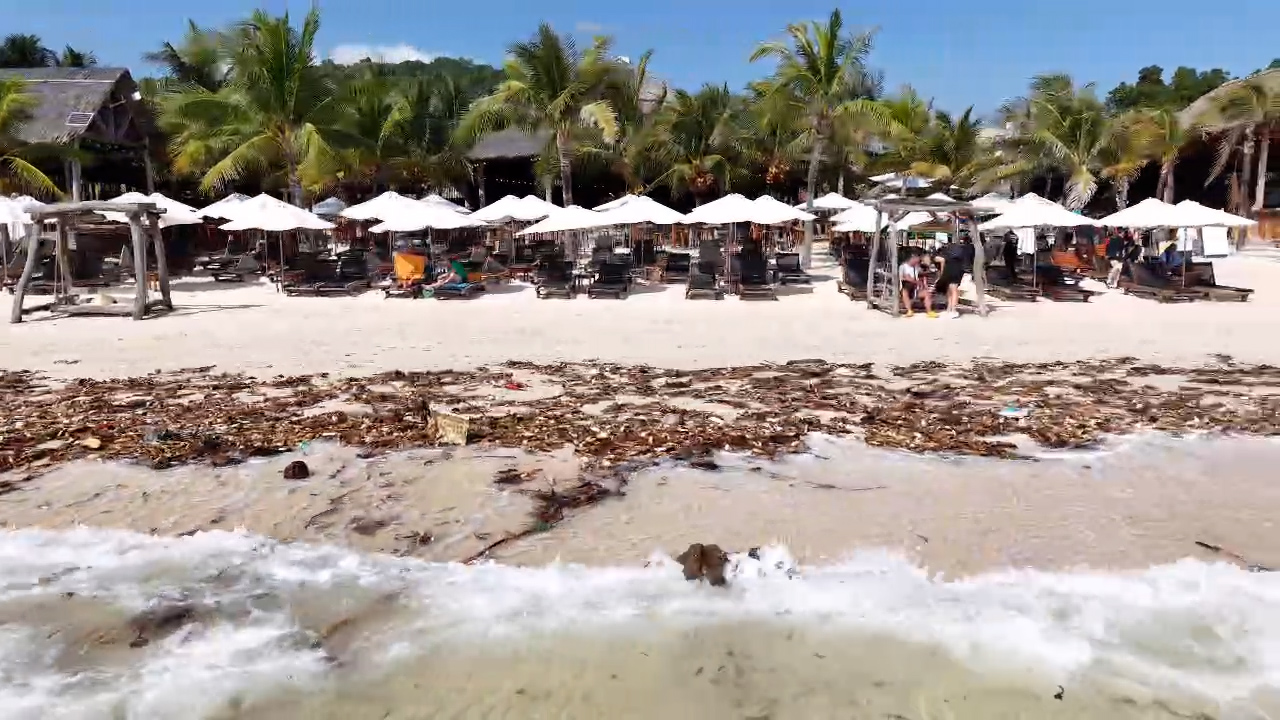 |
Sao Beach on the morning of 2/1. *Photo: NVCC* |
A representative from Chez Dugong restaurant in the Sao Beach area reported that this situation had persisted for three days. On 2/1, the restaurant mobilized most of its staff to clean up trash until late evening, but they could not keep up. Besides water hyacinths, household waste also accounted for a significant portion, with 70% water hyacinths and 30% trash.
According to the restaurant representative, they could only manage the water hyacinths in the beach area directly in front of their establishment. Other sections of Sao Beach remained surrounded by water hyacinths, discouraging guests from swimming.
"This phenomenon is not constant, but many international visitors might find it unpleasant and start comparing it with other countries," the restaurant representative said, adding that while the amount of water hyacinths had decreased on the morning of 3/1, guests were still hesitant to swim.
A representative from the Phu Quoc Department of Agriculture and Environment stated that the phenomenon of trash and water hyacinths drifting from the mainland onto the beaches occurs annually. The department is aware of the situation and is processing a solution.
Typically, water hyacinths are carried out to sea by currents from rivers and canals, then pushed ashore by tides. This phenomenon frequently occurs in coastal areas near large river mouths, especially after the rainy and flood seasons. In 5/2025, a similar situation occurred at Bai Sau in Vung Tau (now part of Ho Chi Minh City).
In 10/2025, the renowned travel magazine Conde Nast Traveler announced that Phu Quoc had been named Asia's most beautiful island, scoring 95,51/100. Globally, Phu Quoc ranked third. Sao Beach and Khem Beach have long been celebrated as Phu Quoc's two most beautiful beaches.
Tu Nguyen