Chris Schalkx, a writer for CnTraveler, ventured out as dusk settled over Ho Chi Minh City, the streets still radiating heat. The air vibrated with the hum of 9 million motorbikes and the chatter of 11 million people, spilling into alleys, balconies, and sidewalk noodle stalls.
Everywhere he looked, doors were wide open. Old men chewed betel nut beside iced beers, while women in silk pajamas fanned charcoal grills laden with lemongrass chicken skewers and pork. Small parks doubled as public gyms, and Vietnamese pop music echoed from crackling speakers. The sensation was overwhelming, vibrant, and authentically Vietnamese.
The best way to grasp it all was to "immerse oneself," which is why Chris clung to the back of an old Vespa, driven by Bui Quan Khanh, a young guide fresh out of tourism school. They weaved through a labyrinth of red and white taillights, past trendy cafes, neon bars, and glittering buildings.
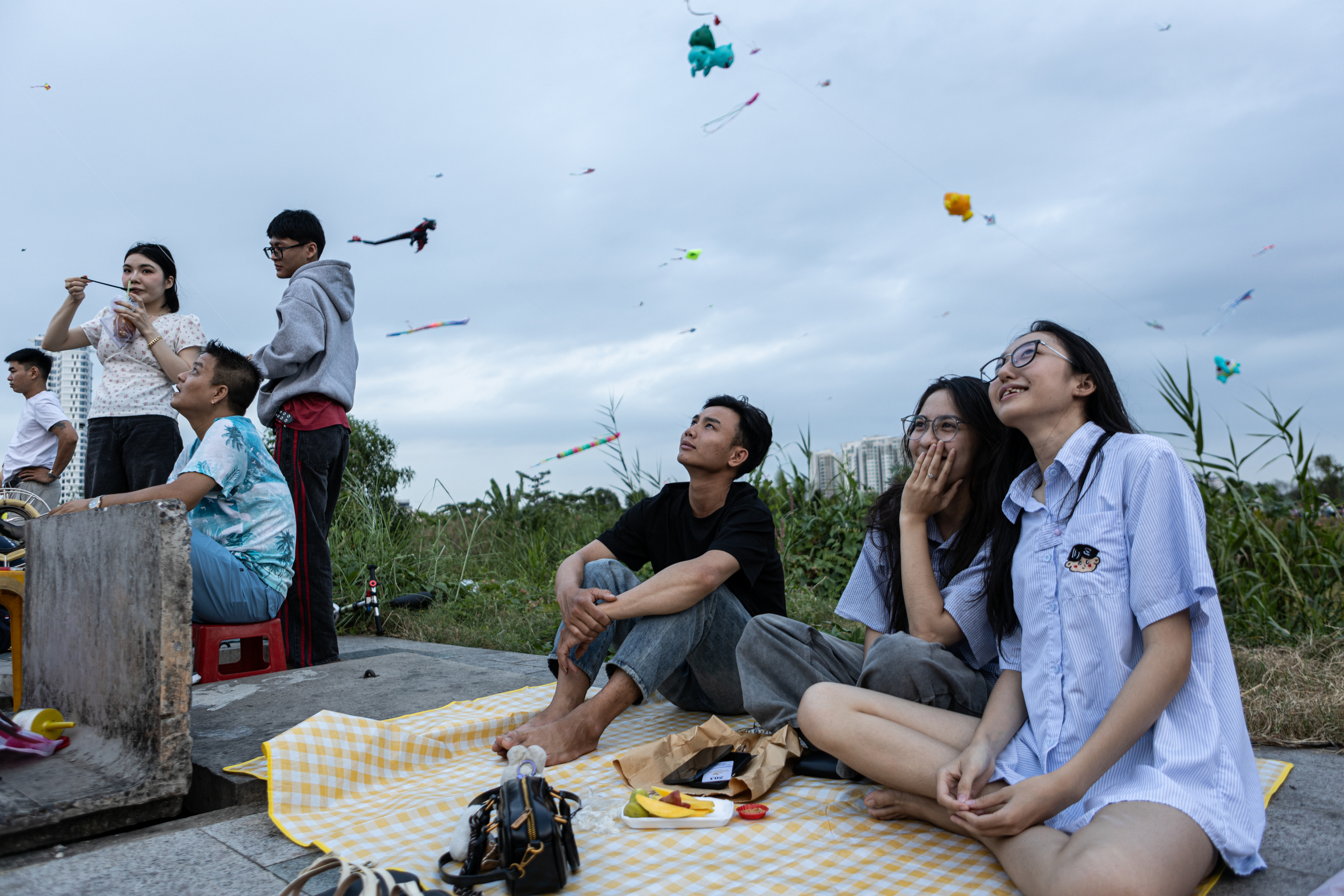 |
People fly kites in an open field near Ba Son Bridge. Photo: Khuong Nguyen |
As they sped through narrow alleys and working-class neighborhoods, the guide shared insights into the city's transformation, its new metro network, and the master plan for a megacity unveiled last July, aiming to turn it into Southeast Asia's next economic hub.
The scent of fresh cilantro and fish sauce still wafted through the streets. They paused for a snack of stir-fried snails and sipped passion fruit juice at a cafe overlooking Cau Mong Bridge, built by architect Gustave Eiffel during the French colonial era. In a fluorescent-lit kitchen, a woman flipped a sizzling pan, making crispy shrimp pancakes for Chris to wrap with fresh herbs.
From his luxury hotel room in Ho Chi Minh City, Chris's subsequent days unfolded in a "whirlwind of color and movement." He stood amidst vibrant produce at street markets, navigated the incense-laden air of temples in Chinatown, and sampled the city's new generation of restaurants.
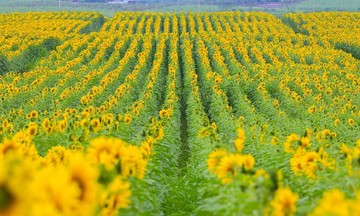
As Ho Chi Minh City's last suburban towers faded from view, the Mekong Delta unfolded into shimmering mosaics of rice paddies and fruit orchards, all bordered by a winding maze of rivers and canals. Major branches of the Mekong River threaded through the region, its waters nourishing countless fertile fields that provide over half of Vietnam's agricultural output.
Chickens scattered under wheels, motorbikes whizzed past carrying bulging sacks of jackfruits as large as soccer balls.
"'This is Vietnam's rice basket', says guide Thuan Khuc. 'Every over 10 km, the crops change, and each family grows what best suits their land'."
The next morning, they arrived in Can Tho, the delta's largest city, drifting among wooden boats on the waves of Cai Rang floating market. Vendors exchanged pineapples, dragon fruits, and fresh fish from deck to deck, while giant eyes painted on the bows were believed to guide captains to good fortune. They pulled alongside Ba Y's boat, a local legend who has cooked delicious pork noodle soup from her floating kitchen for over four decades.
Afterward, they cycled inland along raised dikes, passing wedding parties and funerals, where everyone was cheerful. In Co Do village, groups of men waved from shaded verandas. Their day's work done, it was time for drinks. Chris sampled local rice wine with a sweet banana flavor and ate roasted field mouse, which tasted somewhat like chicken.
"'The people here don't chase many things; they have everything they need from fish in the ponds, rice in the fields, and abundant water', Khuc explains, noting that generations have spent digging canals and taming floods to live stably. Now, they simply enjoy the pleasant life they deserve."
Building this home was a collective effort. Once a swampy borderland of the Khmer Empire, the delta attracted waves of migrants over centuries. Together, they cleared this wilderness. Khue explains that Vietnamese people have a saying, "Sell distant relatives, buy close neighbors," so everyone here learned to cooperate and rely on each other. That's why they are so open.
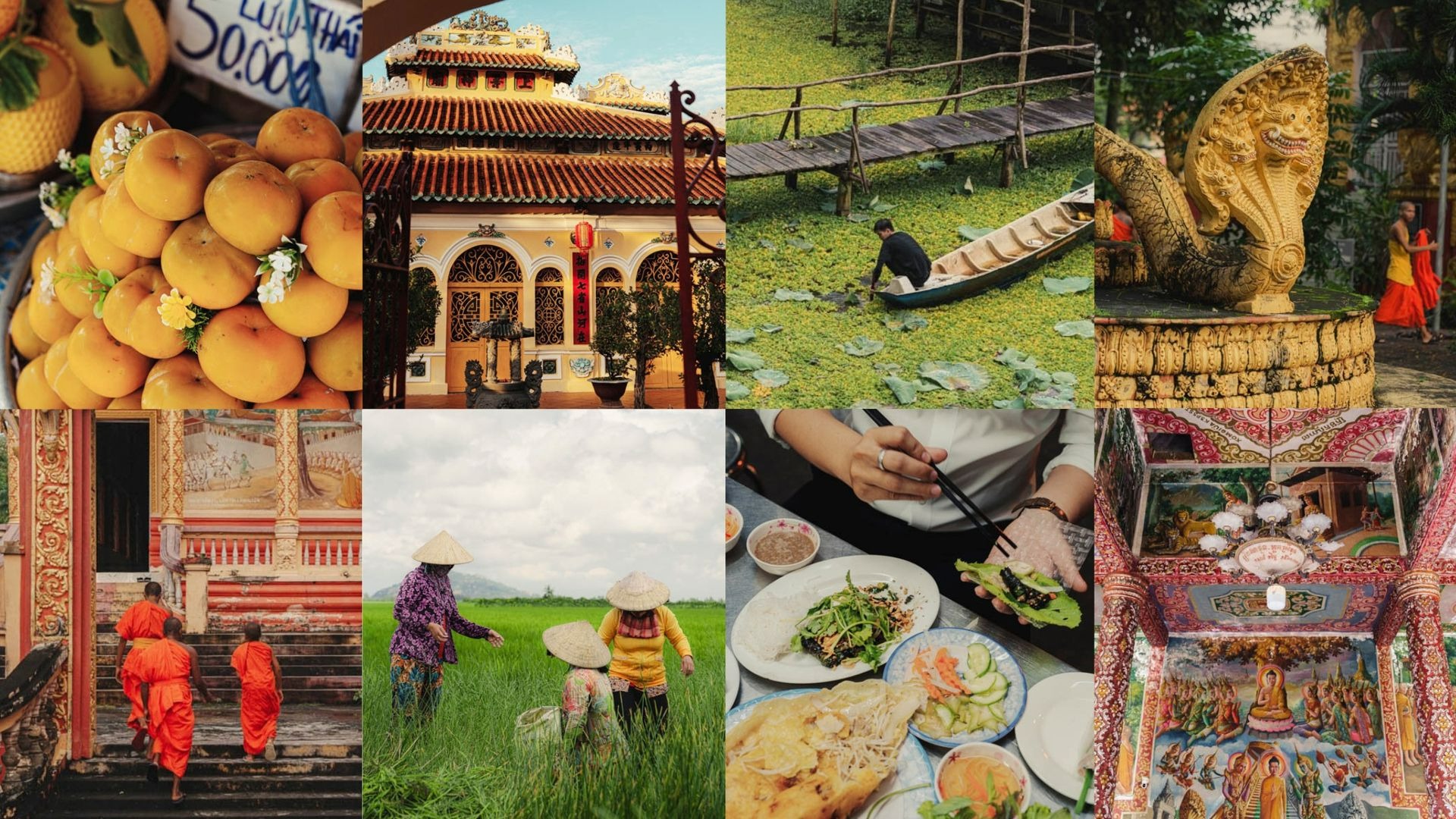 |
Photos Chris took during his exploration of Southern Vietnam. Photo: CnTraveler |
That spirit still flows through the delta's watery labyrinth, where the culture is as diverse as the crops in the fields. They visited golden Khmer temples where monks in saffron robes swept courtyards and stopped at Cham Chau Giang floating village, where women wear hijabs, say "as-salamu alaykum" ("Peace be upon you" in Arabic) instead of "hello," and weave silk in wooden homes.
Chris and his guide traveled through submerged forests and bird-filled wetlands. However, it was the "unscripted" moments that he remembered most: stopping at a roadside cafe or hearing children shout "helloooo" as they cycled past.
The pace combined cycling with van rides for longer stretches, fast enough to avoid crowded tourist spots, yet slow enough to smell sun-dried coconut husks or stop for tea in a kind stranger's backyard.
Reaching the final stop in the riverside town of Chau Doc, the setting sun dyed the delta waters and turned palm leaves into swaying shadows. A boat drifted by, and the distant hum of a night market echoed. The day ended as it began, in constant motion, somewhere between the land, water, and the whispering soul of Vietnam.
Hoai Anh (According to CnTraveler)