 |
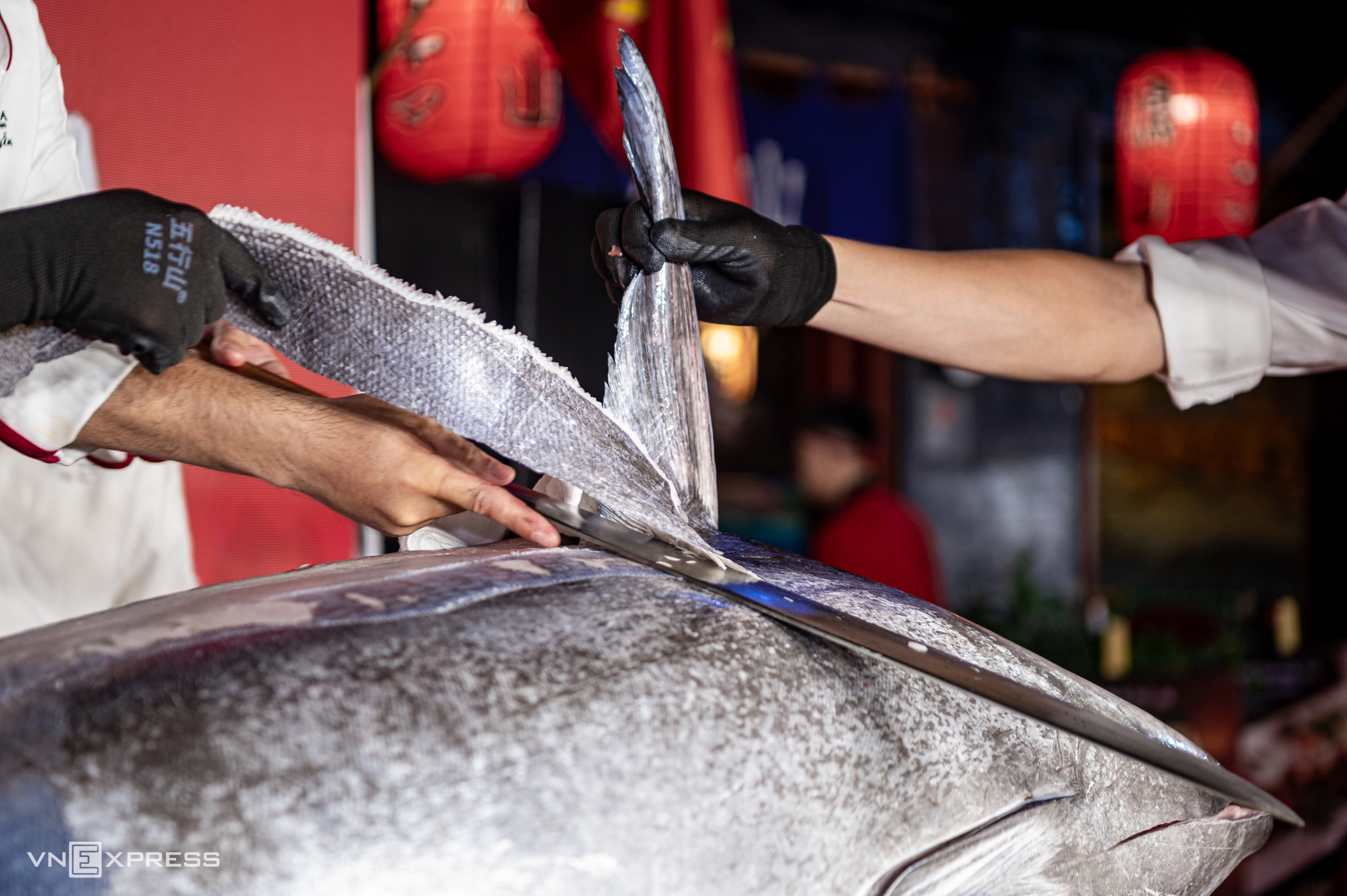
The specialized Maguro Hocho knife, used for carving tuna, is hand-forged by artisans in Japan from extremely sharp steel (such as blue steel). One new knife in Tokyo costs 300 million dong and measures 1,2-1,5m in length. |
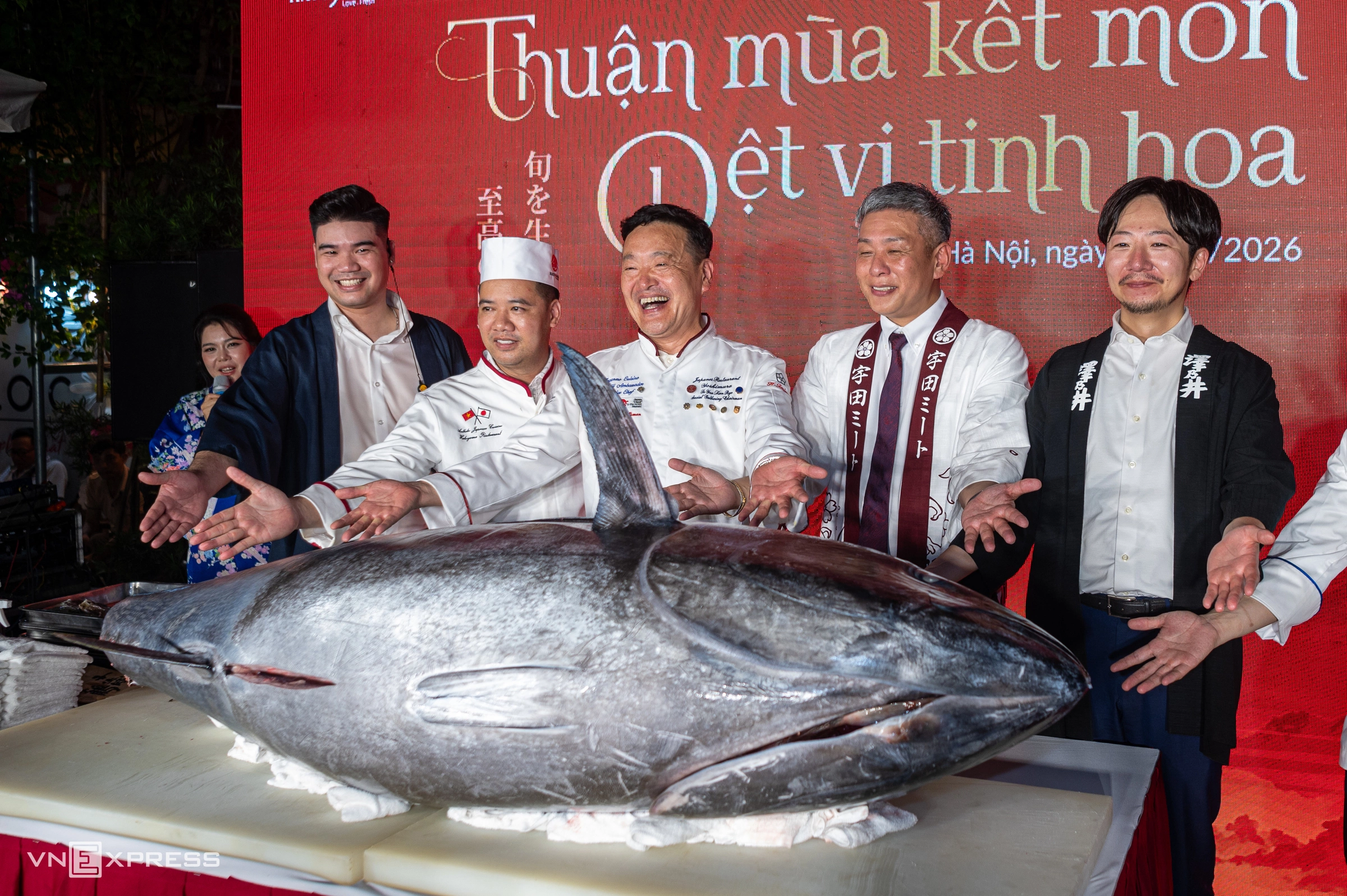
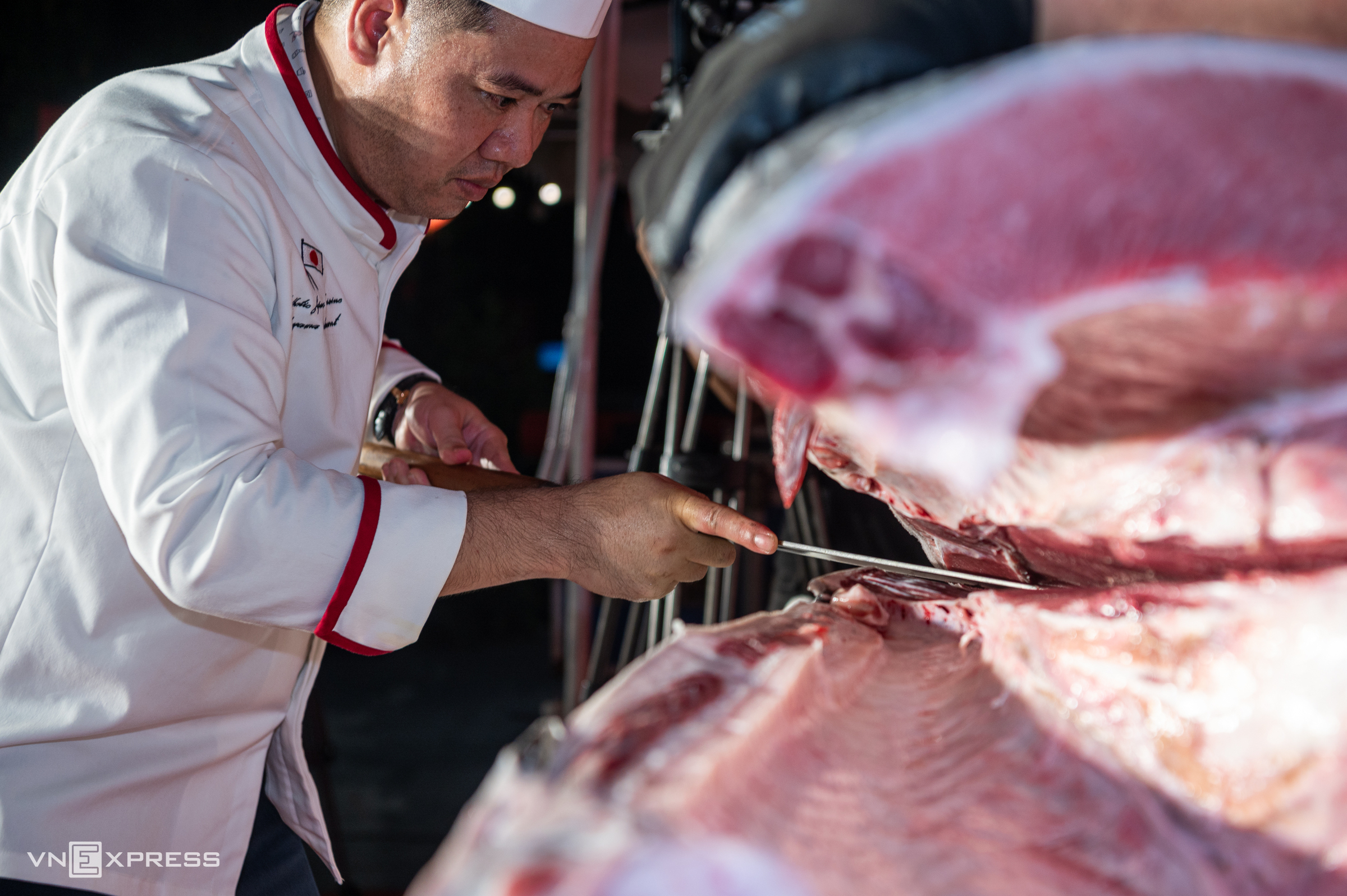
The 220 kg tuna was carved by Chef Kyo Nguyen and four colleagues on the evening of 13/8. It was acquired at an auction at Tokyo's Toyosu fish market earlier that morning and subsequently airlifted to Vietnam.
This event was part of Taste of Japan, an annual culinary cultural event series launched in 2023 to commemorate 50 years of diplomatic relations between Vietnam and Japan.
 |
The bluefin tuna was caught off the coast of Oma in northern Japan, an area renowned for some of the country's finest tuna. Prices there average 17,000-20,000 yen (2,8-3,2 million dong) per kilogram. In Vietnam, market prices for this species can reach 6 million dong/kg, depending on the cut.
During the first auction of this year at the Toyosu fish market, the highest-priced tuna, weighing 243 kg, fetched 3,2 million USD (over 80 billion dong), according to CNN.
The ritual of carving a whole tuna is a common feature at events showcasing Japanese culinary culture. According to local belief, this ceremony symbolizes wishes for good fortune, prosperity, and peace.
 |
Tran Hanh, CEO of Hatoyama restaurant, stated that the 220 kg tuna carved by Chef Kyo Nguyen, including auction and transport costs to Vietnam, amounted to nearly one billion dong.
Chef Kyo has dedicated over 27 years to Japanese cuisine. He trained under Japanese Culinary Culture Ambassador Tomisawa Hirokazu and has served former Japanese Prime Minister Yukio Hatoyama on multiple occasions.
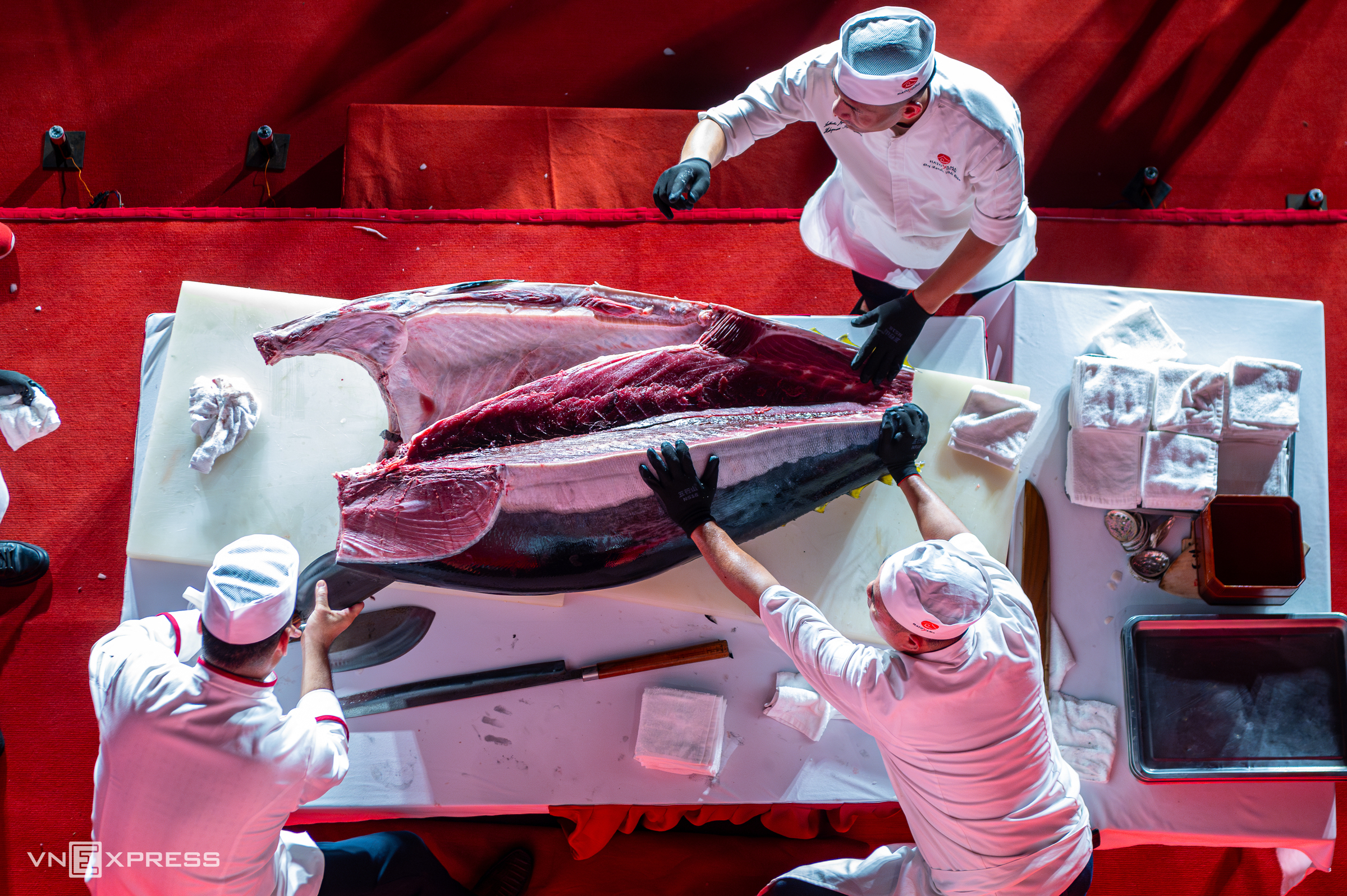 |
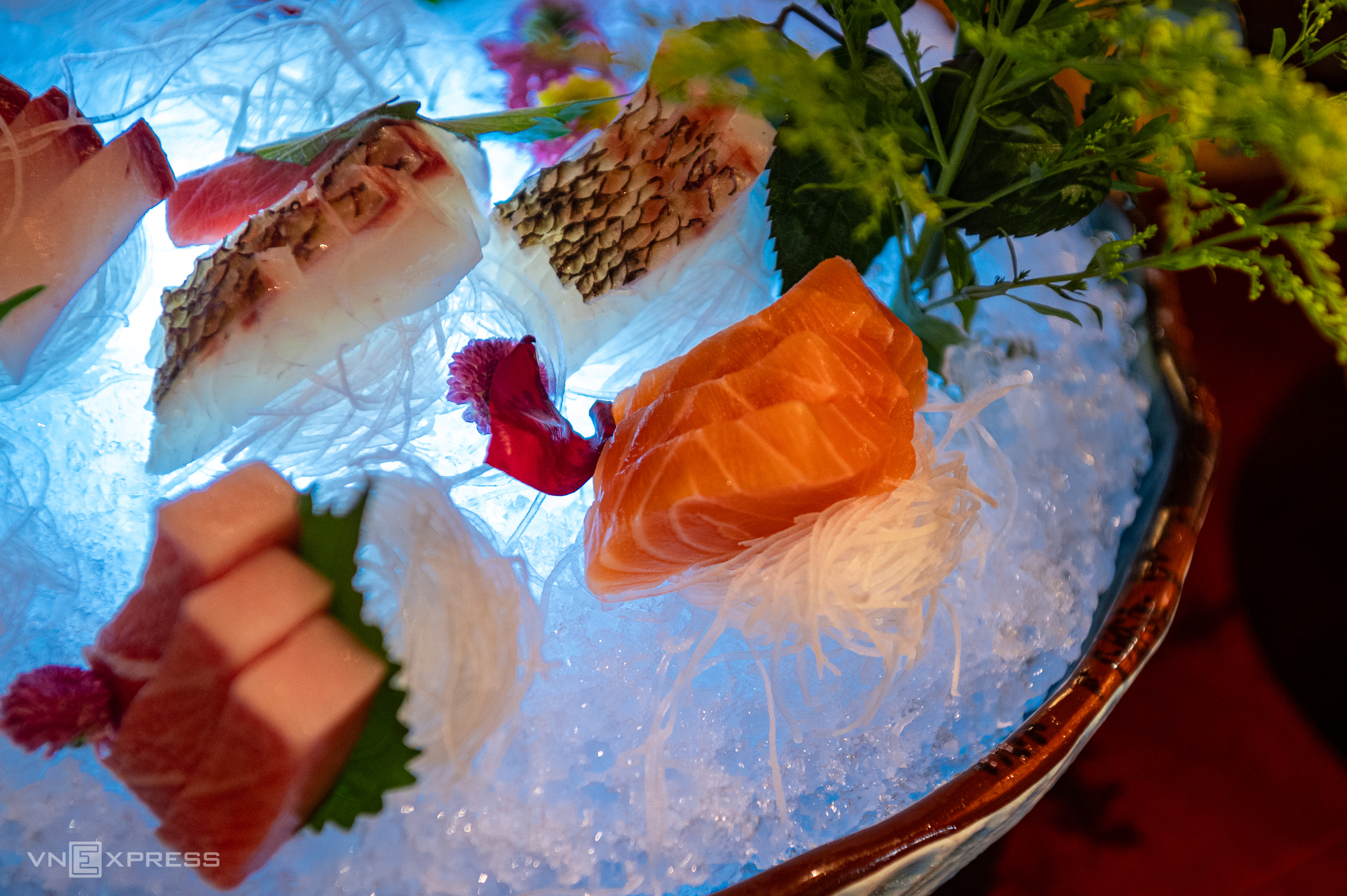
{"caption_all":"Bluefin tuna, or kuro maguro, is highly prized in Japanese cuisine and often featured in high-end restaurants, according to Chef Nguyen Ba Phuoc, head chef at Kaiseki Hatoyama. Chefs divide the fish into three main sections: otoro, chutoro, and akami. Otoro, the fatty belly, is considered the most valuable part, making up about 10% of the fish. Chutoro, from the back-belly, has a moderate fat content, while akami is the lean meat around the central bone, offering a light, sweet flavor.","caption_items":"["","",""]"}
 |
According to Chef Phuoc, bluefin tuna weighing over 100 kg is considered large. At nearly 220 kg, the fish carved on the evening of 13/8 was classified as "exceptionally large."
After completing the carving ritual, the chefs prepared the fish meat into various dishes for diners, including: sashimi, sushi, soup, hotpot, grilled dishes, and salad.
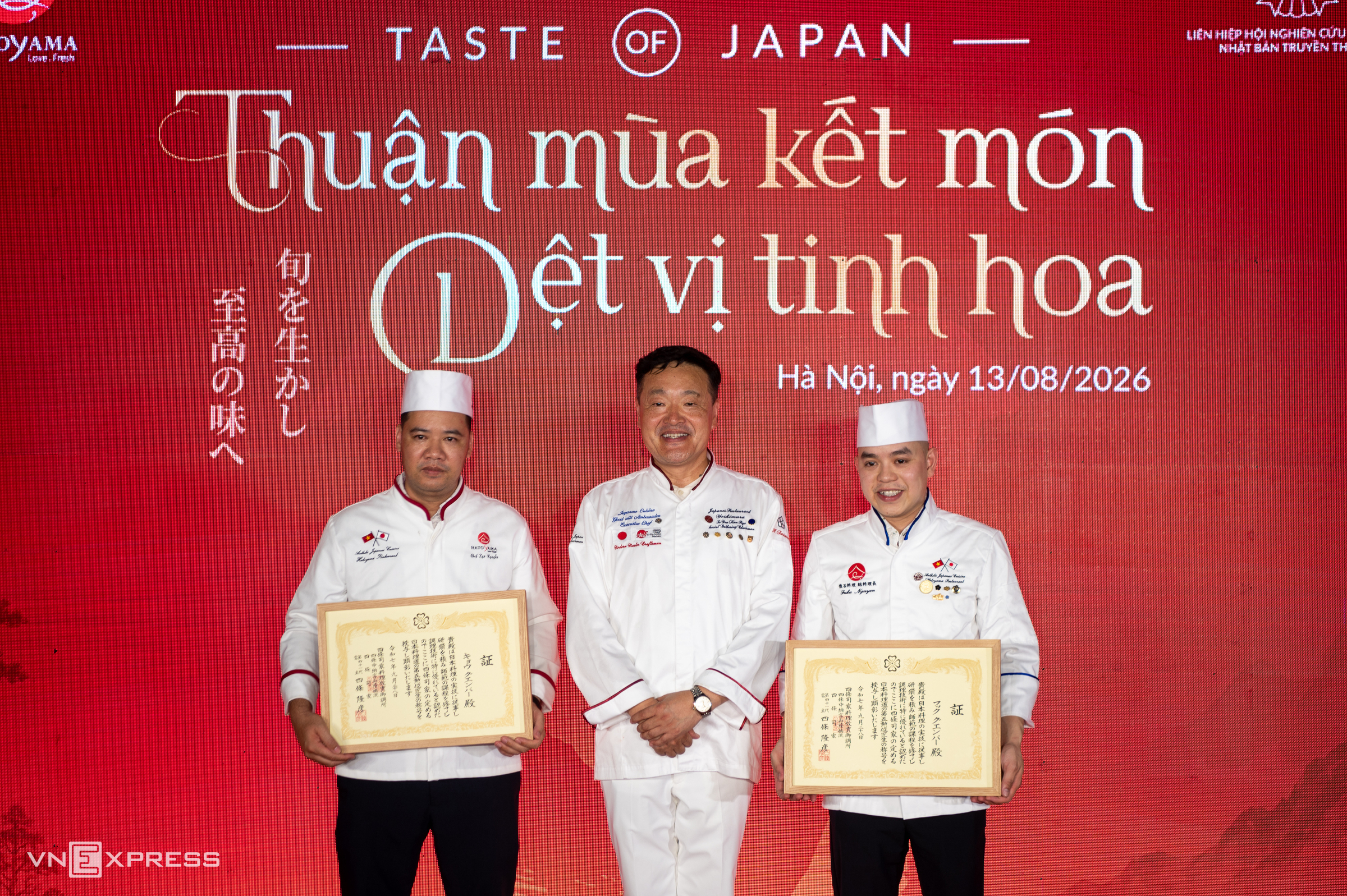 |
Also at the event, Chef Nguyen Ba Phuoc (right) received a lecturer certificate from the Japan Professional Chefs Association alongside Chef Kyo Nguyen (left).
Nguyen Ba Phuoc is the first Vietnamese chef and the 9th person worldwide to receive the Taste of Japan gold badge, a prestigious honor for foreign chefs competing in traditional Japanese culinary contests. Additionally, he was appointed as a Japanese Culinary Culture Ambassador by the Ministry of Agriculture, Forestry and Fisheries of Japan.
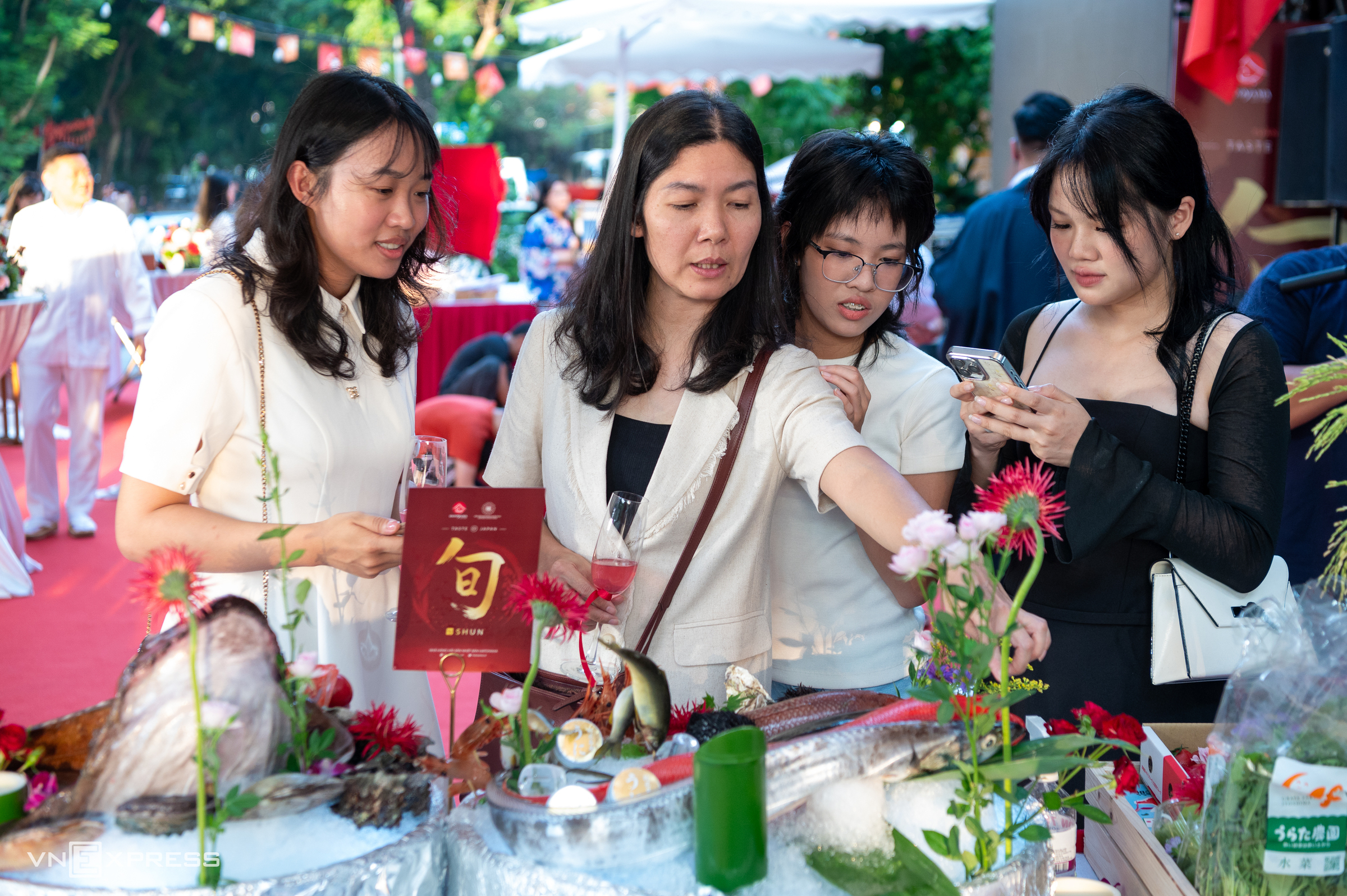 |
"I really enjoy sashimi, so I often attend Japanese culinary events," said Dao Ngoc Trang, from Thai Binh.
In the photo, diners participated in the tuna carving ritual and enjoyed Japanese cuisine last night.
Phuong Anh
Photos: Tran The Bang