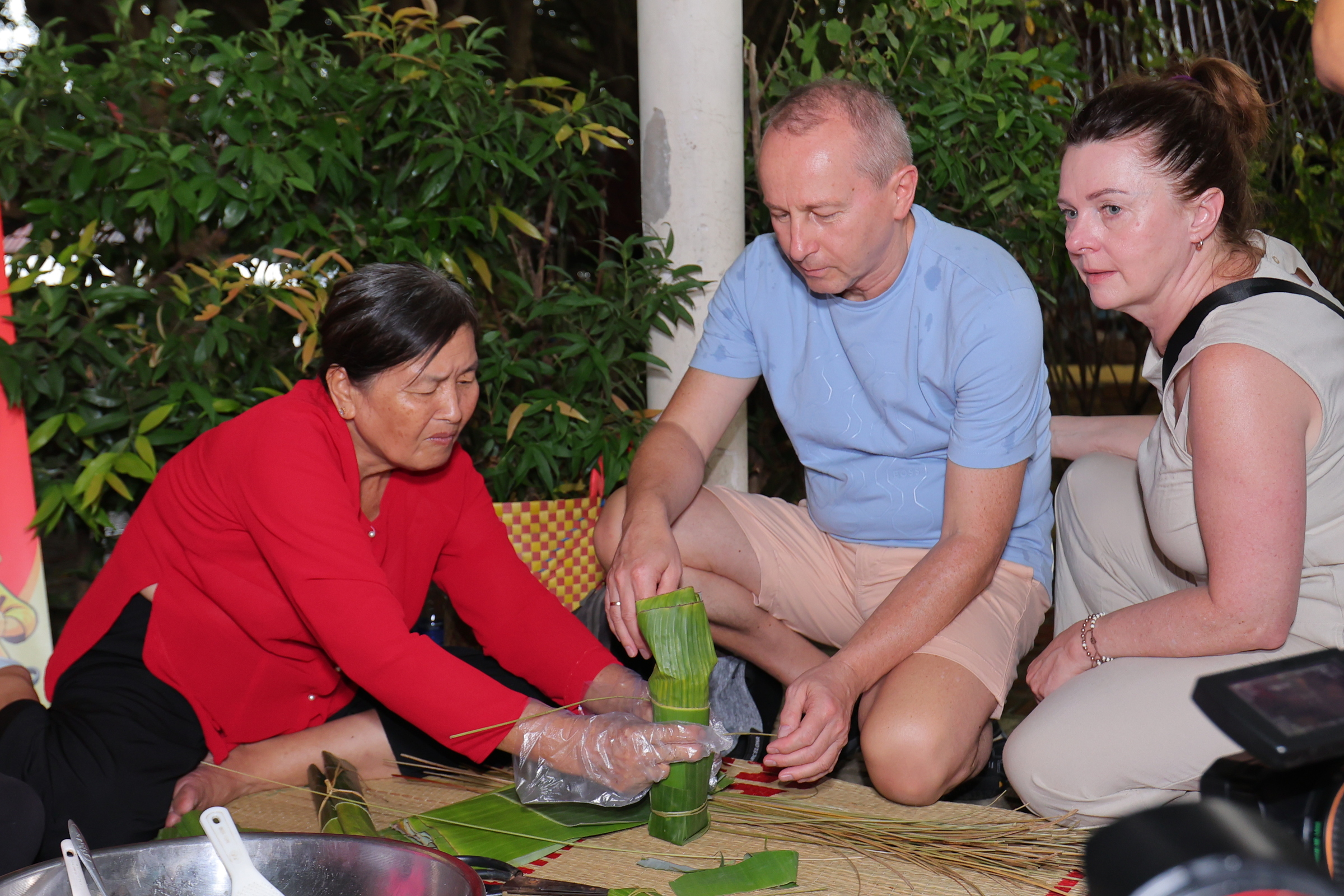
In a vibrant Southern Vietnamese setting adorned with yellow apricot blossoms and red couplets, Miroslaw and his wife, for the first time, personally placed dong leaves and tied strings around banh tet. He noted that he had heard much about the Lunar New Year (Tet) in some Asian countries through media, but this was his first opportunity to witness Vietnamese people preparing for the year's biggest holiday.
Miroslaw was one of 70 Polish tourists who stopped at Thoi Son ward, Dong Thap province on 5/2. The stop was part of the group's 12-day journey across Vietnam. Unlike typical sightseeing tours, this European group experienced a program dedicated to exploring traditional Tet in the Mekong Delta.
 |
Miroslaw experiencing banh tet making for the first time. |
In Poland, the Lunar New Year atmosphere among the Asian community is not prominent, making it difficult for tourists like Miroslaw to fully grasp the scale of this occasion. Directly participating in the Tet preparation stages offered a unique emotional experience.
"Not only is the scenery beautiful and the air fresh, but the local people are also friendly, and the homes and streets are beautifully decorated", Miroslaw shared, expressing hope to learn more about traditional Tet in other localities on his next visit.
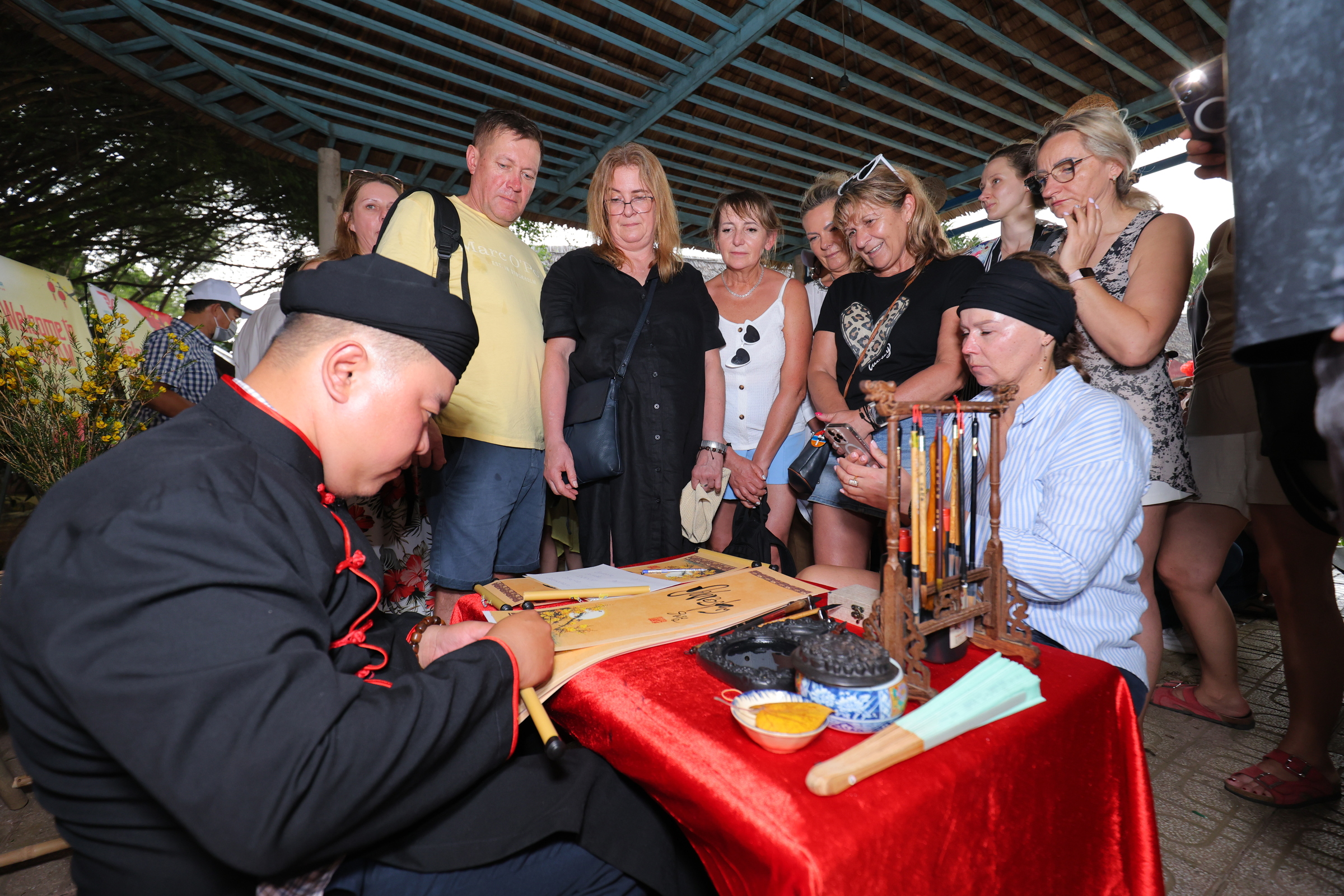
Beyond making banh tet, the tourists also received calligraphy from a calligrapher, practiced making coconut jam, and enjoyed it on the spot. A particularly impressive experience was observing the distinctive arrangement of the five-fruit tray by people in the Mekong Delta and learning about the ritual of offering incense to commemorate ancestors.
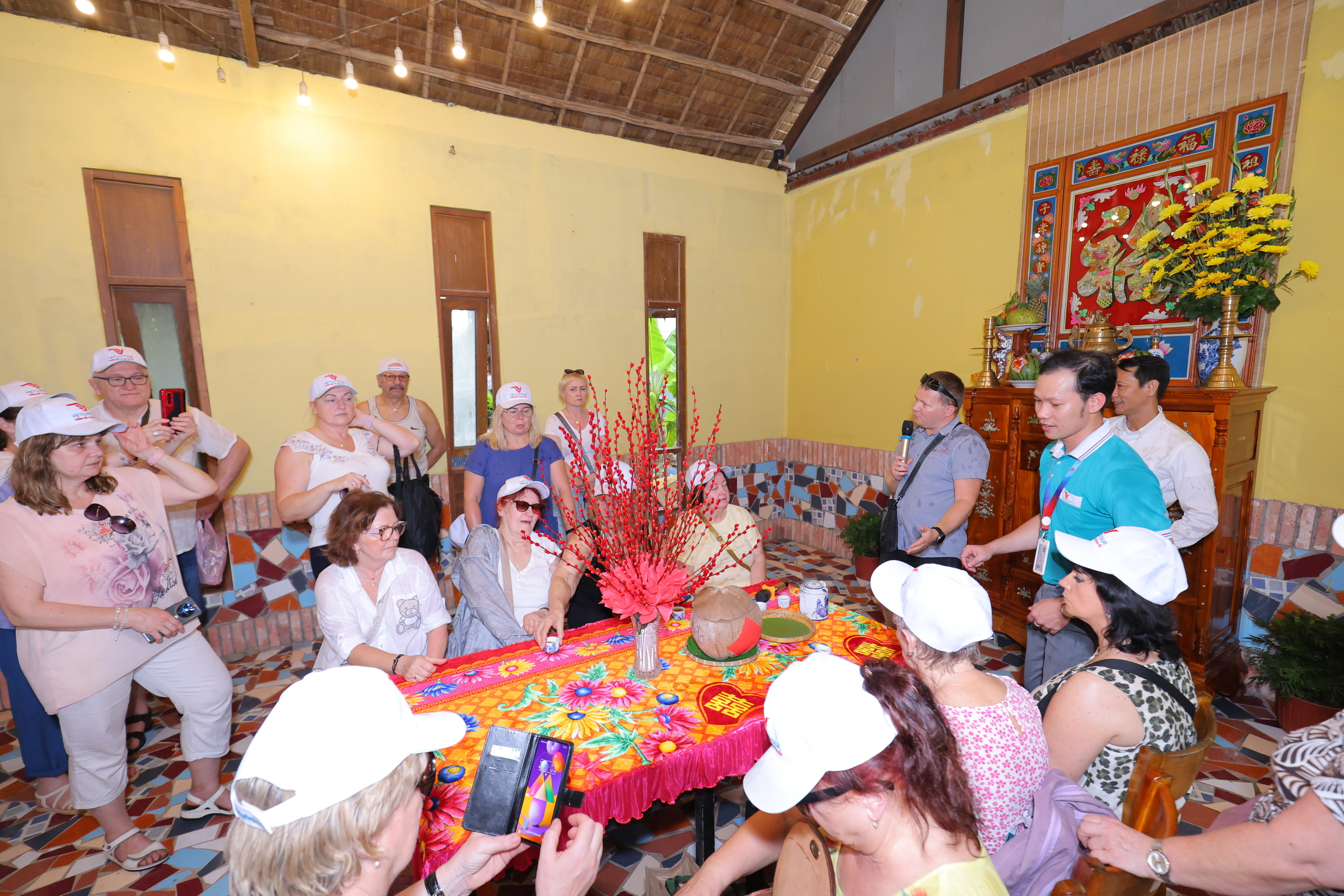
Most tourists were surprised to learn about the feng shui philosophy within Vietnamese homes. Anna, a group member, expressed fascination upon discovering that each family arranges their altar in a specific direction, depending on the homeowner's age (calculated by the Lunar calendar). This altar arrangement symbolizes harmony between yin and yang and reverence for ancestors.
 |
Tourists learning about Vietnamese worship customs and the Tet altar arrangement in the Mekong Delta. |
"It was my first time hearing about the strict rules for arranging offerings, flower vases, or water bowls to connect the present with one's roots", Anna remarked, impressed by how Vietnamese people maintain family values across generations.
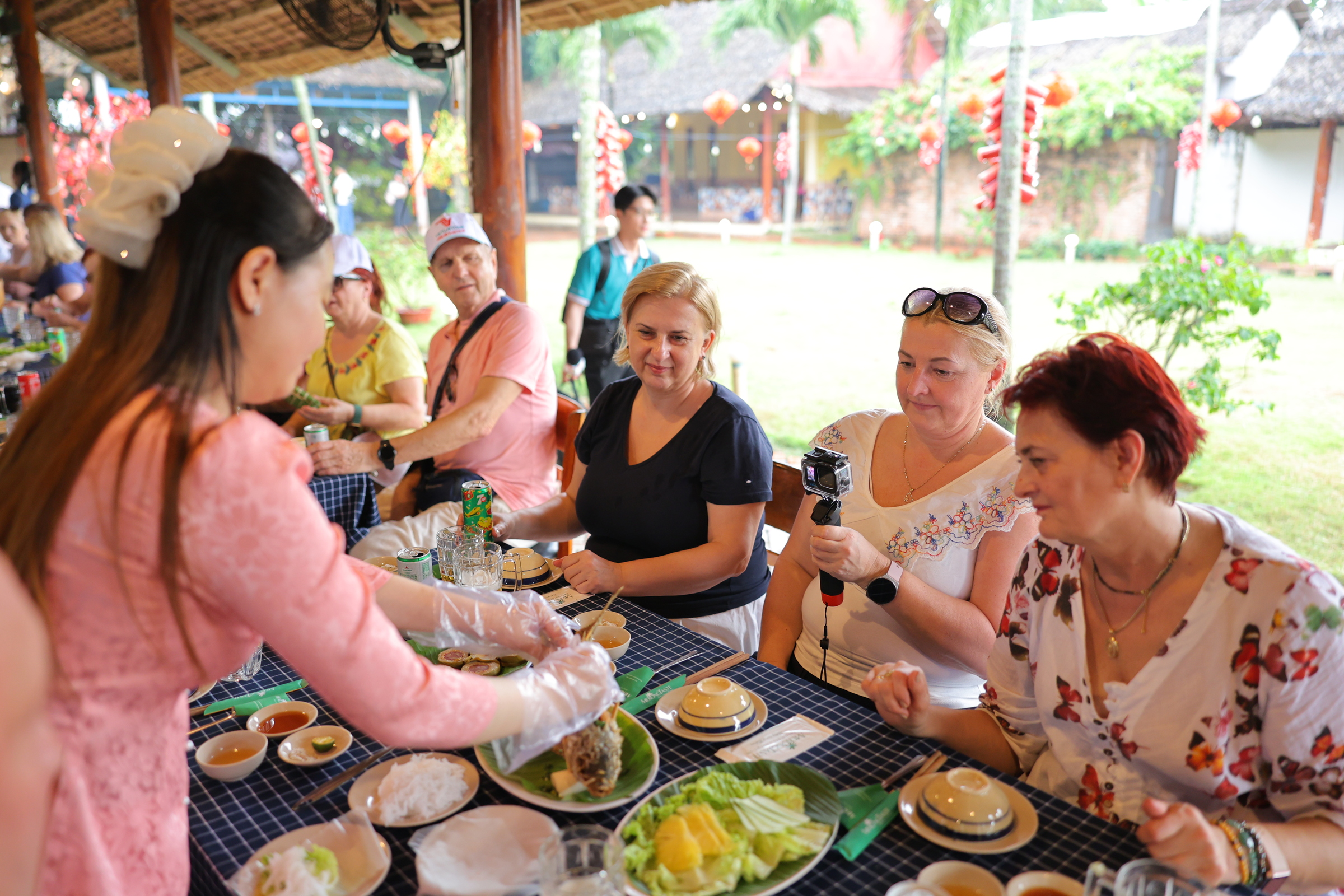
Mekong Delta Tet cuisine, featuring specialties such as fried elephant ear fish wrapped in rice paper, braised pork with coconut water and eggs, chicken salad, and banh tet, also served as a cultural "language" that helped the group better understand local life. Many tourists were excited to taste the delicate sweetness of coconut water in the braised pork and the crispy texture of the elephant ear fish, flavors representing the bounty of the Mekong Delta region.
While Poland was experiencing a cold winter, the warm sunshine of the Mekong Delta in the days leading up to Tet allowed the group to comfortably enjoy outdoor activities.
Wojciech Pawelec, a group member, noted that the hospitality of the local people made him feel connected despite the language barrier. After the trip, he plans to encourage his friends to visit Vietnam more and hopes the Vietnamese tourism industry will further promote these unique traditional values to the world.
Adrianna, the tour guide leading the group, stated that direct charter flights from Poland made the tourists' journey more convenient and time-efficient compared to transiting through hubs. Although she has guided tourists to Vietnam many times, this was her first time participating in a specialized tour designed to explore traditional Tet.
"I was surprised by the diversity in customs across different regions, from how the five-fruit tray is displayed to the dishes on the feast table; we gained a more authentic and intimate understanding of the depth of Vietnamese culture", Adrianna said.
Tran The Dung, General Director of Vietluxtour Travel Company, the organizer, believes that European tourists in the mid to high-end segment are increasingly seeking deep local experiences. Instead of merely observing scenery, they desire to "touch" the lifestyle through cuisine and festivals.
 |
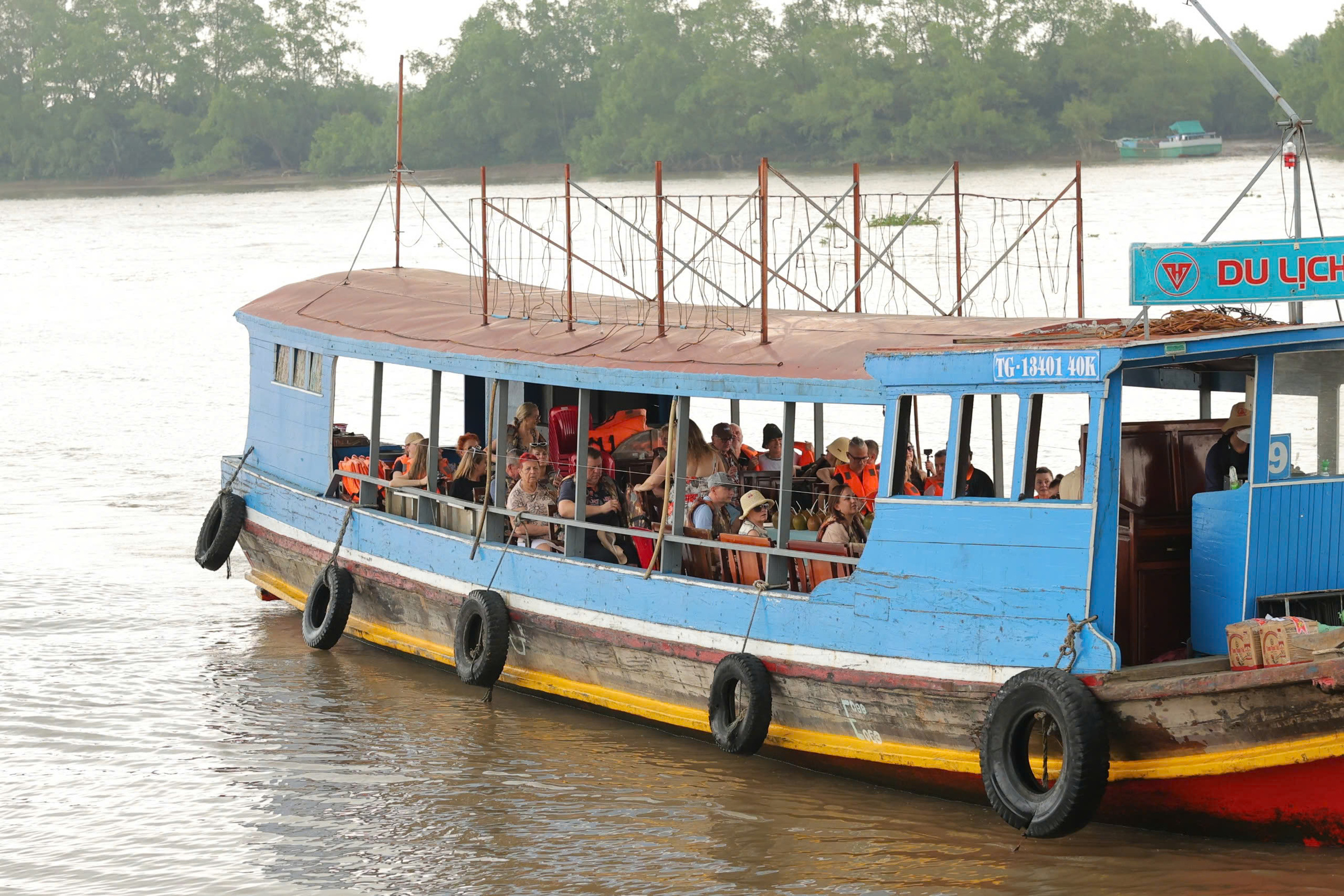
The group of tourists on a boat on the Tien River.
 |
The group of tourists asking for calligraphy from a scholar.
 |
Tourists experiencing a Mekong Delta Tet feast.
 |
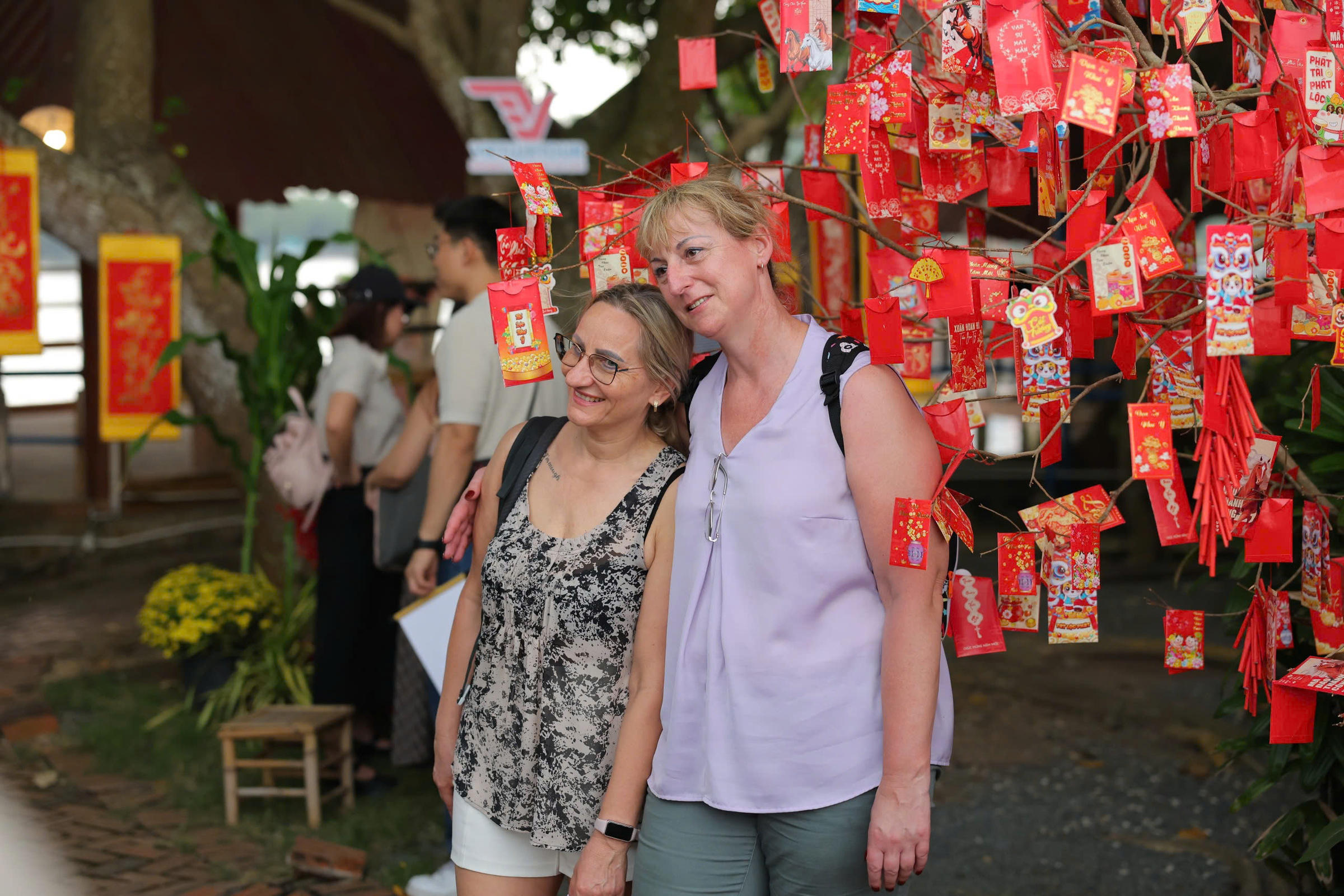
Tourists checking in by a lucky money tree.
According to Dung, taking tourists away from urban areas to the Mekong Delta helps them feel the simplicity and emotion of traditional Tet. Cultural tourism products, such as the "Westerners celebrating Tet in the Mekong Delta" tour, not only generate revenue but also significantly contribute to positioning Vietnam as a deep and sustainable destination on the global tourism map.
"What tourists remember most is not just the food, but the feeling of living in the Tet atmosphere like a true Vietnamese, understanding the value of family connection and the respect for roots that Vietnamese people hold", Dung emphasized.
The visit by the Polish tourist group coincided with Vietnam's tourism industry recording remarkable growth figures. According to data from the National Statistics Office, in January, Vietnam welcomed nearly 2,5 million international visitors, an increase of 21% compared to the previous month. This marks the highest monthly number of international arrivals ever recorded since 2009.
Experts attribute this surge to breakthrough visa policies, coupled with renewed promotional efforts and product diversification. With such a favorable start, the tourism industry is optimistic about achieving its goal of welcoming 25 million visitors for the entire year.
Bich Phuong