When checking into a hotel, receptionists greet guests, process payment, and then provide the room key. Following standard procedure, they will either speak softly, whisper, or write the room number on paper instead of announcing it loudly and clearly. While guests might not always notice, this is a mandatory operational rule in hotels. This practice is even more stringent at larger hotel chains, primarily for three key reasons.
Enhanced safety and privacy
Nick OrRico, general manager of the Fairmont Chicago in the US, explains that keeping room numbers confidential helps prevent eavesdropping by unauthorized individuals. "We train our staff to never say room numbers aloud. Instead, they discreetly write the number down or program it directly into the key card," he states.
This measure significantly minimizes the risk of strangers identifying a guest's exact lodging location. This is particularly crucial for solo travelers, female guests, and those checking in late at night.
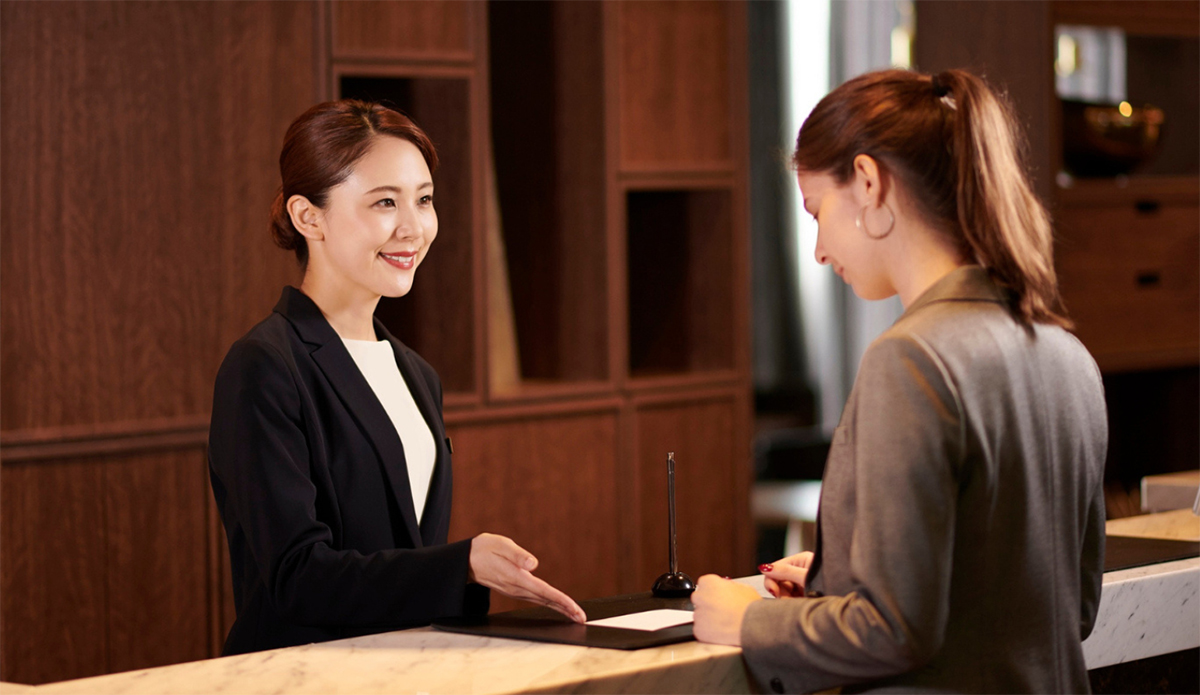 |
Receptionists often write down guest room numbers. Photo: vegoutmag |
Assisting guests with room recall
Greg Fregoso, director of the Blackstone Hotel in Chicago, notes that beyond security, writing down room information provides an easy reference for guests should they forget their room number.
However, travelers are advised against keeping their key card and the envelope with the written room number together when moving around. Alicia Wiley, general manager of the Hotel Monaco Salt Lake City in the US, identifies this as a common mistake that increases risk.
“If you drop both, you are essentially handing over the key and room address to a thief,” she warns. To ensure safety, Wiley recommends guests photograph the room number with their phone and store the key card separately immediately after leaving the reception desk.
Preventing fraud and unwarranted charges
Another reason is to prevent malicious individuals from exploiting this information to add fraudulent charges to a guest's bill, according to hotel expert Cameron Sperance, content director at Questex Hospitality and Travel.
“In the movie Ocean’s 8, actress Sandra Bullock overheard a room number at the Plaza hotel, then returned to that room and charged the entire bill to the previous occupant. Writing down the room number helps ensure you do not become an easy target for opportunists,” Sperance explains.
While Sperance acknowledges that this scenario is a movie plot and incorrect charges are not frequent occurrences, guests certainly wish to avoid unexpected, unauthorized expenses.
Personal safety extends beyond just the room number. Here are additional tips to enhance guest security during a hotel stay:
- Always engage the deadbolt and any secondary locks when inside the room.
- Store valuables in the in-room safe or secured within luggage.
- If a key card is lost, immediately report it to reception for a replacement; the old card will be deactivated.
- Do not share your room number or itinerary with strangers, nor post it on social media in real-time.
- When someone knocks, always look through the peephole before opening the door. If you do not recognize the person or feel unsafe, contact reception or security.
- Avoid lower-floor rooms, which are more susceptible to external break-ins. Also, consider avoiding rooms near elevators and at the end of stairwell hallways for enhanced safety.
- Solo travelers should avoid rooms with connecting doors.
- If there is no additional charge for a second guest, consider booking the room for two people and requesting two key cards at check-in. This can provide a greater sense of security.
Tam Anh (according to Reader's Digest)