To cries of "so-re, so-re", teams of 80 people took turns pulling 30-meter ropes, moving the main tower of Hirosaki Castle in Aomori province closer to its original position.
The 360-ton tower moved 1.13 meters on 22/8 and an additional 1.09 meters on 23/8. This was achieved using the hikiya method, an ancient technique that involves placing structures on rollers to move them rather than dismantling them.
"We received about 8,000 applications for 1,800 slots over the past two days, exceeding our target by about four times, so not everyone could participate," said Kensuke Hayasaka, head of Hirosaki city's parks and green spaces division. "Participants came not only from the city but also from across Japan and abroad, with a significant number from Southeast Asia, Europe, and North America."
Volunteers collaboratively move the main tower of Hirosaki Castle in Aomori province, Japan, on 23/8. Video: Guardian
The main tower was originally situated on a high stone embankment, which protected the castle's central area. Over time, earthquakes, ground pressure, and natural erosion caused the embankment to bulge, risking collapse into the moat. A collapse of the stone structure would lead to the entire 400-ton ancient tower toppling.
To carry out thorough repairs, engineers had to dismantle all 2,185 stone blocks of the embankment. Unable to repair the foundation with the hundreds-of-tons wooden tower still in place, and unwilling to dismantle the tower to preserve its original heritage structure, they opted for the hikiya technique. This method allowed them to pull the tower back into the courtyard by approximately 70 to 78 meters. The tower has remained in that temporary location since 2015.
In 2015, the city called on residents to participate in the relocation, marking the first time hikiya had been used to move a castle in a century.
"Because the main tower is an important historical cultural relic, we did not disassemble it," Hayasaka said. "We used hikiya, a house-moving method that has existed in Japan since ancient times."
By the end of 2024, the restoration and re-stacking of the embankment's 2,185 stone blocks were completed. Officials needed to move the tower back the 78 meters to its original foundation.
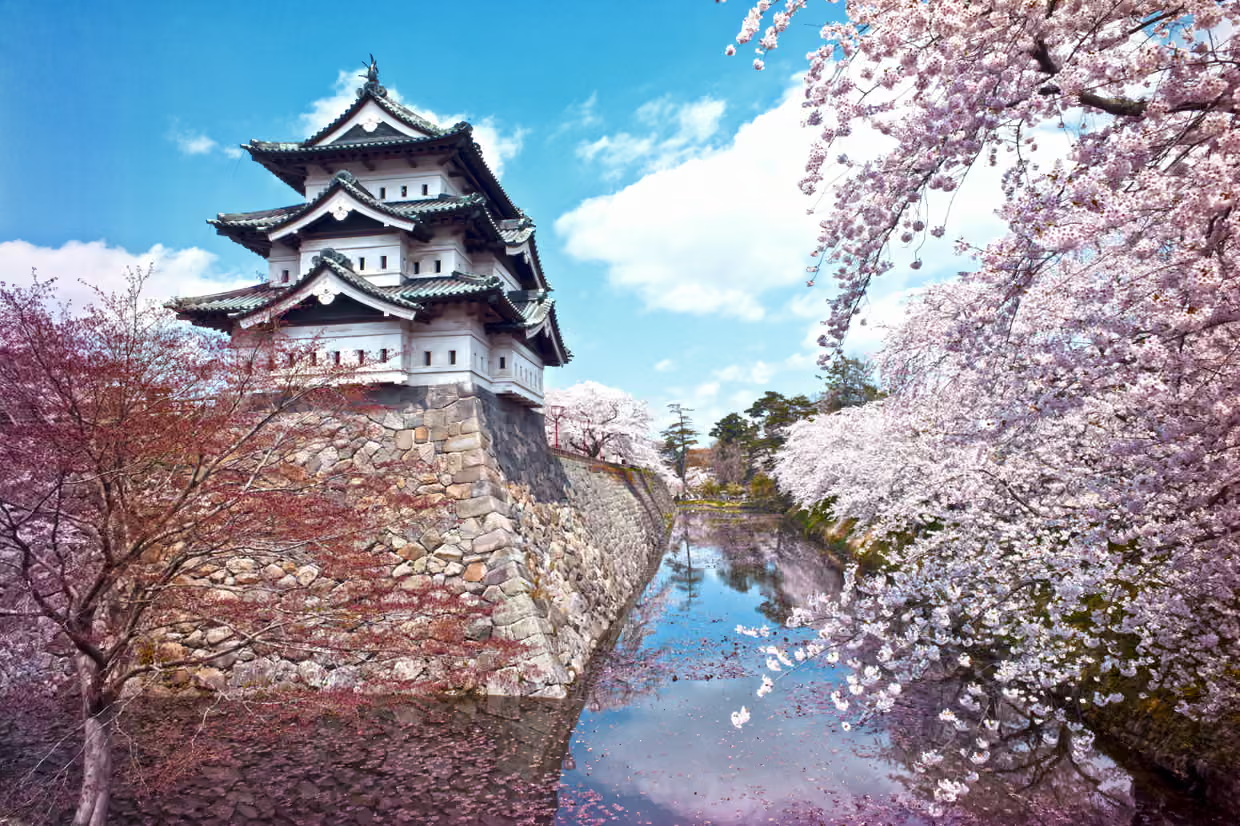 |
The main tower of Hirosaki Castle sits on a high stone embankment. Photo: Guardian
This year, officials once again sought public assistance to pull the tower back to its original position.
"I pulled it 11 years ago. It's truly moving to be able to participate again," said Motoharu Nakata, 61, who traveled from Hiroshima to Aomori.
The manual pulling of the tower will continue until the end of August, with 4,100 people expected to participate in moving it a distance of 5 meters. This effort is symbolic and aims to connect the community. Machinery will complete the remaining 73 meters by the end of the year.
The main tower at Hirosaki Castle is one of Japan's 12 remaining ancient structures and the only one in the northeastern Tohoku region. Part of the Tsugaru clan's estate, the original structure was completed in 1611. However, the main tower burned down in 1627 after lightning struck a gunpowder magazine. The current structure was rebuilt in 1810. Today, the castle is the center of a park that attracts about two million visitors annually during cherry blossom season.
This major restoration means visitors will not be able to tour the main tower for many years.
"Once it returns to its original position, conservation work on the main tower will begin, and the entire structure will be covered," Hayasaka said. "Based on the current situation, we expect the site to reopen to visitors in 2033."
By Hong Hanh (Source: Guardian, Kyodo News)