Jeju Island has been shaken by the discovery of four bodies of missing persons over the past three days, leading the Korean National Police to launch an inspection into the handling of such cases. The findings have raised serious questions about police adherence to proper procedures, particularly concerning the premature closure of missing persons reports.
The first discovery occurred on 23/8, when a fisherman around 3:04 found the body of a man in his 70s, identified as Mr. A, floating near Jeju Island's east coast. Emergency services were immediately contacted. Mr. A had been reported missing at Dong Jeju Police Station on 22/8. Police are currently investigating the cause and circumstances of his death.
Further discoveries followed, highlighting systemic issues. Around 10:46 on 24/8, a body believed to be Jang Mi-ran, 37, who went missing in May, was found at a palm farm near her residence. The initial report of her disappearance in May was improperly closed by the officer in charge. The search was only reopened last month after her family submitted a new application.
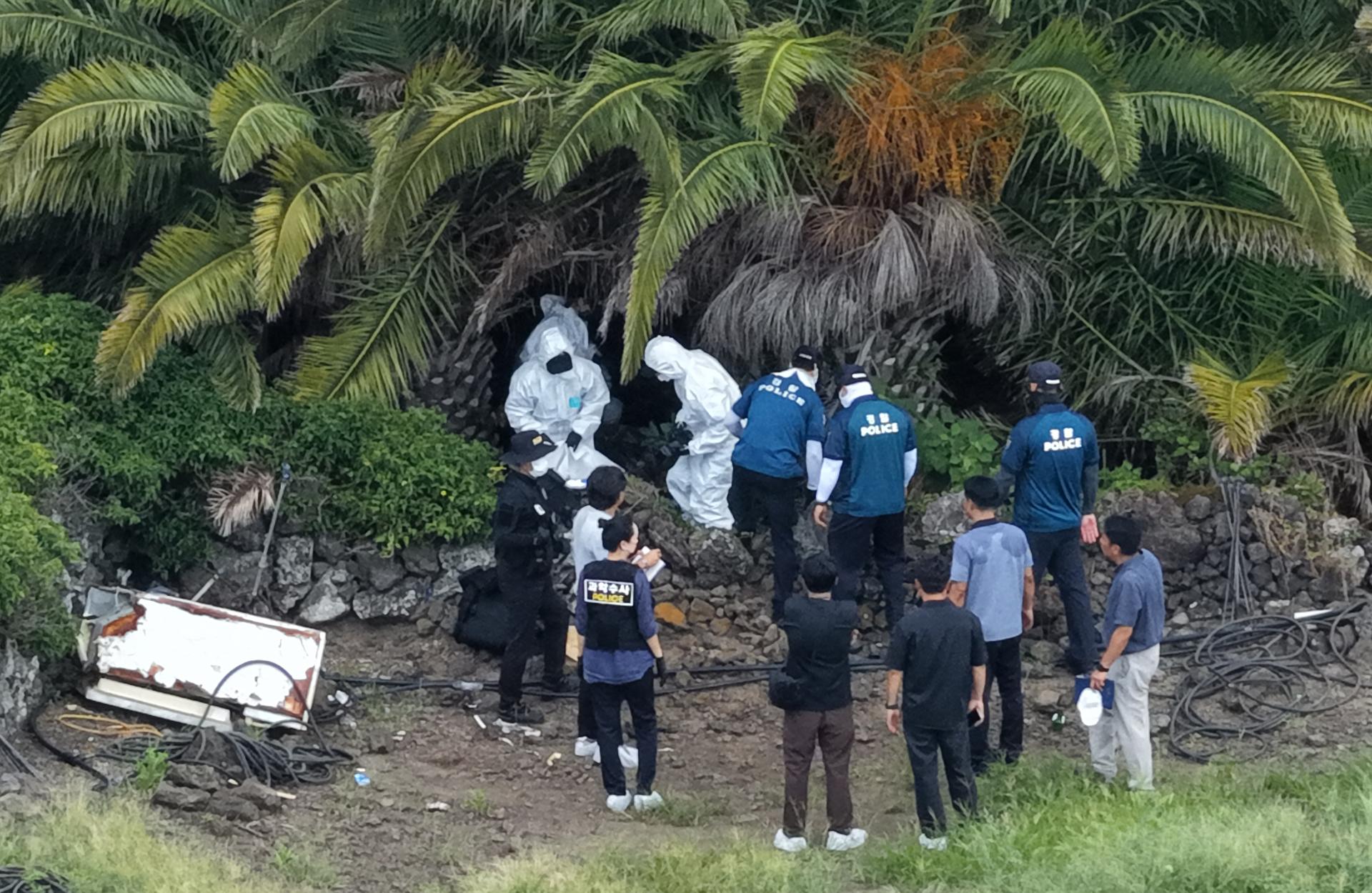 |
Police conduct a forensic examination after finding Jang Mi-ran's body at a palm farm in Jeju City on 24/8. *Yonhap* |
Earlier on 24/8, around 9:35, another missing person, previously reported to police, was found deceased near a valley in Aewol-eup, west Jeju Island. Adding to the concerns, on 22/8, the body of a man in his 60s was discovered northeast of Jeju Island. He had been reported missing on 2/7, but his case was also prematurely closed by the same officer handling Jang Mi-ran's case. His relatives filed another report last week, prompting further investigation.
In response to these alarming incidents, the Korean National Police has launched an inspection into the improper procedures in Jeju missing persons cases. This includes a comprehensive review of related command and management practices. The officer linked to the premature closure of two of these cases had handled 298 reports during his one year five months tenure in the missing persons unit of West Jeju Police Station before being suspended on 11/8.
The incidents on Jeju Island underscore a broader issue within Korean policing. Last year, out of approximately 70,000 adult missing persons reports received by Korean police, 99.7% of cases were closed without a large-scale search. Only 0.3% of cases remained open, categorized as missing persons. This statistic raises increasing questions about whether police are truly following proper procedures and effectively addressing missing persons reports.
By Huyen Le (According to Chosun, Korea Times, SBS)