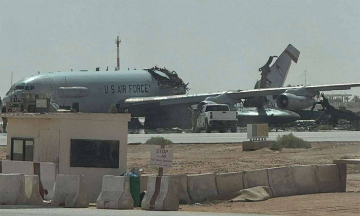
Iran has released satellite images revealing damage to a US E-3G early warning aircraft at Prince Sultan Air Base in central Saudi Arabia. The images, published by Iran's Jamaran News on 29/3 and analyzed by the US military publication War Zone, show the aircraft on a taxiway near the runway both before and after an attack on 27/3.
The satellite imagery indicates the E-3G's rear fuselage, behind the main wing, was incinerated, leaving scorch marks on the tarmac. Debris lay scattered around the damaged aircraft, and multiple vehicles were deployed nearby. Tyler Rogoway, War Zone editor, noted, "What appears in these images is completely consistent with previously seen on-site photos."
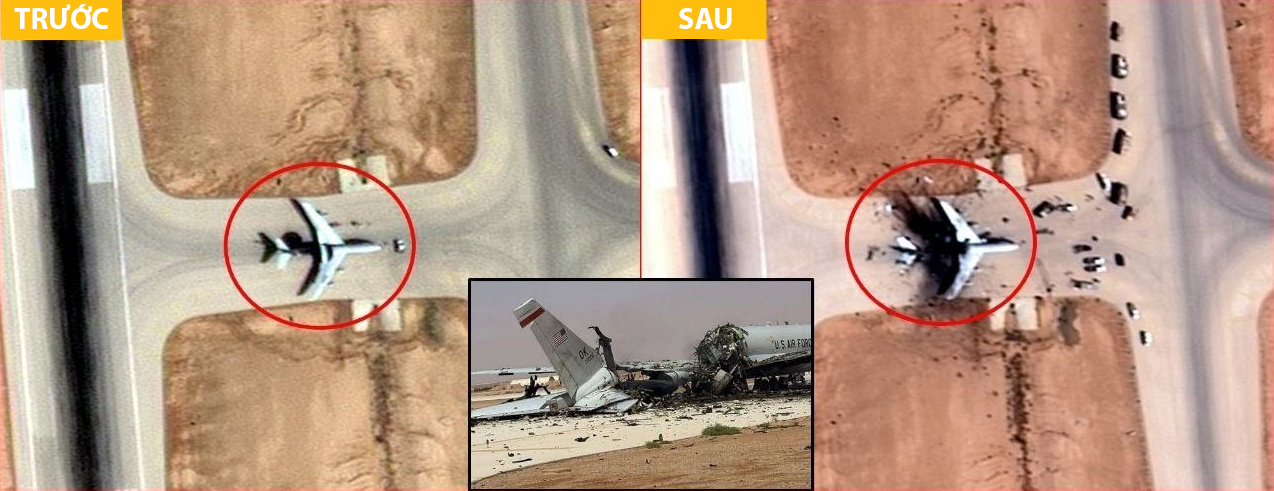 |
Aircraft believed to be a US E-3G at Prince Sultan Air Base in satellite images published on 29/3. Photo: X/Clash Report
Further satellite images from Chinese company MizarVision, captured in March, showed E-3 early warning aircraft, E-11A battlefield communication aircraft, and F-16 fighter jets positioned across various sections of Prince Sultan Air Base. Separately, Iranian media also released satellite photos detailing damage at Isa Air Base in Bahrain following dozens of missile and unmanned aerial vehicle (UAV) attacks. A hangar, which housed US Navy P-8A Poseidon maritime patrol aircraft, sustained severe damage, though it remains unclear if any aircraft were inside during the assault.
Steffan Watkins, an open-source intelligence data researcher on X, commented on the situation. "The US Air Force had dispersed its E-3 fleet across taxiways to mitigate the risk of missile attacks, but this measure appears to have been ineffective," he stated.
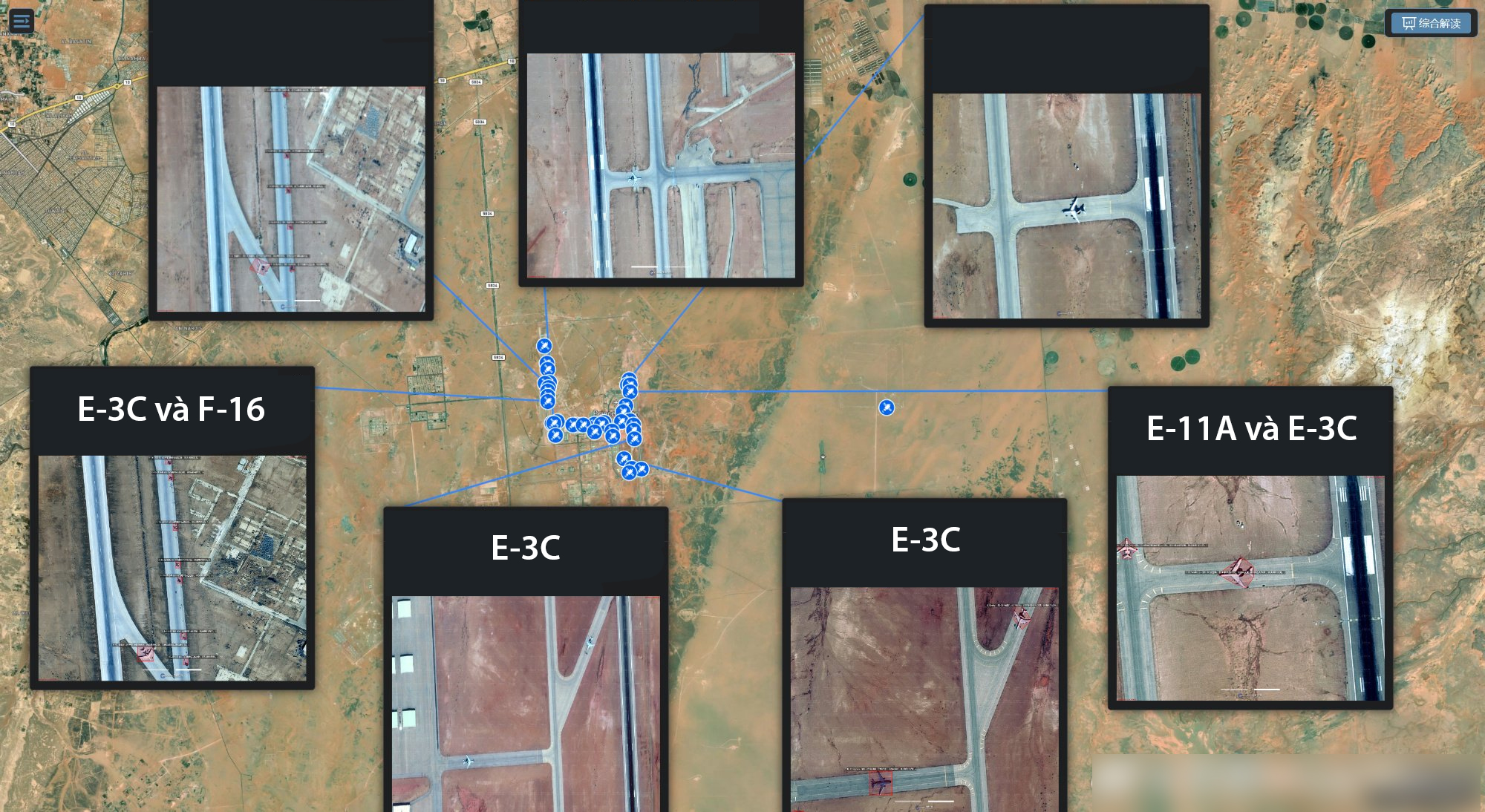 |
US military aircraft and fighter jets at Prince Sultan Air Base, Saudi Arabia. Photo: MizarVision
US Central Command (CENTCOM), the command responsible for US military operations in the Middle East, declined to comment on the information.
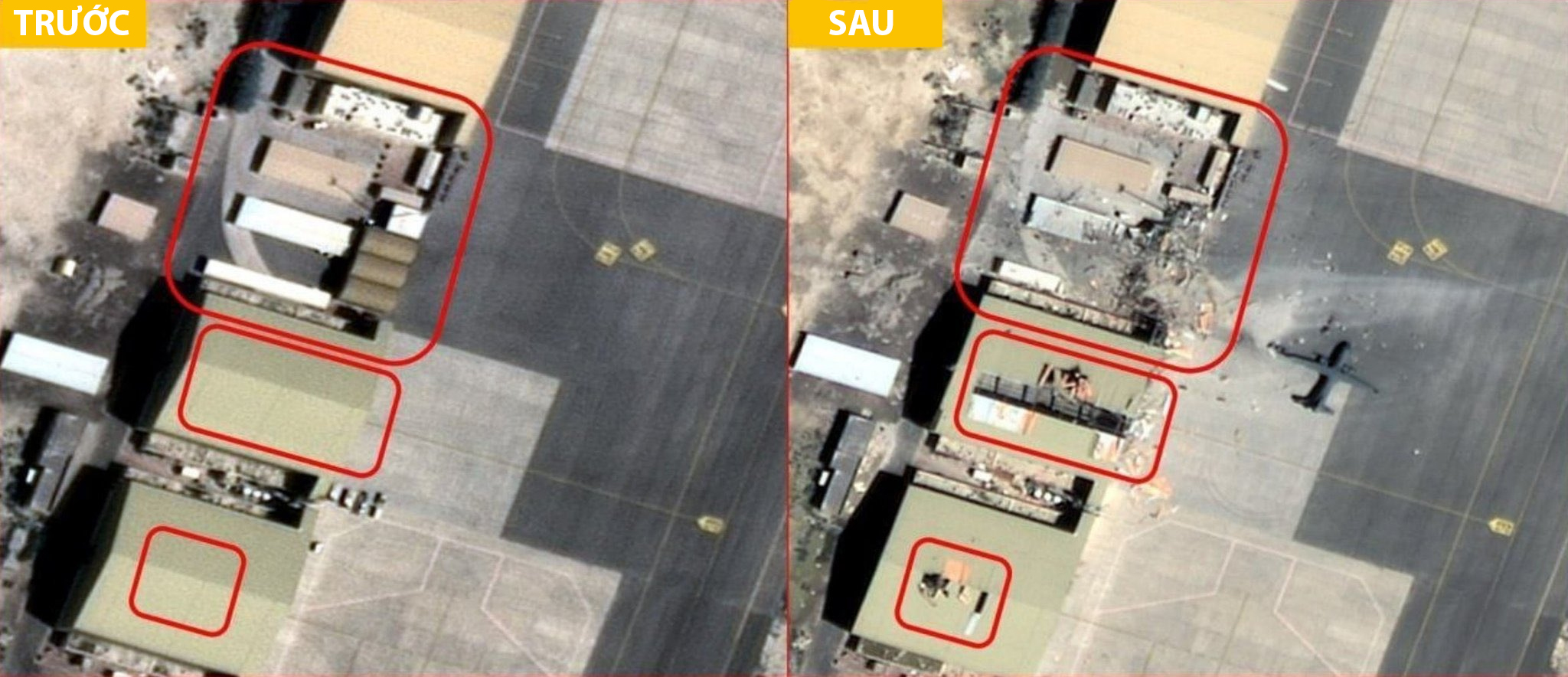 |
Hangar for US P-8A maritime patrol aircraft at Isa Air Base in Bahrain in images published on 29/3. Photo: Tasnim
The E-3 Sentry is often referred to as an "eye in the sky" aircraft due to its ability to detect other aircraft from hundreds of kilometers away. This model, developed from a Boeing 707 passenger aircraft frame, is distinctive for its large, rotating radar dome.
The US Air Force once operated a large fleet of E-3 aircraft, but only 16 remained in service before the conflict. Not all were always operational. The average mission readiness rate for the US E-3 fleet in fiscal year 2024 was 55,68%, meaning only about 8-9 aircraft could take off on demand.
Beyond financial implications, with each E-3G aircraft valued at over USD 500 million, experts suggest that losing a Sentry risks degrading the US Air Force's battlefield control capabilities. This is especially true for one of the 6 aircraft directly involved in operations targeting Iran. Rogoway emphasized, "Losing an E-3 is a very serious development, as this aircraft plays a crucial role in detecting enemy attacks and coordinating combat operations across multiple fronts."
Nguyen Tien (Based on AFP, AP, War Zone reports)