On 29/3, the Air Force Amn/Nco/Snco account, which specializes in US Air Force documentation, published a series of images showing an "E-3 Sentry early warning aircraft damaged at Prince Sultan Air Base". The photos show the aircraft's entire tail section nearly destroyed. The radar dome on the aircraft's back has collapsed and lies next to the plane. The extent of damage to the front fuselage and main wings is unclear.
OSINTdefender, a social media account that tracks open-source intelligence on conflicts, indicated that this is one of six E-3G Sentry aircraft deployed by the US to Prince Sultan Air Base in recent days, based on public tracking signals on 20/3.
Central Command (CENTCOM), the agency responsible for US military operations in the Middle East, has not yet commented on the information or images related to the attack.
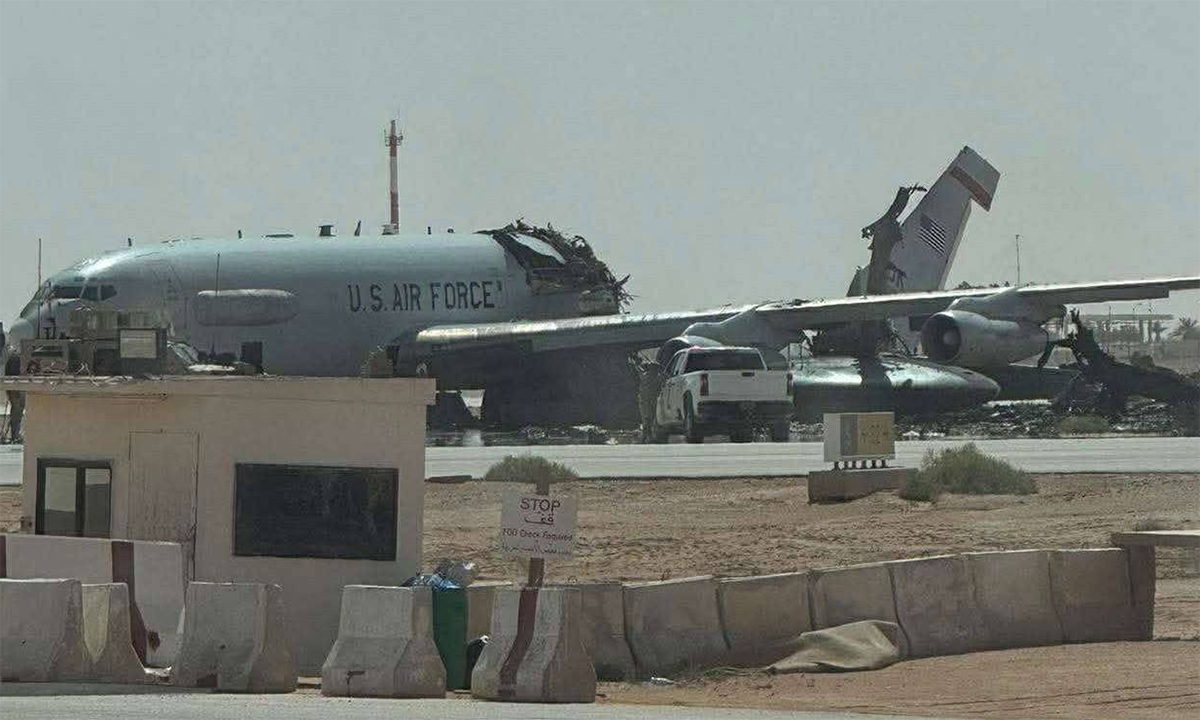 |
The damaged E-3G in photos released on 29/3. Photo: Facebook/ Air Force Amn/Nco/Snco
"After initial assessment, these images are likely authentic. Losing an E-3 is a serious development, as this aircraft plays a crucial role in detecting enemy attacks and coordinating combat operations across multiple fronts", stated Tyler Rogoway, editor of the US military specialized website War Zone.
US military magazine Air & Space Forces and aviation website Aviationist both agree that the E-3G in the photos is completely destroyed and beyond repair. If confirmed, this would be the first E-3 Sentry aircraft destroyed by enemy fire.
Beyond the financial cost, with each E-3G aircraft estimated at over 500 million USD, experts believe that losing a Sentry, especially one of the six aircraft directly involved in operations against Iran, risks degrading the US Air Force's battlefield control capabilities.
"This is a serious issue, as the E-3 Sentry is vital for operations such as airspace deconfliction, preventing collisions between forces, identifying targets, and supporting all units on the battlefield", said Heather Penney, a former F-16 pilot and director of research at the Mitchell Institute for Aerospace Studies, based in the US.
US and allied fighter pilots particularly rely on the comprehensive battlefield picture provided by E-3 early warning aircraft. Penney noted, "The value of the E-3 lies in its ability to monitor the entire area. They are like the chess master controlling the whole game, while fighter pilots are just the pieces on the board".
The E-3 with tail number 75-0557 taking its final flight before being decommissioned in 5/2023. Video: USAF
The US Air Force once operated many E-3 aircraft, but only 16 remained in service before the conflict erupted, and not all were operational at any given time. The average mission readiness rate for the US E-3 fleet in fiscal year 2024 was 55,68%, meaning only about 8-9 aircraft were capable of taking off when ordered.
One E-3 taken out of commission will further overburden the Sentry fleet and reduce flexibility in operational planning.
The remaining aircraft will need to perform missions for longer durations and at higher frequencies to fill the gap, causing significant stress on personnel health and morale, while accelerating equipment wear and increasing malfunction rates. Maintaining the current mission frequency could lead to defense gaps, risking enemy threats slipping through.
"This is a significant loss in the current conflict", assessed Kelly Grieco, a defense policy expert at the Stimson Center.
The US military cannot easily replace a damaged E-3G on the battlefield. The production line closed in 1992, and reactivating some stored aircraft would require significant time and budget for restoration and upgrades to match the destroyed aircraft's standards.
The Pentagon plans to shift most surveillance and early warning tasks to a space-based sensor network, but this technology will take many years to fully develop.
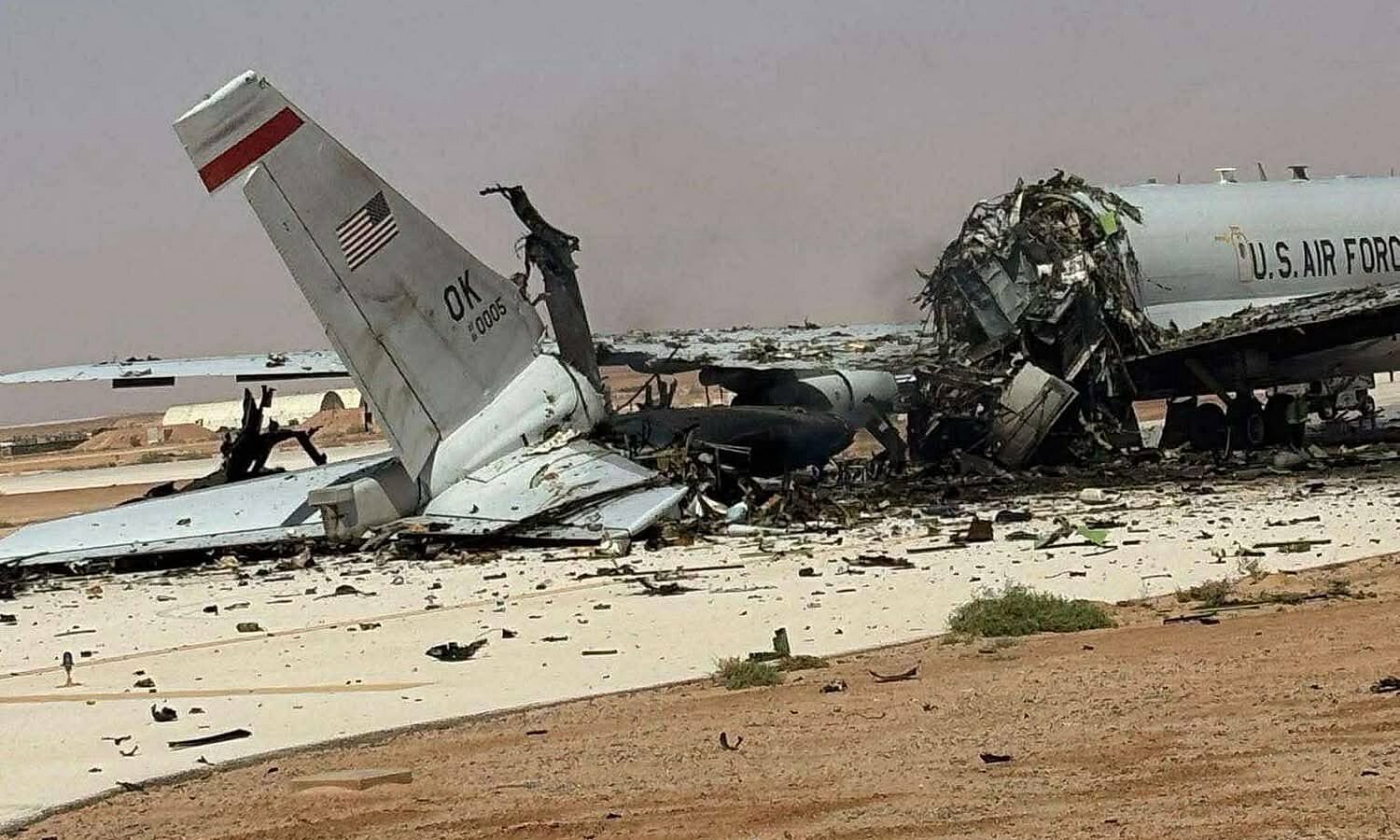 |
Images reportedly show the US E-3 after the Iranian attack on 26/3. Photo: Facebook/ Air Force Amn/Nco/Snco
The US Air Force planned to order 26 E-7 Wedgetail aircraft, estimated at 700 million USD each, to replace the E-3 fleet during a transition phase. However, the service later suspended this project, opting instead to purchase E-2D aircraft developed for the US Navy, which are less capable than the E-3 and E-7 lines, to save costs.
Rogoway commented, "This unusual move creates gaps in the US Air Force's early warning and airspace control capabilities, while their needs continue to grow. Losing an E-3 will shrink an already small fleet, pushing the US Air Force into a more concerning situation".
To date, no E-2D aircraft have been delivered to the US Air Force.
Penney warned, "The loss after the attack on Prince Sultan Air Base not only increases pressure on the early warning aircraft fleet but also affects combat capabilities, battlefield command, and the operations of the entire US military".
Nguyen Tien (According to War Zone, Air&Space Forces, AFP, AP)