From 12-13/9, Prime Minister Le Minh Hung attended the 18th BRICS Summit and held bilateral meetings in India. This marked Vietnam's second participation in a BRICS summit as a partner nation.
Professor Faisal Ahmed, of International Business at FORE School of Management, India, stated that Prime Minister Le Minh Hung's attendance affirmed Vietnam's position as an important nation in Southeast Asia.
Economically, the conference created an opportunity for Vietnam to enhance supply chain resilience and establish interconnected global production networks.
“This is an opportunity for Vietnam to leverage its geostrategic and geo-economic advantages, while also playing a larger role in the global financial structure and global economic governance”, Ahmed stated.
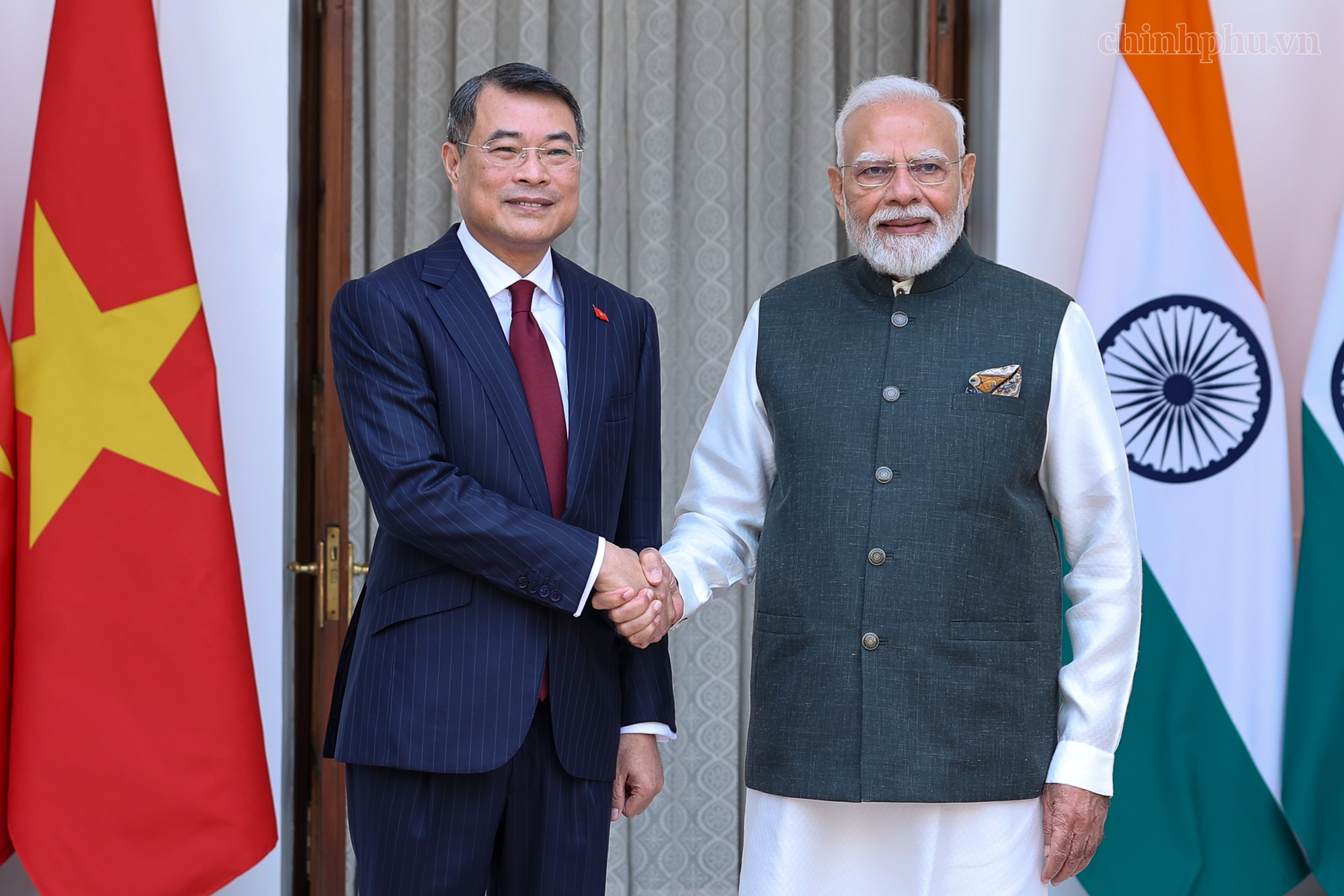 |
Prime Minister Le Minh Hung and Indian Prime Minister Narendra Modi pose for a photo before their talks. *Photo: chinhphu.vn*.
Vietnam also holds many advantages to contribute to BRICS. The Indian professor believes that Vietnam's geostrategic advantage allows it to become a unique connecting hub between BRICS and ASEAN, and also with major free trade agreements such as the Regional Comprehensive Economic Partnership (RCEP) and the Comprehensive and Progressive Agreement for Trans-Pacific Partnership (CPTPP), of which Vietnam is a member.
Accordingly, Vietnam can contribute in many areas: from enhancing supply chain resilience, global value chains, regional connectivity, attracting investment, urbanization, and digital infrastructure development, to measures for adapting to and mitigating the impacts of climate change.
Professor Nicholas Chapman, Tohoku University, Japan, stated that Prime Minister Le Minh Hung's participation in the BRICS conference is an opportunity for Vietnam to disseminate a practical narrative of a responsible, inclusive, and proactive foreign policy. This model promotes peace and development through dialogue, rather than adopting unilateral stances or confrontation.
According to Chapman, in the context of increasingly intense competition among major powers, small and medium-sized nations often bear the brunt of pressure. Therefore, multilateral mechanisms like BRICS are key pillars that help developing countries enhance their strategic autonomy, while also effectively accessing global development support resources.
“With impressive economic achievements and a reputation as a reliable partner, Vietnam can certainly become a vivid testament to the value of multilateral cooperation amidst a volatile global period”, the Japanese expert observed.
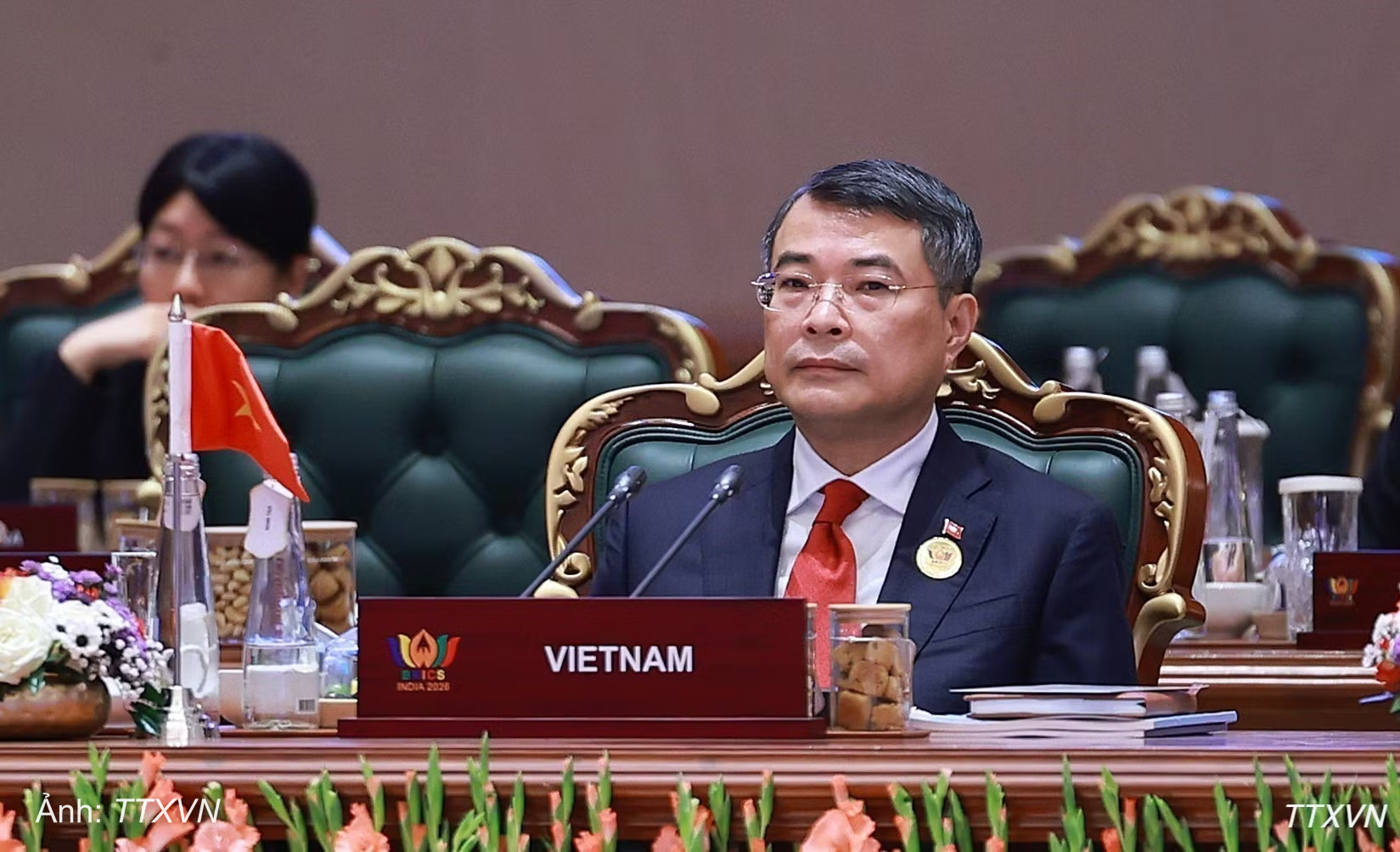 |
Prime Minister Le Minh Hung attends a session of the 18th BRICS Summit in New Delhi, India on 13/9. *Photo: TTXVN*.
Beyond multilateral opportunities, the working trip also provided a major boost to bilateral cooperation with the host nation. Navendu Kumar, President of the Indian Chamber of Commerce in Vietnam (InCham), stated that the Vietnamese Prime Minister's attendance at the conference was clear evidence of mutual trust and strong support for India's role as BRICS Chair.
Occurring after the upgrade of bilateral relations to an Enhanced Comprehensive Strategic Partnership in May, this visit solidified a "golden era" in Vietnam - India relations. The InCham President expressed confidence that this high-level visit reassures Indian businesses that their capital investment commitments in Vietnam are supported by long-term institutional alignment.
“For Indian corporations – whether in heavy infrastructure, renewable energy, pharmaceuticals, or high-tech manufacturing – this political stability and high-level diplomatic commitment are key drivers of investment confidence”, Kumar stated.
Lan Huong