Five of the seven people trapped since 19/5 in a remote, flooded cave in Longcheng district, Xaisomboun province, Laos, were found on 27/5 following a high-risk search operation.
After days of waiting, the trapped individuals finally saw the lights of the rescue team emerge from the murky water. They had been clinging to a narrow rock ledge in the flooded cave.
"Someone has come to help", Norased Palasing, a Thai cave diving expert, told the trapped individuals. "The important thing is that you are alive. It’s okay, it’s okay, you’ve done very well. Don’t cry."
Ing, one of the trapped individuals, spoke into a rescuer’s camera: "Mom, don’t worry. The rescue team has reached us. We are safe. I miss you and Dad very much. We will probably be out tomorrow or the day after."
According to a Facebook post by a Lao volunteer rescue group, the five individuals found are all men. "I am still shaking. Our team succeeded", said Bounkham Luanglath, a member of the Lao rescue team, adding that the search for the remaining two people will continue.
Mikko Paasi, a Finnish diver involved in the rescue mission, expressed surprise at the relatively good health of the five individuals. They had likely prepared for several days in the cave, bringing food and water.
"They are miners, so they don’t suffer from claustrophobia", he noted. "They are used to working in confined spaces. Those are two immediate benefits I observed, helping them stay physically and mentally well."
Paasi stated that rescuers had searched about 95% of the cave but found no trace of the other two individuals. He added that the five people found were unaware that two others were also trapped.
"There aren’t many places left to search", he said. "The chances of finding these two are very slim."
Rescuers are considering the possibility that only five people were trapped, not seven. However, the mother of one missing person, waiting outside, confirmed her son was not among those found.
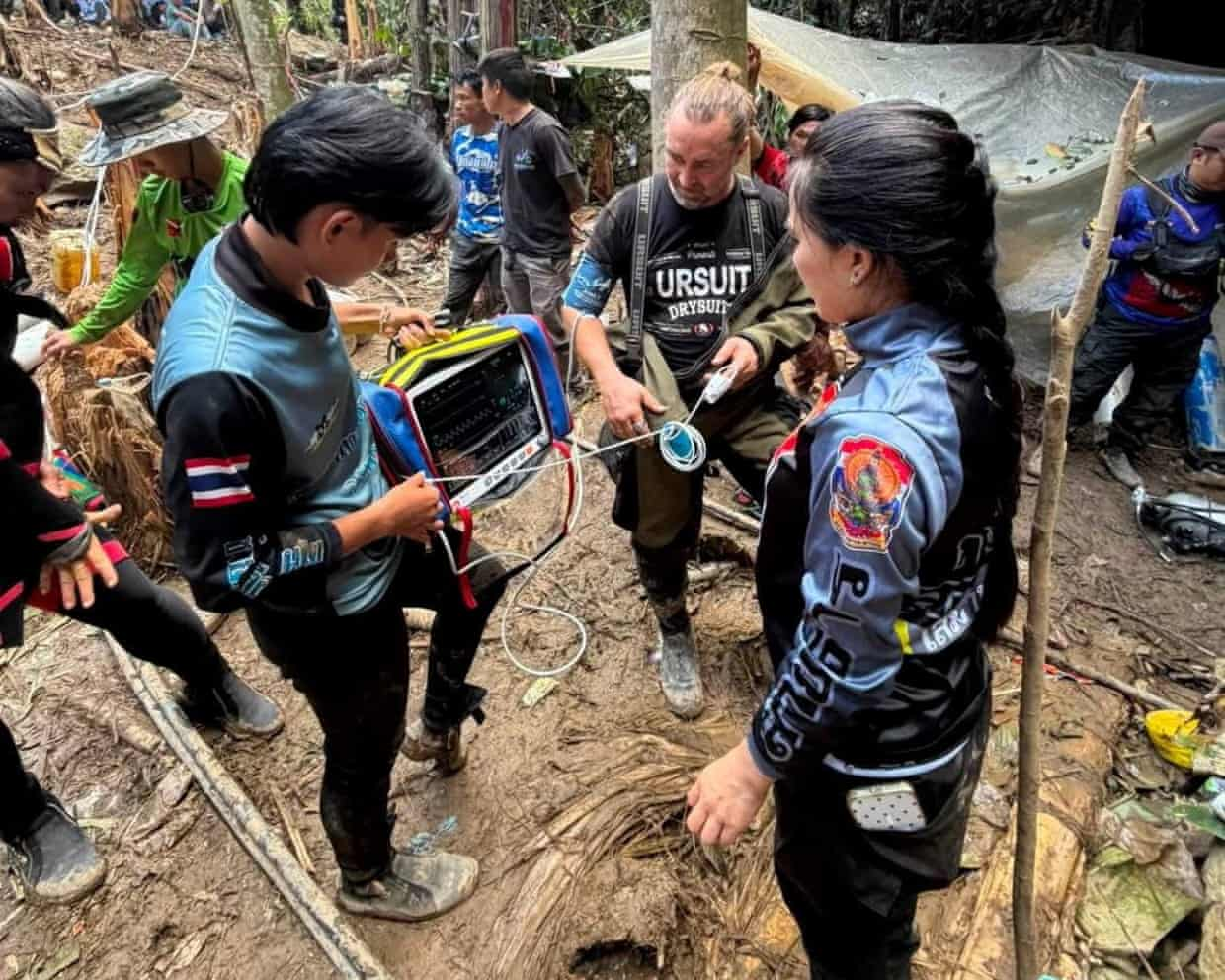 |
Rescue forces outside the cave entrance. Photo: Facebook/MTK |
Paasi explained that the trapped group was located approximately 300 m from the exit. To reach them, the rescue team had to crawl hundreds of meters and navigate long, dark, flooded sections inside the cave. Some tunnel passages were only 60 cm wide.
"The terrain here is remote and challenging, starting with a 4 km trek through the forest to reach the site. Once inside, you have to grope through hundreds of meters of narrow, flood-filled tunnels, facing collapse risks and high danger from contaminated air", Paasi detailed.
Video footage of the rescue team locating the trapped individuals shows them traversing dark, narrow passages, some almost submerged in muddy, murky water.
Grant Pearce, country director of the Australian Cave Diving Association, described the search process as "visiting a friend’s house you’ve never been to, with no lights, having to grope your way through rooms so you don’t trip".
Cave divers are trained to navigate "sumps", which are flooded passages, and to handle situations in constricted tunnels with limited visibility. They use specialized equipment like powerful flashlights, but these can be ineffective in muddy environments, meaning "divers must work in zero visibility conditions", Pearce stated.
This is why divers establish a fixed line from the surface along the length of the cave. This line ensures that even in zero visibility, they can exit the cave and know their location.
Cave divers typically adhere to the "rule of thirds" to ensure sufficient oxygen: one-third for entry, one-third for exit, and the final one-third reserved for others.
Despite finding the five trapped individuals, how to bring them out remains a significant challenge.
"The work is not over. The next step is to figure out how to move the five people out of the cave. This is not easy", wrote Kengkard Bongkawong, head of operations for Metta Tham Rescue, a Thai rescue group, on social media.
They are considering two options: pumping water out of the cave or undertaking a risky underwater dive. Pumping water is the safest solution, and the rescue team has been doing it continuously for days, but the water level has not receded. It is likely that groundwater from the mountain, continuously flowing after heavy rain, complicates this option.
If the water-pumping option fails, divers may have no choice but to guide the survivors through flooded cave sections, despite the survivors not being professional divers.
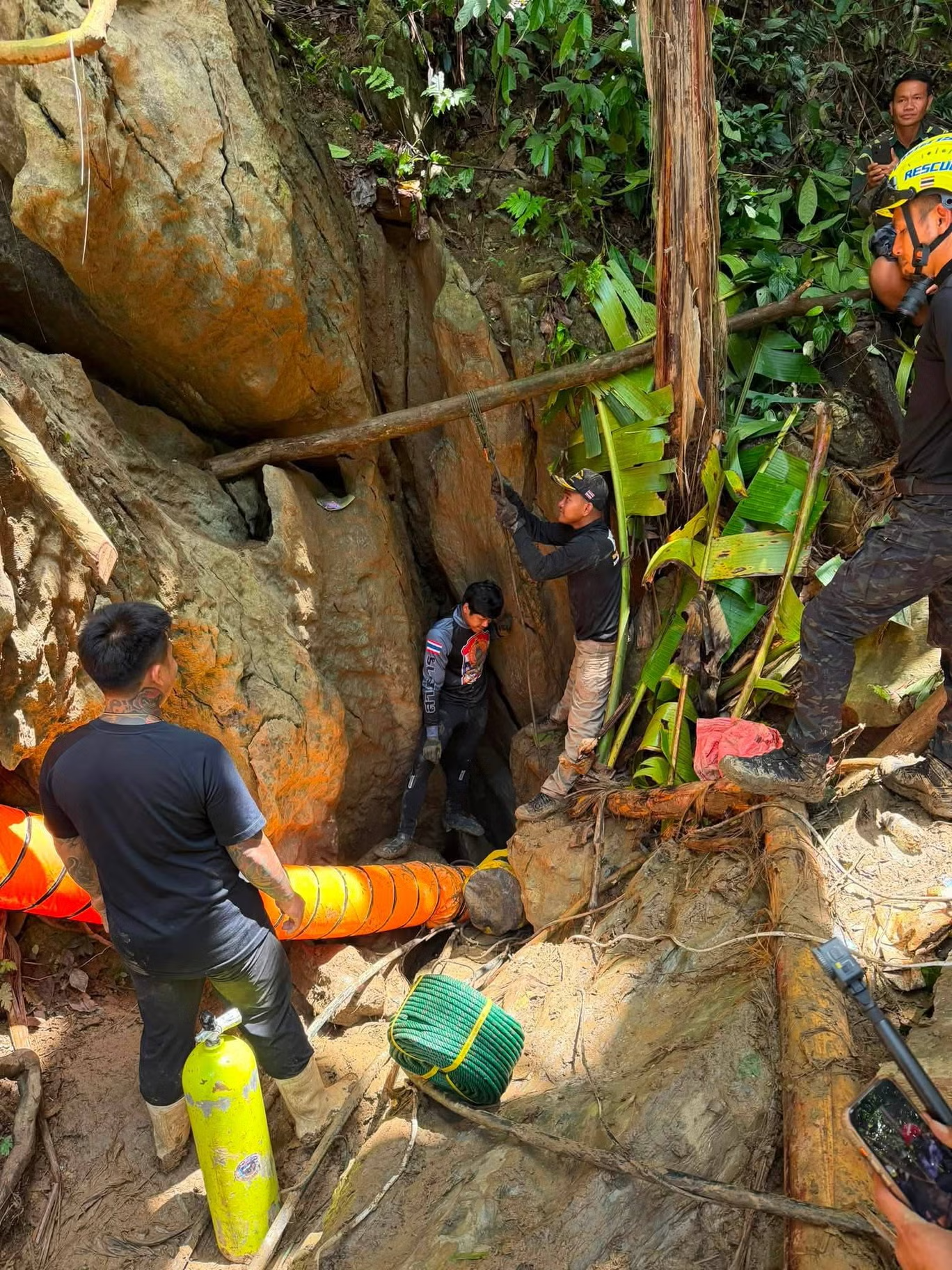 |
Rescue forces laying pipes to pump water from the cave. Photo: Facebook/MTK |
In an emergency, cave divers cannot directly surface. Trapped individuals without the skills and experience of cave divers would need to be securely attached to a rescuer. The health status of those being rescued also adds to the complexity of the extraction. The risk could increase if they panic, making it difficult for both the rescuers and themselves, Pearce noted.
Kengkard, who assisted in the 2018 rescue of a Thai youth football team, is among the international divers present in Laos to help.
"We need to use as many oxygen tanks as possible and want to set up an oxygen refill station at the cave entrance", Kengkard posted online, appealing for donations of at least 30 oxygen tanks.
During the 2018 rescue, the trapped youth football players were sedated, fitted with full-face diving masks, and tethered to divers for extraction. According to Pearce, each rescue faces different conditions, so the success of the Thai operation "does not mean we will use the same method".
Hong Hanh (According to Guardian, AP, ThaiPBS)