The China Coast Guard announced today that it has deployed a patrol fleet within the waters surrounding the Senkaku/Diaoyu islands. The agency stated, "This is a legitimate operation aimed at protecting China's rights and interests."
Japanese officials have not yet commented on the information.
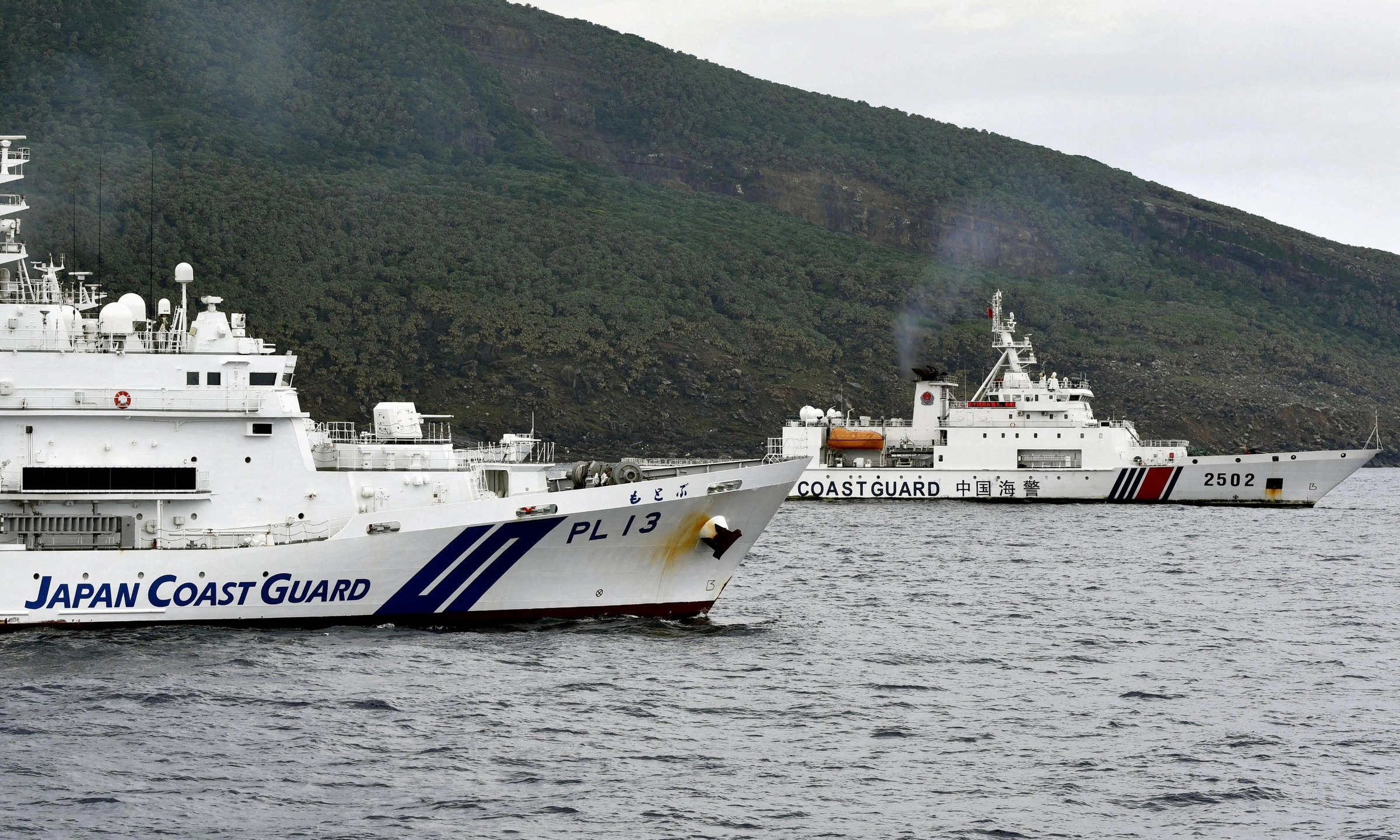 |
A Japanese Coast Guard vessel (left) and a China Coast Guard ship in the Senkaku/Diaoyu area in April 2024. Reuters.
The Senkaku/Diaoyu islands are an uninhabited group located about 1,900 km from Tokyo and 600 km from Shanghai, currently under Japanese control. Beijing claims sovereignty over these islands since the 1970s. Following Japan's nationalization of the Senkaku/Diaoyu islands in 2012, Chinese vessels have approached the island group more frequently.
Tensions between the two countries over the islands' sovereignty have persisted for years, with Japanese Coast Guard vessels frequently encountering China Coast Guard ships and Chinese fishing boats in the area.
This development comes amid heightened bilateral tensions following remarks by Japanese Prime Minister Sanae Takaichi on November 7. At that time, Takaichi warned that Japan might take military action if Taiwan were attacked.
China reacted strongly to her statement, summoning Japan's ambassador for the first time in over two years. China's Ministry of National Defense also declared that any military intervention from Japan would fail.
On November 14, China advised its citizens against traveling to Japan. Three Chinese airlines subsequently announced free ticket refunds or flight changes for passengers traveling to Japan. Tokyo then urged Beijing to "take appropriate measures," but did not provide further details.
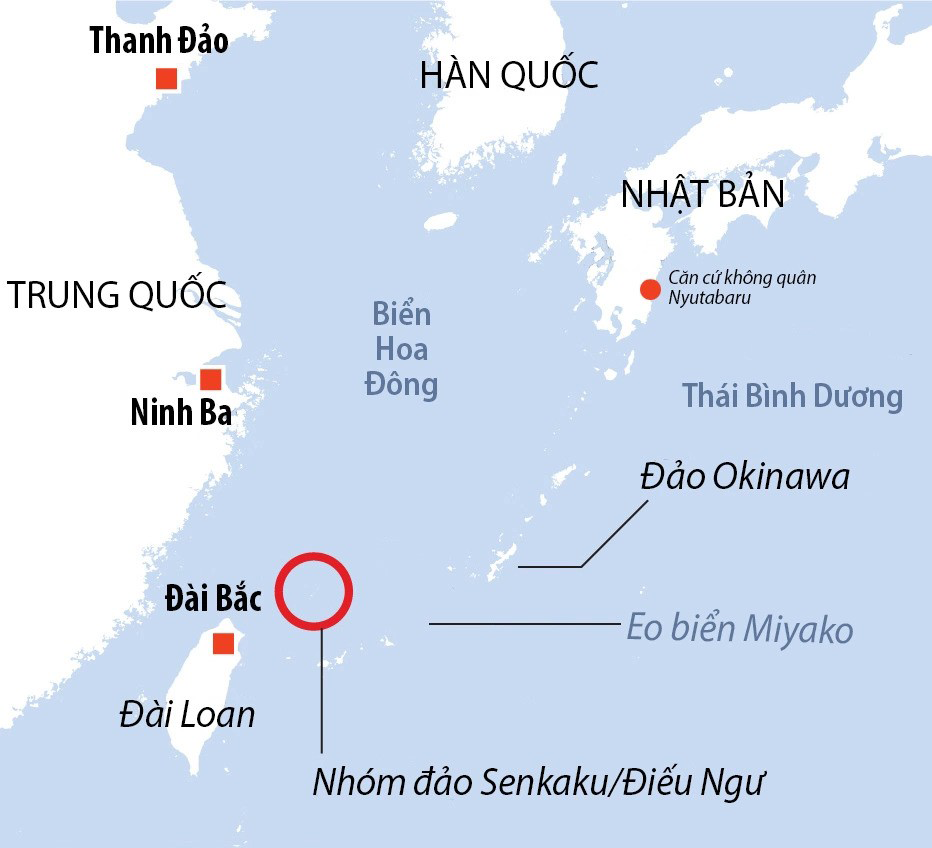 |
Location of Senkaku/Diaoyu and Taiwan islands. AFP.
China views Taiwan as an inseparable part of its territory and is prepared to use all means to unify the island. Chinese leaders have also repeatedly affirmed that they do not rule out the use of force to reclaim the island, although their general policy remains dialogue and peaceful unification.
Japanese leaders have traditionally avoided publicly mentioning Taiwan when discussing military scenarios in the region. This is considered Japan's policy of "strategic ambiguity," which its ally, the US, also supports.
Pham Giang (According to Xinhua, Reuters)