Chinese Foreign Ministry spokesperson Mao Ning said at a press conference in Beijing on 1/4 that China and Pakistan are actively mediating to end the conflict in the Middle East, creating an opportunity for negotiations between the US and Iran as the conflict enters its fifth week.
Previously, Chinese Foreign Minister Wang Yi and his Pakistani counterpart Ishaq Dar met in Beijing to announce a five-point peace proposal for the Middle East. The plan includes an immediate cessation of hostilities, the earliest possible start to peace talks, ensuring the security of non-military targets, security for maritime routes, and prioritizing the United Nations (UN) Charter.
Mao stated that tensions in the Middle East "do not serve the interests of any party," and urged countries to welcome the China-Pakistan mediation efforts. "The top priority is to begin peace negotiations as soon as possible," she added.
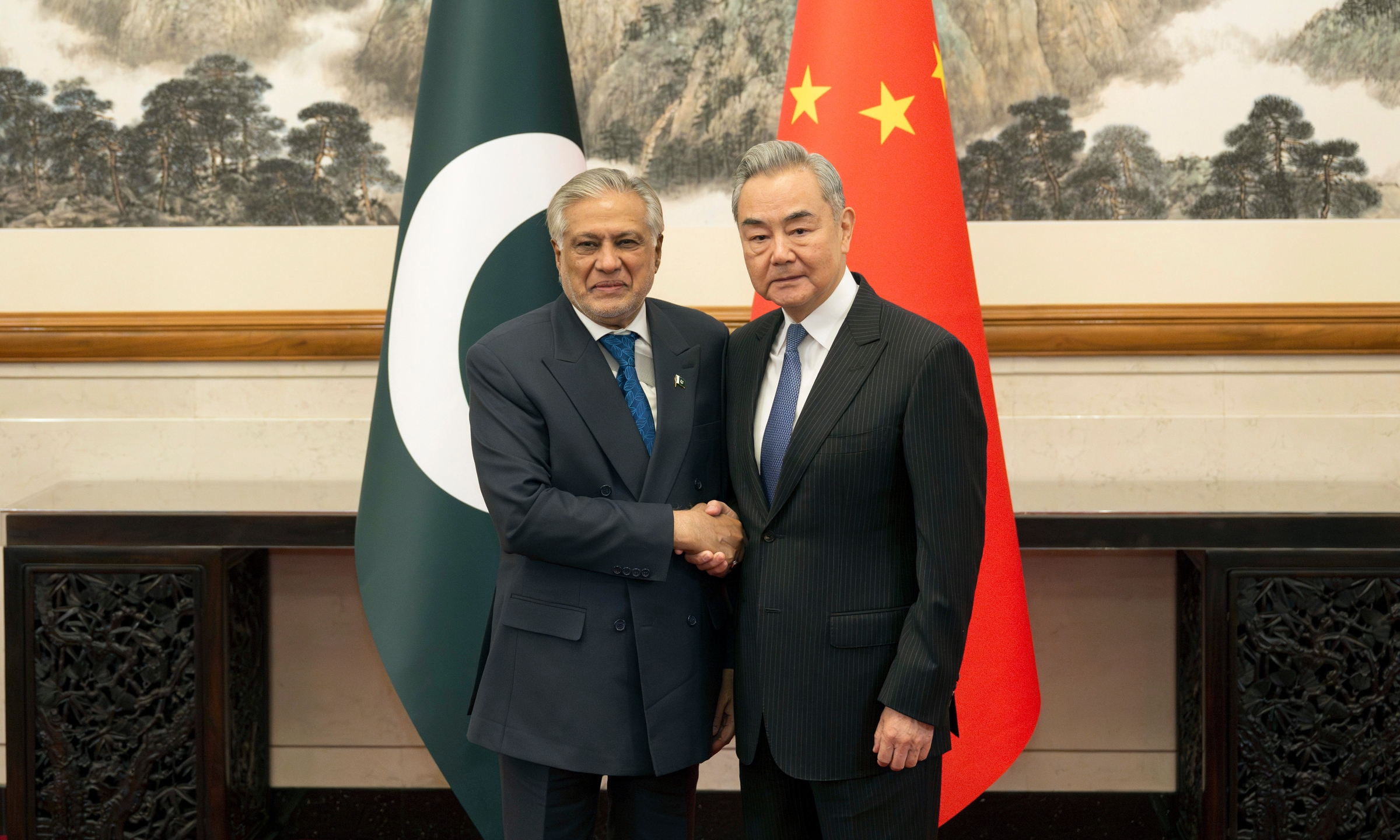 |
Chinese Foreign Minister Wang Yi (right) and his Pakistani counterpart Ishaq Dar in Beijing on 31/3. Photo: *AP*. |
In their five-point proposal, Beijing and Islamabad called for "allowing safe passage for civilian and commercial vessels, as well as restoring normal traffic through the Strait of Hormuz as soon as possible."
This joint initiative comes as Pakistan mediates indirect talks between the US and Iran to end the conflict. However, it does not specify concrete measures for both sides to engage in ceasefire negotiations.
The US has not yet commented on the China-Pakistan proposal. Meanwhile, Iran stated it has not had any direct negotiations with the US, though some messages were exchanged between Iranian Foreign Minister Abbas Araghchi and US special envoy Steve Witkoff.
Following attacks by the US and Israel on 28/2, Iran launched retaliatory operations targeting military sites and energy infrastructure in the Middle East with missiles and drones.
Tehran also imposed a near-total blockade of the Strait of Hormuz, a waterway through which approximately 20% of the world's crude oil passes. Iran stated that "non-hostile vessels" could traverse the strait if they coordinated with Tehran and adhered to published security regulations.
Iran permitted some vessels from Malaysia, China, Egypt, South Korea, and India to pass through the Strait of Hormuz. It also published a list of "friendly nations" that could use the Strait of Hormuz for unimpeded commercial activity: India, Pakistan, Iraq, China, and Russia.
The conflict has so far resulted in over 3,000 deaths across the Middle East, primarily in Iran and Lebanon.
Ngoc Anh (According to *AA*, *Reuters*, *AFP*)