Ellen Robillard, a Democrat in New York state, first considered applying for Canadian citizenship after the 2016 election. Her mother was Canadian, born in Nova Scotia.
However, Robillard, 52, put the idea aside when she realized her son did not qualify under the regulations at the time. These rules did not allow Canadian citizens born abroad to pass on their citizenship to their children if the children were also born outside Canada.
In 2023, a Canadian court declared this regulation unconstitutional, and changes to citizenship requirements are set to take effect in late 2025. This unexpected development has opened a path to Canadian citizenship for many Americans, including Robillard and her son, who are now processing their applications.
 |
Ellen Robillard, right, photographed with her partner during a visit to her maternal hometown in 2025. *Photo: CNN*
The surge in interest is evident through immigration consultant Cassandra Fultz in Ottawa. She reports a tenfold increase in her American clientele, from an average of 10 applications to 100 applications per month since the new law was passed. This sustained interest marks a significant departure from previous patterns, which typically saw a temporary spike after US elections.
"The level of interest in moving to Canada has increased steadily since november 2024, which is unprecedented," Fultz said. "In 17 years in this profession, I have never seen this. Usually, people eventually calm down. But now it is almost the midterms, and interest is still very high, even after two years."
Similar trends are observed at the Quebec National Archives and Library. In february 2025, the institution received 100 requests from the United States for marriage, death, and baptism certificates to prove lineage for citizenship applications. By february this year, that number had soared to 1,500.
For many, this pursuit of Canadian citizenship stems from a desire for stability amid growing political polarization in the United States. Robillard, who heads a local Democratic committee in a Rochester suburb, has experienced online threats and was once followed home after a protest. She fears becoming a target if political violence escalates.
The political disputes have led to exhaustion, depression, and insomnia for Robillard, straining relationships with friends and family, and eroding her faith in daily life. "I truly do not recognize my world anymore," Robillard said. "Last year, I visited my maternal hometown in Nova Scotia, and it was like becoming a different person. Everything was much less stressful. Everyone was more pleasant, many positive interactions. This alone made me feel whole."
The amended Canadian law will allow Robillard to pass citizenship to her 19-year-old son after she obtains it. In the current US political climate, they are gathering the necessary documents, describing it as a "contingency plan." Robillard added, "If things here start to get bad, especially economically, I know I can get in the car and leave. At least that is still an option."
 |
The border area between Seattle, Washington, US and Surrey, British Columbia, Canada. *Photo: Reuters*
Rachel Rabb, 34, is another American exploring this option. She had already left the United States for Mexico in 2018, but former President Trump's recent anti-gang campaign in Mexico rekindled her fears. Upon learning about Canada's citizenship law changes, Rabb researched her ancestry and discovered a great-grandparent born in Ontario, Canada. "In the current political climate, discovering I have Canadian ancestors is like a godsend," Rabb said.
Immigration expert Fultz notes that many Americans, like Rabb and Robillard, are filing applications not with the intent of moving to Canada immediately, but to secure citizenship documents "just in case."
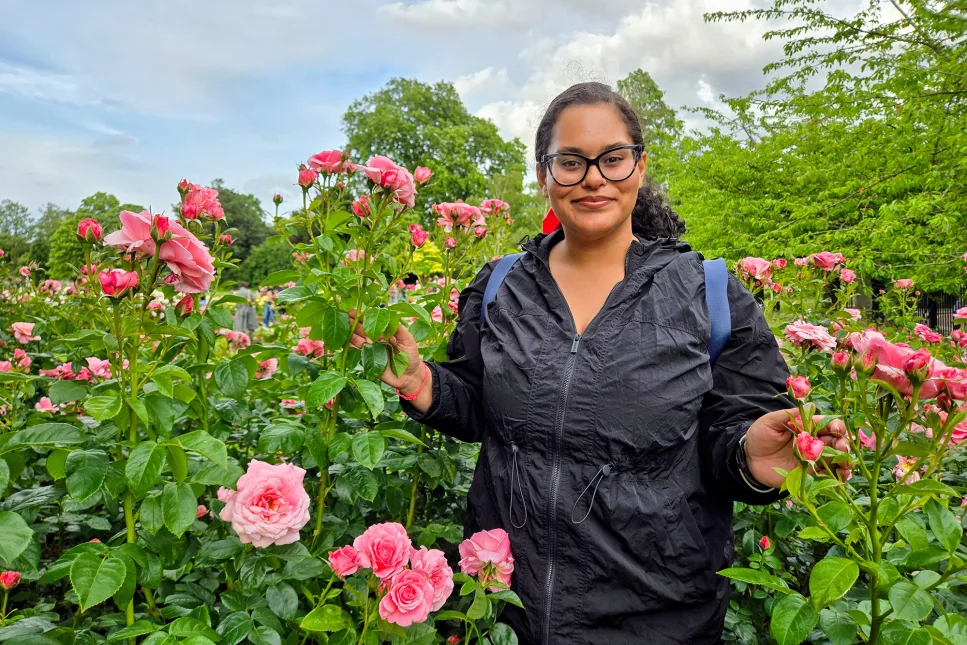 |
Rachel Rabb in Mexico. *Photo: CNN*
Not all applications are politically motivated. Other common reasons for seeking Canadian citizenship include family reunification, work, study abroad, or simply a desire to reconnect with one's roots. Timothy Beaulieu, 45, living in New Hampshire, only learned about his family's French-Canadian heritage, dating back to his great-grandparents, from his American grandfather when he was 20. "It felt like a new world opened up," Beaulieu said. He emphasized, "Even if the person in the White House were the best president ever, I would still enthusiastically apply."
However, not everyone in Canada welcomes the eased citizenship requirements. On online forums, some Canadians express frustration that the change appears to favor Americans with minimal ties or contributions to the country, while immigrant families who work and pay taxes face lengthy and complex citizenship processes. Others are annoyed by the perception that Americans view Canada as a "plan B."
Fultz defended the policy, stating that the Canadian government amended the law because the court determined the old regulation was "unconstitutional and discriminatory." She highlighted that her American clients include "the best and brightest," such as doctors and lawyers from prestigious schools. "This is good for Canada, and good for Canadians. After all, they are truly our relatives. I do not see any problem here," Fultz commented.
Duc Trung (According to CNN, Globe and Mail, Toronto Star)