On 29/1, China carried out the execution of 11 individuals linked to online fraud activities. This action came nearly four months after a Wenzhou city court sentenced them to death for crimes including intentional homicide, intentional injury, illegal detention, fraud, and organizing gambling. Other executions in China typically occur one to two years after sentencing.
Xinhua news agency reported that the death sentences were approved by the Supreme People's Court in Beijing, which concluded that the evidence presented for crimes committed by these individuals since 2015 was "convincing and sufficient".
Among those executed were "key members" of the notorious Ming criminal family. They were accused of causing the deaths of 14 Chinese citizens and injuring many others while operating a scamming den in Myanmar.
The Ming family was one of the "four great families" involved in criminal scamming in northern Myanmar, alongside the Bai, Liu, and Wei families. These organized crime groups are accused of running hundreds of online scam centers, prostitution rings, and drug production facilities in border areas between Myanmar and China.
Ming Xuechang, the head of the Ming family, previously served as a committee member of the Kokang Self-Administered Zone's leadership and was a former local military official.
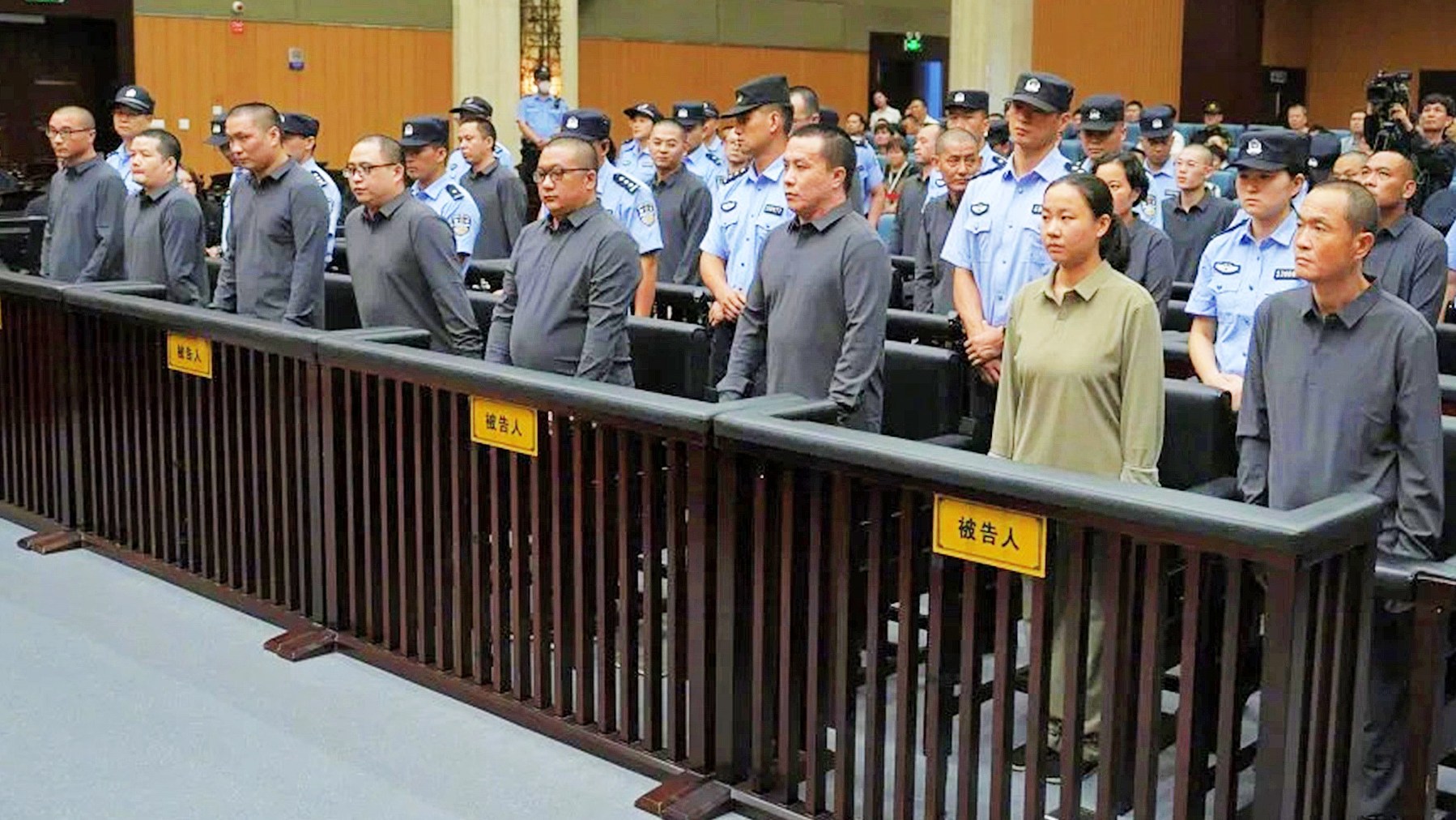 |
A court session sentenced members of the Ming family in Wenzhou, Zhejiang province in 9/2025. Photo: The Times
The Ming family was long associated with the infamous Wo Hup Shan Zhuang complex in Laukkaing town, the capital of Kokang, an autonomous region on the Myanmar-China border. At its peak, the family employed up to 10,000 laborers in scamming and other criminal activities at the complex, according to CCTV.
Wo Hup Shan Zhuang was considered a "hell on earth" in Laukkaing. Tens of thousands of laborers, primarily Chinese citizens, were lured there with promises of "easy work and high pay", only to be detained and forced into online fraud operations.
Following numerous complaints from relatives of the entrapped laborers and growing international media attention, China launched a crackdown campaign against scam complexes in Myanmar in 2023.
The downfall of Wo Hup Shan Zhuang and the Ming family began with a violent incident on 20/10/2023. Myanmar's Irrawady newspaper reported that during a transfer of laborers at the scam den, the Ming family's guards opened fire on a crowd, resulting in dozens of deaths. This information sparked outrage in Chinese public opinion at the time.
That november, the Ministry of Public Security of China issued special arrest warrants for Ming Xuechang and other Ming family members on charges of fraud, murder, and human trafficking. Beijing also offered rewards of 14,000-70,000 USD for the capture of these scamming family members.
Family patriarch Ming Xuechang committed suicide after being apprehended during the crackdown, Chinese state media reported. His son, Ming Guoping, who commanded the Kokang border guard force, and granddaughter Ming Zhenzhen were among those executed this week.
Chinese authorities stated that the Ming family also colluded with the leader of another organization, Wu Hongming. Wu Hongming intentionally killed, injured, and illegally detained compatriots, leading to the deaths of 14 Chinese citizens. Wu Hongming was also executed in the case.
When asked about the executions on 29/1, a spokesperson for the Ministry of Foreign Affairs of China stated that Beijing would continue to intensify efforts to "eradicate the scourges of gambling and fraud".
"By executing the leaders of the Ming family, Beijing sends a clear message to gangs operating in Southeast Asia: China will hunt down, extradite, and severely punish those running fraud networks", commented Stephen N. R., deputy editor-in-chief of Gulf News.
According to the United States Institute of Peace, scam gangs in Southeast Asia defraud victims of over 43 billion USD annually. In 4/2025, the United Nations Office on Drugs and Crime warned that the online scam industry is spreading globally, including South America, Africa, the Middle East, Europe, and some Pacific islands.
The United Nations estimates that hundreds of thousands of people work in scam centers worldwide. In Myanmar, scam complexes are shielded by corruption and lawlessness in border regions.
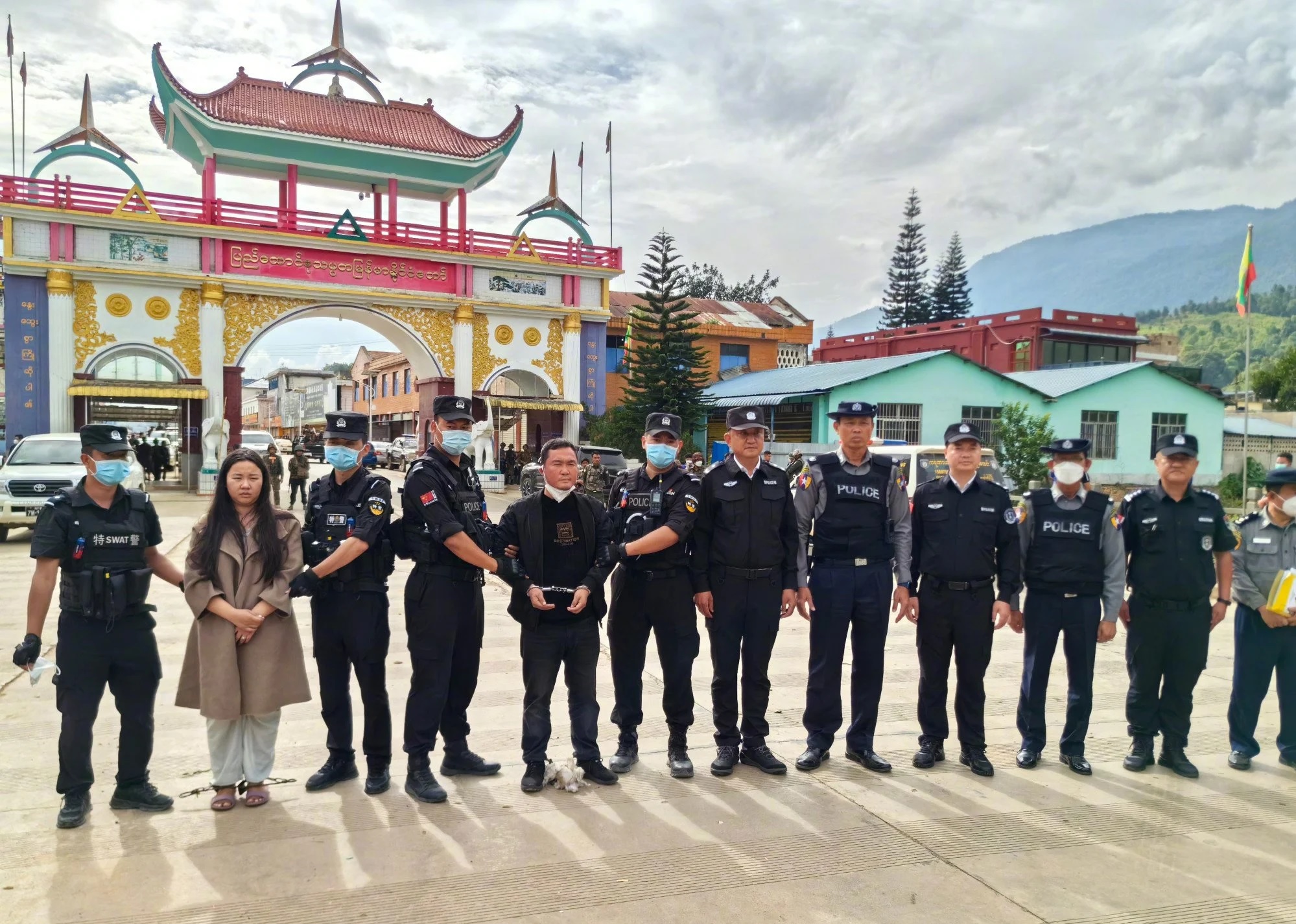 |
Online scam suspect handed over to Chinese police in Myanmar in 11/2023. Photo: BCA China
China views scam gangs as a national security threat, according to Stephen. Beijing has also increased pressure on regional governments to dismantle these networks.
Thailand and Cambodia recently cooperated to extradite hai Chinese businessmen accused of running scam empires: Xiong Zhijiang and Chen Zhi. Beijing has also repatriated tens of thousands of Chinese citizens who worked in scam complexes for trial.
However, experts warn that despite strong crackdowns, the online scam industry is unlikely to be eradicated.
"Many scam gangs have relocated to areas with weaker law enforcement capabilities to continue their operations", Stephen noted.
Thanh Tam (According to BBC, CNN, China Daily, Gulf News)