Iran confirmed on 17/3 that National Security Council Secretary Ali Larijani, 67, had died, following Israel's claim of killing him in an airstrike the previous night.
"This is a severe blow to Iran, potentially having even greater consequences than Supreme Leader Ali Khamenei being killed earlier in the conflict," commented Patrick Wintour, foreign affairs editor at The Guardian.
Since the conflict began, Larijani had been a primary target within Iran's leadership, according to Wintour. His influence spanned various political levels in Iran, and he held significant personal sway not only domestically but also with external powers like Russia and China.
Within Iran, Larijani, as the nation's top security official, had long served as a strong government spokesperson. He possessed extensive political experience and came from a noble and religiously influential family.
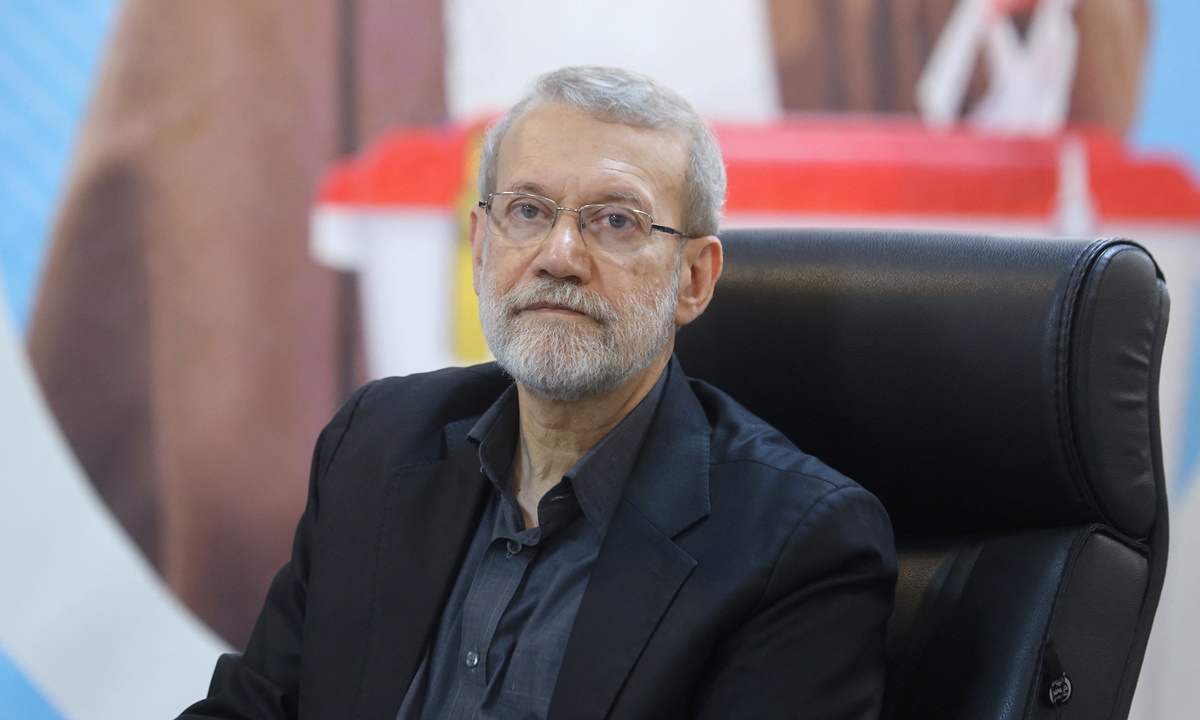 |
Ali Larijani in Tehran, Iran, in 2024. Photo: Reuters
Larijani was born into a prominent clerical family. His family left Iran in the 1930s amid escalating tensions between the clergy and the Pahlavi dynasty, returning in the 1960s.
He served in the Islamic Revolutionary Guard Corps (IRGC) during the Iran-Iraq war in the 1980s, subsequently rising to senior positions, including liaison between the IRGC and parliament.
In the late 1980s and 1990s, Larijani held the position of Minister of Culture and Islamic Guidance. He then became head of national television, reporting directly to the Supreme Leader. He also served as Parliament Speaker from 2008 to 2020.
Larijani was viewed as a moderate conservative politician, capable of garnering support from reformist factions. Crucially, he was a close confidant of Supreme Leader Ali Khamenei and was often entrusted with resolving the nation's most significant challenges.
Throughout his career, Larijani built an extensive network within the power structure, encompassing the military, the clergy, parliament, and the Supreme Leader's office. He commanded enough respect to connect with all factions, from hawkish to moderate.
His influence expanded in recent months. In January, Supreme Leader Ali Khamenei appointed Larijani to make decisions on urgent national matters, primarily addressing anti-government protests and managing internal disagreements.
Larijani directly oversaw efforts to counter the protest movement that erupted in Iran earlier this year. According to senior officials and members of the Iranian guard force, before the conflict began, Supreme Leader Ali Khamenei had included Larijani in a small group of key officials. This group was tasked with drafting a plan to ensure the survival of the Islamic Republic should the Supreme Leader be killed.
Among Iran's leadership, which includes many hardline figures, he was considered pragmatic, able to reconcile internal factions and handle complex foreign challenges.
On the international stage, he was instrumental in coordinating Iran's relations with Russia and China, its two largest allies. He directly led nuclear negotiations with the US and served as an envoy to important regional countries such as Oman and Qatar.
From 2005 to 2007, he served as Iran's chief nuclear negotiator with world powers. Although later replaced by a hardline figure, he played a key role in facilitating the signing of the Joint Comprehensive Plan of Action (JCPOA) nuclear deal with the US President Barack Obama administration and other world powers in 2015.
In 2021, he chaired negotiations for a comprehensive strategic agreement with China, under which China agreed to invest USD 400 billion in Iran over 25 years in exchange for a stable supply of cheap oil. This agreement was a vital lifeline for the country's economy, which had been constrained by severe sanctions from the US and Europe.
He also served as the government's public face. Larijani frequently gave interviews to domestic and international media and was active on social media. He posted messages condemning Iran's adversaries, shared images of himself hosting foreign officials, and intimate photos with citizens.
Larijani's last public appearance was on 13/3 at a Quds Day rally in Tehran, an anti-Israel event organized by the government on the last day of Ramadan. This rally aimed to demonstrate public support for the government amidst ongoing attacks.
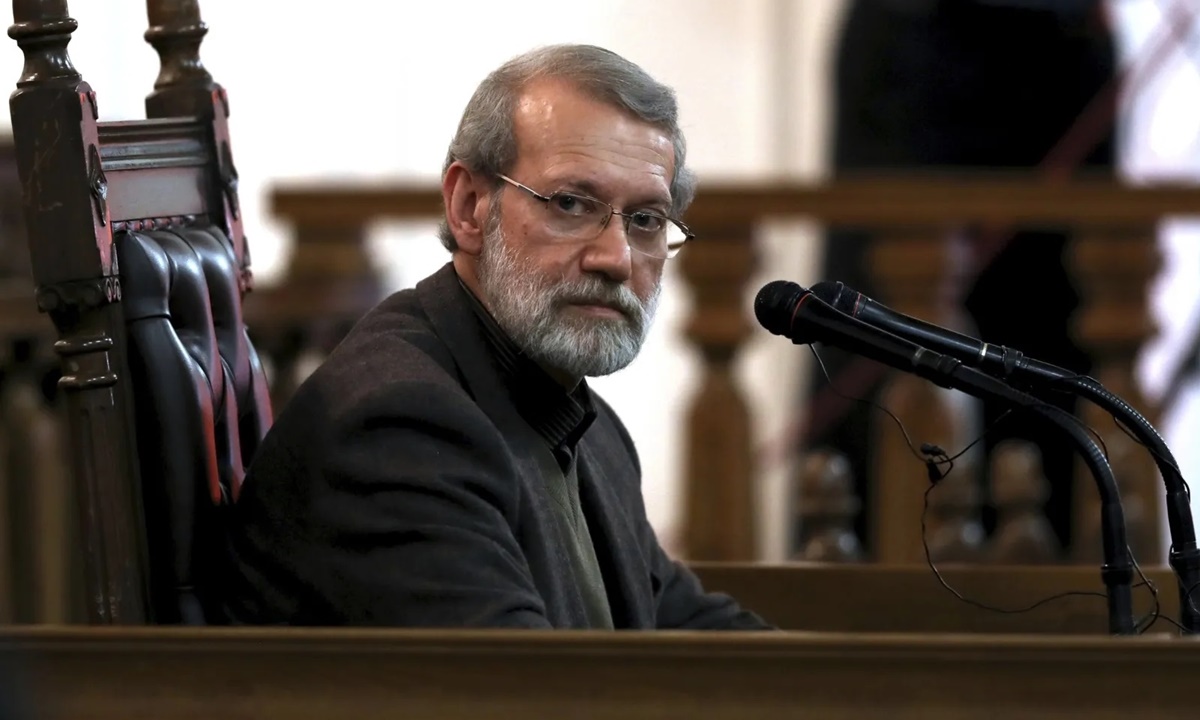 |
Larijani listens to a question at a press conference in Tehran in 2019. Photo: AP
Analysts suggest that Larijani's death could enable hardline military leaders in Iran to consolidate power, making the goal of regime change more difficult for the US and Israel, and further narrowing the window for negotiations between parties.
In discussions surrounding the succession of Supreme Leader Ali Khamenei, Larijani had urged the clergy, who are responsible for appointing the next Supreme Leader, to elect a moderate candidate capable of uniting the nation. However, Mojtaba Khamenei, the Supreme Leader's son, known for his more conservative and hardline views, was reportedly chosen as the successor.
US President Donald Trump had repeatedly expressed a desire to find a candidate in Iran who could play a role similar to Delcy Rodriguez, the Venezuelan Vice President appointed as interim leader to replace Nicolas Maduro, who was arrested by US special forces in a raid in early January.
US officials believed that President Trump's support for Rodriguez's rise to power helped Venezuela avoid political unrest and potential civil war.
In Iran, Larijani's political skills and influence were believed to help the nation's leaders build consensus once the conflict with the US and Israel concluded. However, his killing has ended US hopes of finding a transitional figure like Rodriguez in Iran, further limiting Washington's options.
"Larijani had the ability to open the door for a ceasefire and advance negotiations between Iran, the US, and Israel," stated Ellie Geranmayeh, an Iran expert at the European Council on Foreign Relations. "The airstrike that killed him has closed that door."