"The development of China's military strength contributes to increasing peacekeeping forces globally. It also serves to protect national sovereignty, security, and development interests, without targeting any specific nation," stated Chinese Ministry of Foreign Affairs spokesperson Lin Jian at a press conference in Beijing today.
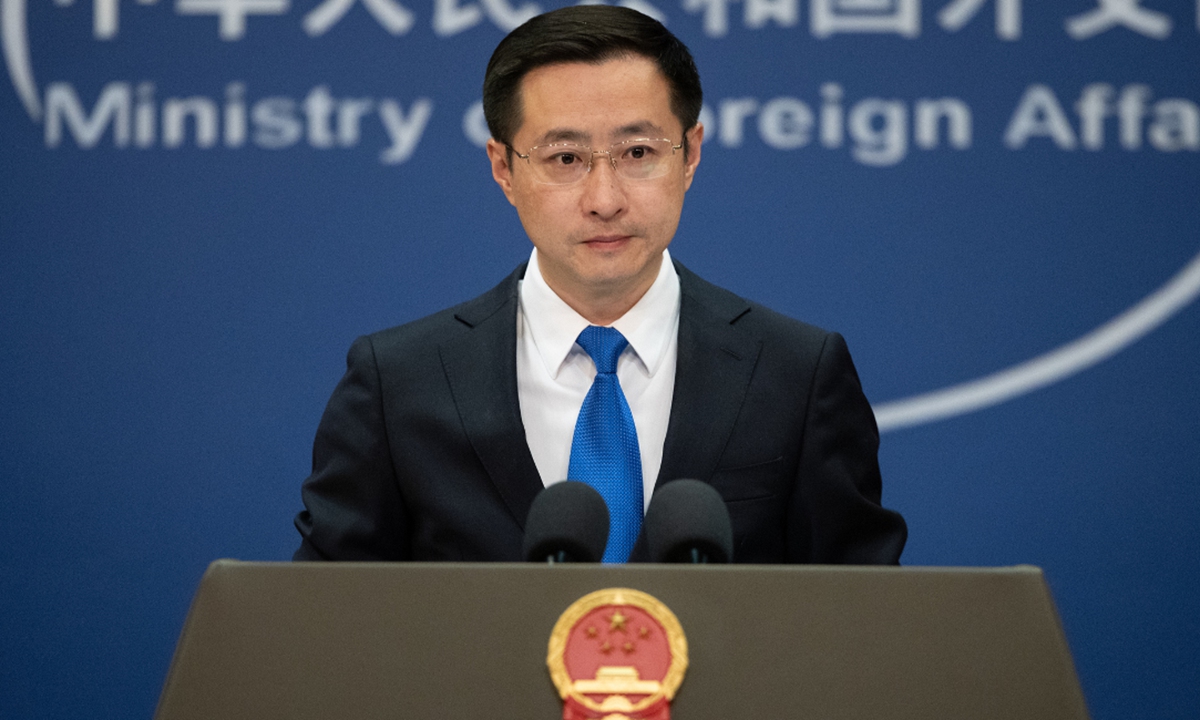 |
Chinese Ministry of Foreign Affairs spokesperson Lin Jian at a press conference in Beijing in March. Photo: Global Times. |
The statement followed a report published on 14/6 by the Lowy Institute, an Australian foreign policy research organization. The report indicated that China now possesses the capability to launch direct missile attacks on Australia, a risk escalating as Beijing expands its long-range arsenal, develops hypersonic missiles, and undertakes other related activities.
The institute noted that China's capacity to strike Australia is expected to grow over the next decade. This increase will occur as DF-27 medium-range ballistic missiles, and potentially conventional warhead intercontinental ballistic missiles, are deployed in greater numbers.
The Lowy Institute's report identified the primary threat to Australia as missiles launched from warships, submarines, and a new medium-range ballistic missile type. These are capable of reaching mainland Australia from Chinese territory. Information released by the US military in 12/2025 indicated the DF-27 missile has a range of 5,000-8,000 km.
However, the institute clarified that its assessment focused on China's military capabilities, not on drawing conclusions about the intent to use them.
In response to the report, Lin criticized it as a "grave strategic misjudgment," asserting that China remains committed to a "path of peaceful development."
The Chinese Ministry of Foreign Affairs spokesperson urged "relevant organizations" to cease "hyping up the so-called threat" from Beijing. He called for a more objective, fair, and rational view of China's development.
Three years ago, Australia adjusted its military strategy. This was in response to the rapid expansion of the Chinese navy and escalating tensions between Beijing and Washington. The revised strategy focused on deterring adversaries approaching from Australia's northern direction.
Huyen Le (According to AFP)