Colombian President Gustavo Petro announced on 16/3 that his country "was bombed from the Ecuadorian side" as the neighboring nation conducted an intensified anti-drug campaign with US support.
Ecuadorian President Daniel Noboa later rejected the accusation, affirming that his country's security forces operated entirely within their territory. He added that Ecuador is fighting drug terrorism in all forms, including air strike operations against hideouts used by several Colombian groups.
A day later, President Petro called Ecuador's explanation "unreliable," stating that Colombian officials had discovered 27 charred bodies near the border following the air strike.
"The attack was not carried out by Colombian forces, nor by illegal armed groups, because these groups do not possess fighter jets," the Colombian leader said. He added that officials found an unexploded bomb dropped from a plane "just 100 meters from a poor farmer's home."
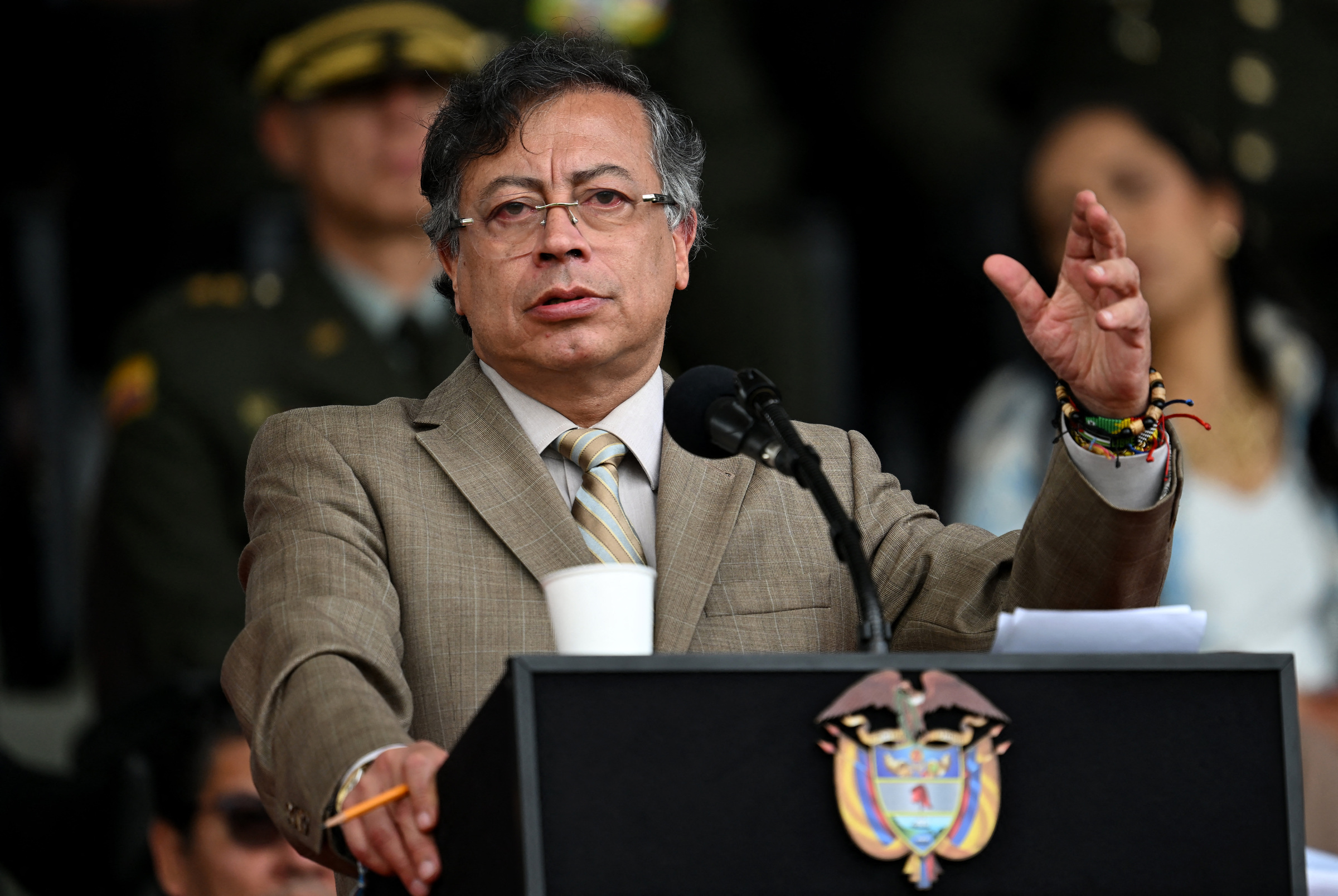 |
Colombian President Gustavo Petro speaks in Bogota on 13/11/2025. Photo: AFP |
The latest verbal exchange indicates that tensions between the two leaders have not subsided. Noboa, a close ally of US President Donald Trump, has repeatedly blamed Colombia for failing to prevent criminal gangs from operating along their shared border.
On 17/3, Noboa stated that Colombia had allowed criminal groups to "infiltrate Ecuador due to lax border control."
In January, the Ecuadorian president imposed a 30% "security tax" on imports from Colombia, arguing that Bogota had not taken sufficient action against cross-border drug trafficking. Colombia retaliated by imposing reciprocal tariffs and reducing electricity exports to Ecuador.
Ecuador is currently facing a rising wave of drug-related violence, as gangs clash for control of strategic Pacific ports, which have become key transit points for cocaine bound for the US. An estimated 70% of cocaine produced in Colombia and Peru now passes through Ecuador.
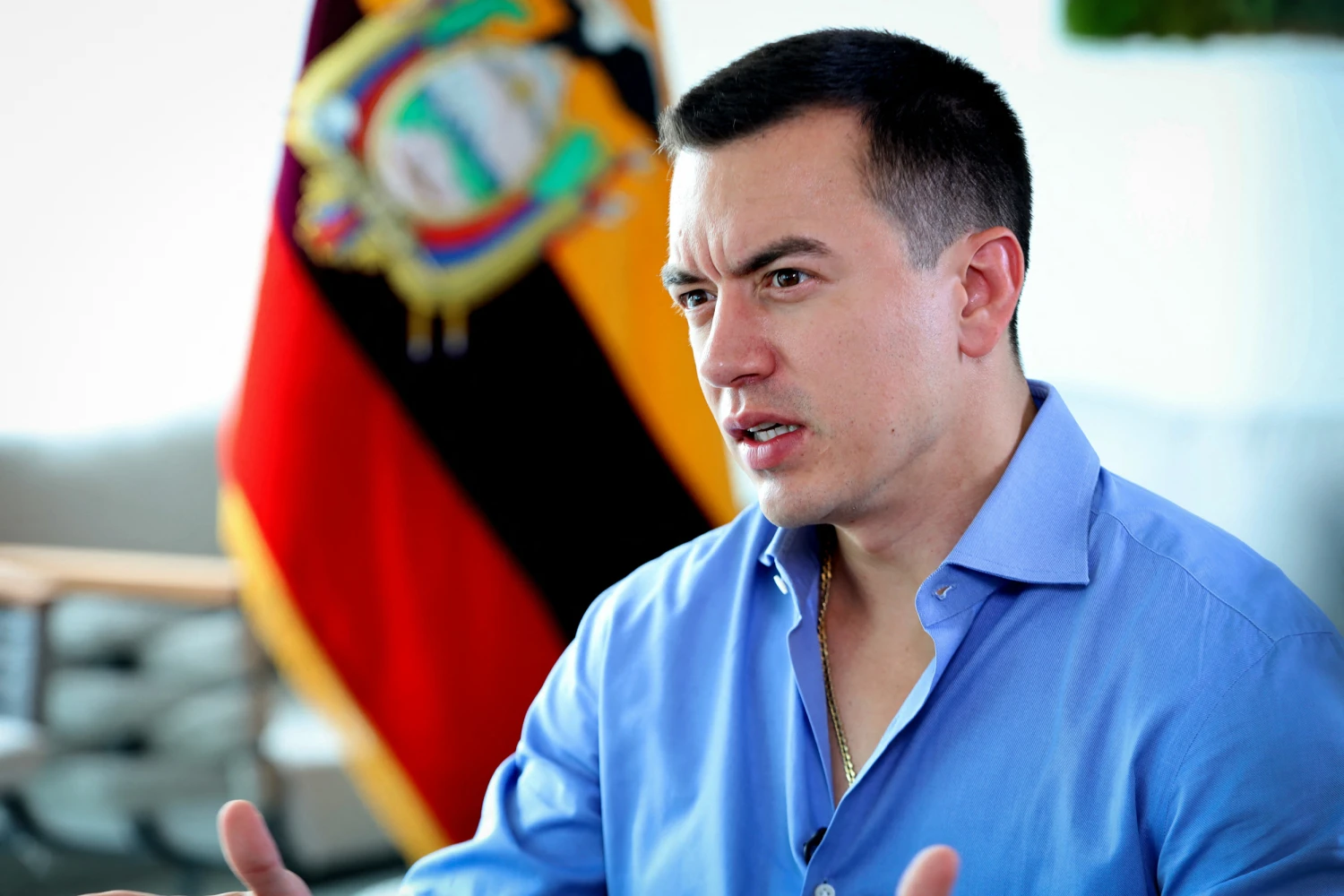 |
Ecuadorian President Daniel Noboa in a 2024 interview. Photo: AFP |
In 2024, Noboa declared Ecuador to be in a state of "internal armed conflict," significantly expanding the military's role to crack down on drug networks. However, the violence has not ended.
According to Ecuador's Interior Ministry, the country recorded its highest murder rate in decades last year, at approximately 50,9 cases per 100,000 inhabitants.
Earlier this month, US and Ecuadorian forces conducted coordinated operations within Ecuadorian territory. The country's military sank a "drug-carrying semi-submersible vessel" near the northern border. Last week, the two nations signed an agreement formalizing the opening of the first Federal Bureau of Investigation (FBI) office in Ecuador.
Over 75,000 police and soldiers have also been deployed across four provinces considered violence hotspots in Ecuador, where a nighttime curfew is in effect. "Stay indoors. We are at war," Interior Minister John Reimberg stated.
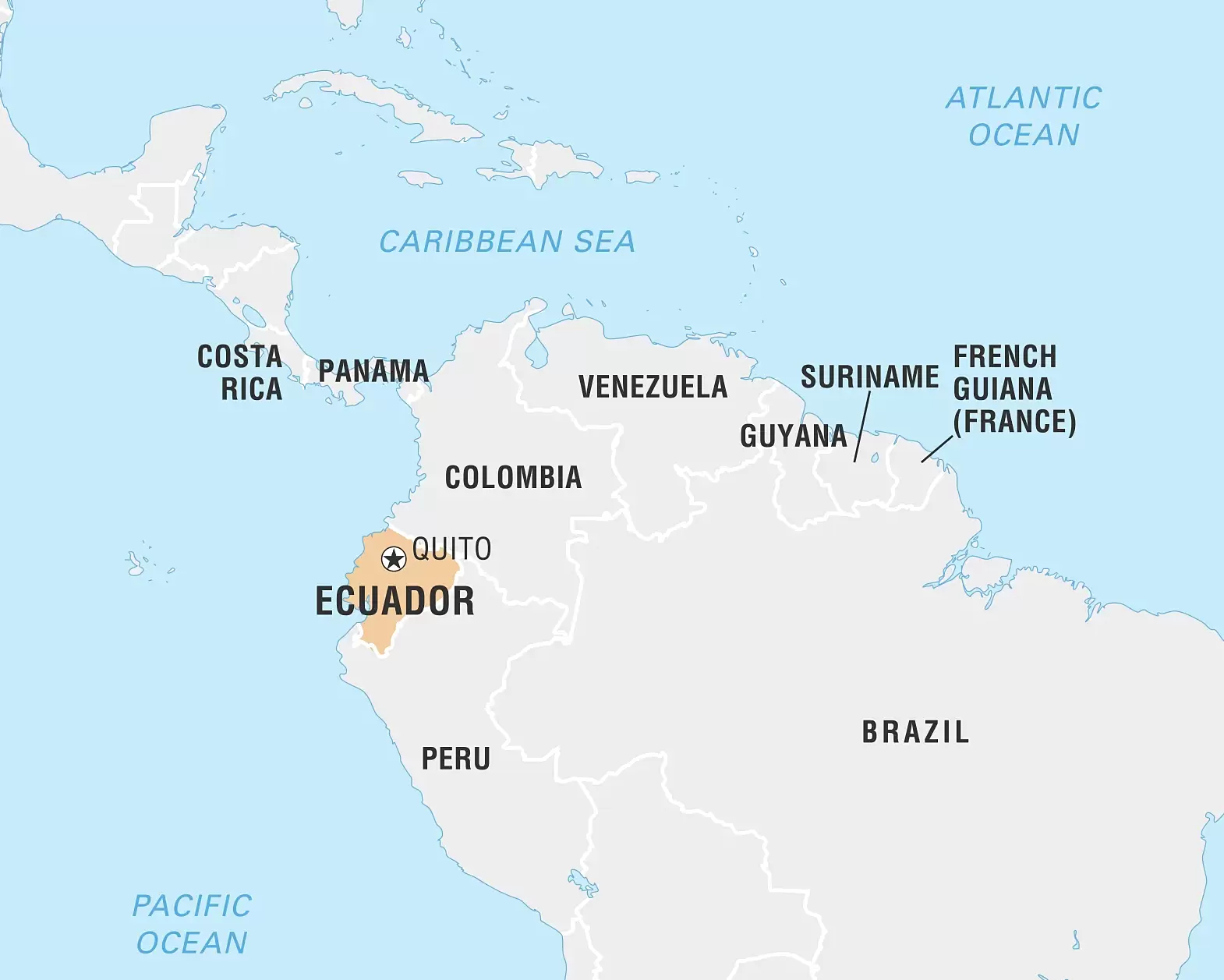 |
Location of Ecuador and Colombia in South America. Graphic: Britannica |