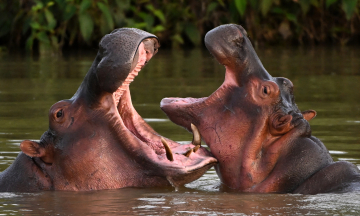
Colombian Environment Minister Irene Velez stated on 13/4 that previous measures to control the hippopotamus population in the country's central region, such as sterilization or relocation to zoos, proved costly and ineffective. She confirmed that about 80 hippos are slated for culling in this phase, though the start date remains undisclosed. "If we do not act, we will not be able to control this population. This is a necessary step to protect our ecosystem," Velez affirmed.
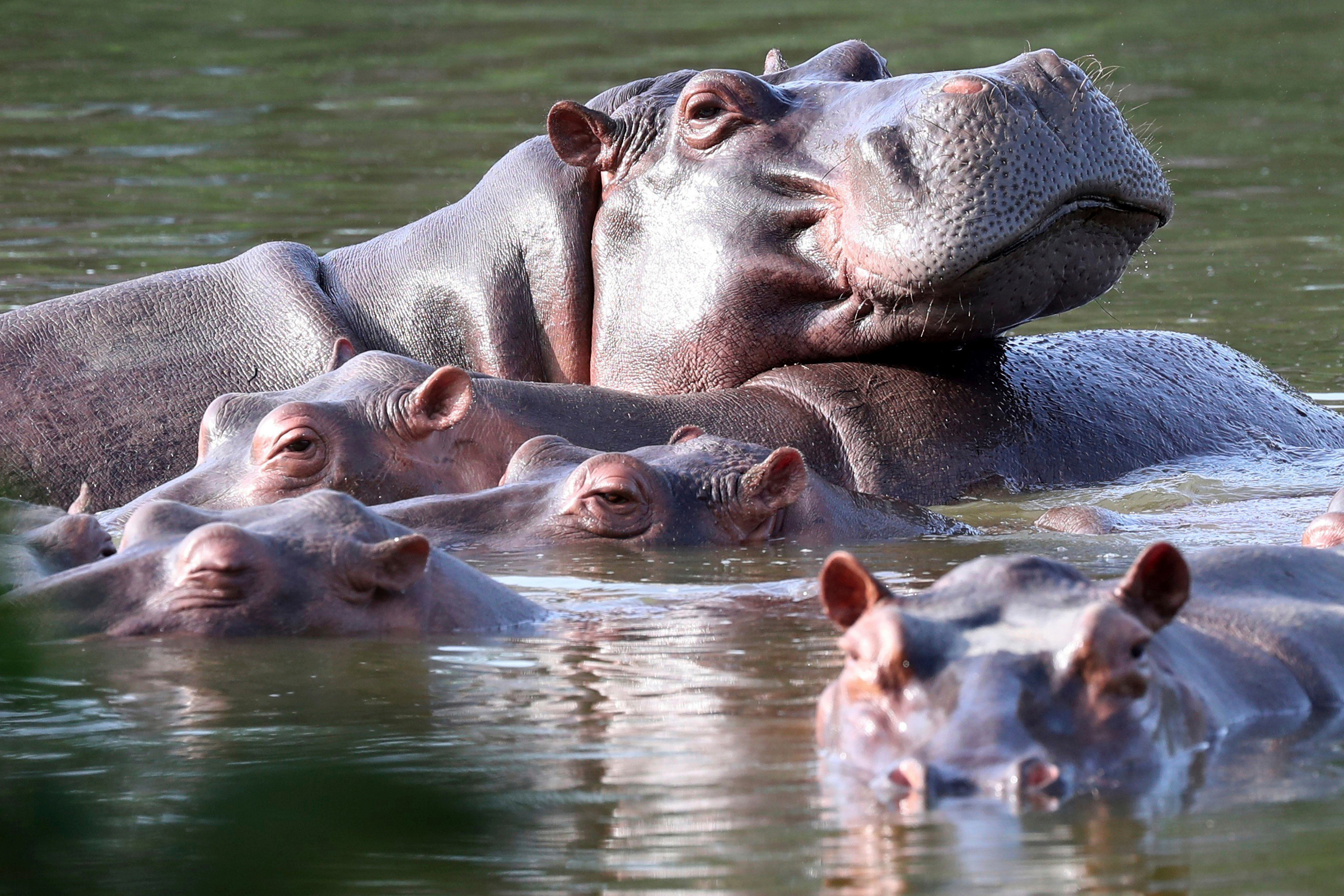 |
Hippos bathing in a pond at Hacienda Napoles Park, formerly drug lord Pablo Escobar's private residence in Puerto Triunfo, Colombia, 4/2/2021. AP |
Hippos bathing in a pond at Hacienda Napoles Park, formerly drug lord Pablo Escobar's private residence in Puerto Triunfo, Colombia, 4/2/2021. AP
Colombia stands as the only country outside Africa with a wild hippopotamus population. This herd descends from four hippos notorious drug lord Pablo Escobar imported in the 1980s to create a private zoo at his Hacienda Napoles ranch. Police killed Escobar in 1993.
A study from the National University of Colombia indicated that as of 2022, approximately 170 hippos roamed in the wild. Recently, they have been spotted in areas over 100 km from the former ranch.
Environmental officials warn that these mammals pose a danger to local residents and compete for food and habitat with native species like manatees. However, hippos have also become a "tourism goldmine," with locals organizing tours and selling related souvenirs.
The culling plan faces strong opposition from animal rights activists. Congresswoman Andrea Padilla criticized the decision as "cruel" and a lazy government solution. "Killing is not the solution. These healthy creatures are merely victims of regulatory negligence," she wrote.
 |
Hippopotamus keychains in a souvenir shop near Hacienda Napoles Park in Puerto Triunfo, Colombia, 11/2/2020. AP |
Hippopotamus keychains in a souvenir shop near Hacienda Napoles Park in Puerto Triunfo, Colombia, 11/2/2020. AP
Activists argue that using violence to solve the issue sets a bad precedent for a nation already grappling with decades of internal conflict.
Over 12 years and three presidential administrations, Colombia attempted to sterilize the hippopotamus herd, but high costs and the dangers of capture led to the plan's failure.
Additionally, experts deem it impossible to return them to their natural habitat in Africa, citing the herd's limited gene pool and the potential risk of introducing foreign pathogens harmful to native populations there.
Hong Hanh (AP)