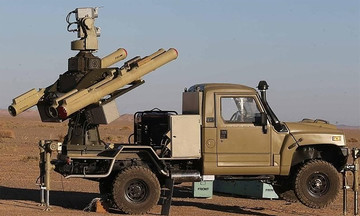
US channel ABC News on 19/3 released an analysis of satellite imagery and field documentation, revealing that at least 10 surveillance radar stations in the Middle East have been struck by Iranian unmanned aerial vehicles (UAVs) and missiles since the conflict erupted in late february.
Among these are four AN/TPY-2 surveillance radar systems, known as the "eye in the sky" of the Terminal High Altitude Area Defense (THAAD) complex, deployed in Jordan, Saudi Arabia, and the United Arab Emirates (UAE).
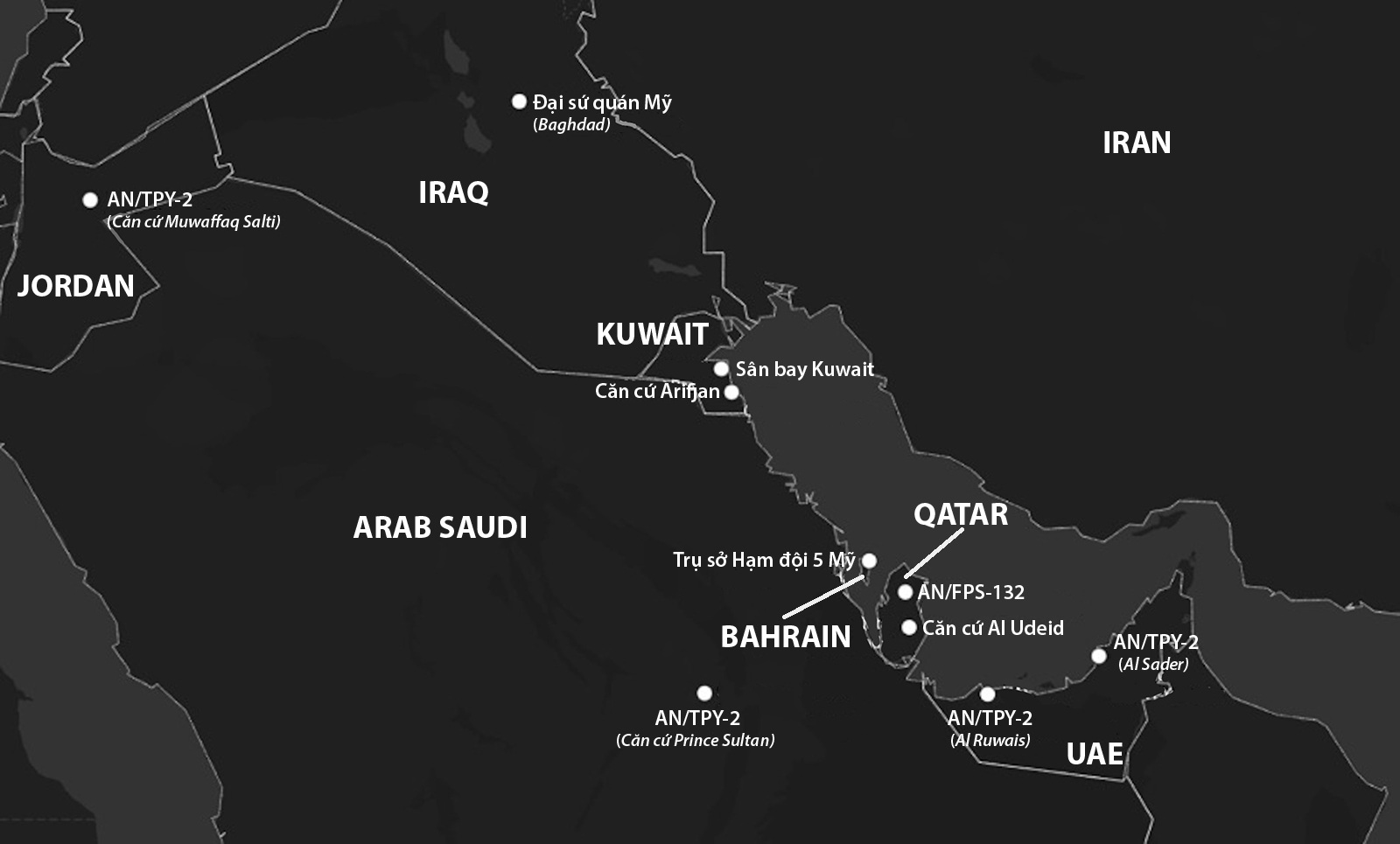 |
US and allied radar sites targeted by Iran, based on satellite images and field videos. Graphics: ABC News
Budget documents from the US Department of Defense indicate that each AN/TPY-2 station has an ex-factory price of approximately 485 million USD. Including customer-specific configurations, operational support, maintenance, and upgrades, each complex could reach a value of about one billion USD.
The AN/FPS-132 ballistic missile warning radar, located in Qatar, valued at 1,1 billion USD and with a tracking range of 4,800 km, also sustained damage from a suicide drone strike. A Giraffe 1X surveillance radar, priced at approximately 2,3 million USD and specialized in detecting UAVs, was also destroyed after a drone attack on the US embassy in Iraq on 14/3.
"The specific extent of the damage cannot yet be determined, partly because satellite companies have imposed restrictions on data since the conflict began. Planet Labs is enforcing a policy of releasing images only 14 days after they are taken, while Vantor is not sharing images of US bases around Iran", ABC News stated.
"We do not comment on battle damage assessments", a US defense official said regarding the information.
Experts believe Iran's strikes highlight the challenges the US faces when deploying such sensitive equipment in the Middle East. "They are incredibly expensive, very fragile, and unbelievably vulnerable", said William Alberque, former director of NATO's Arms Control, Disarmament and Non-proliferation Center.
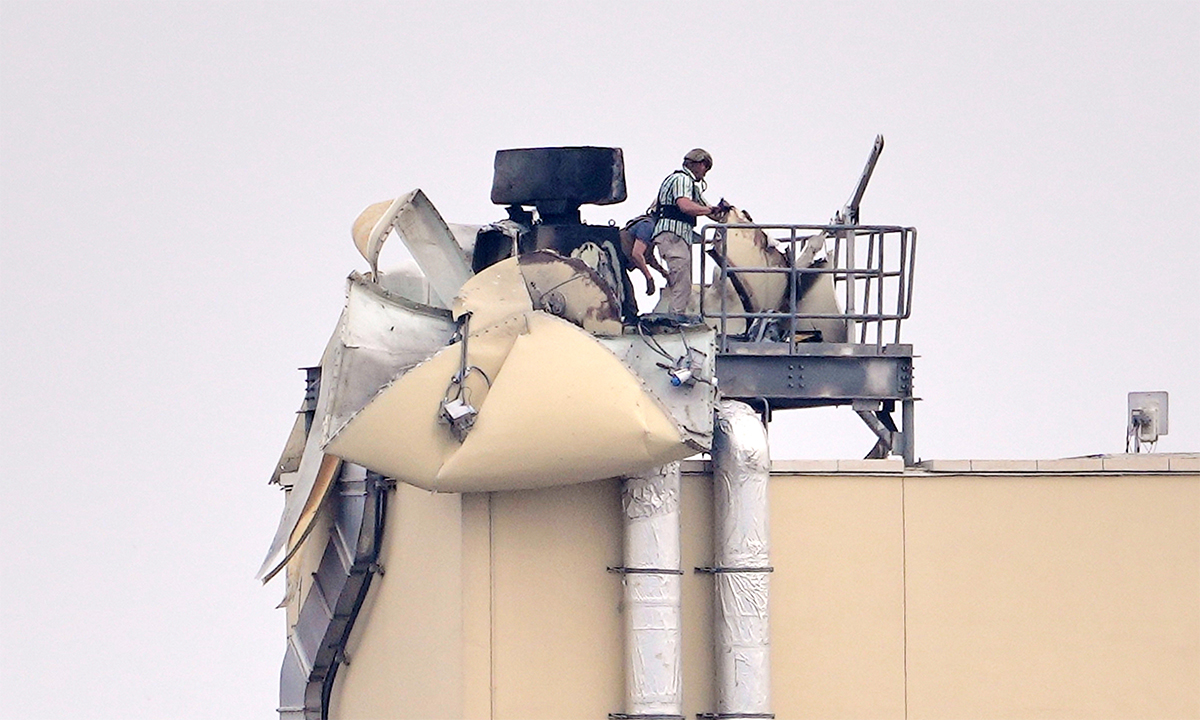 |
Giraffe-1X radar burned after the US embassy in Iraq was attacked on 14/3. Photo: AP
"We knew Iran would target such high-value US assets. Disabling surveillance radars would significantly limit THAAD's combat capability. The complex would not know where to fire if it couldn't detect incoming targets", explained Tom Karako, director of the Missile Defense Project at the Center for Strategic and International Studies (CSIS) based in the US.
Experts note that the US and its allies have developed a sophisticated surveillance network, comprising many radars and satellites, to counter potential threats and have certainly prepared contingencies for when some systems go offline.
However, damage to critical components such as the AN/TPY-2 and AN/FPS-132 radars still degrades the network's target detection and early warning capabilities. "Disabling one AN/TPY-2 radar does not completely paralyze long-range missile defense, but it will partially restrict the field of view", Mr. Alberque said.
Beyond the risk of being easily attacked and damaged, expensive radar systems like the AN/TPY-2 also take a long time to manufacture and depend on a very limited supply of rare earth materials, complicating efforts by the US and its allies to fill the gaps.
Sam Lair, an expert from the open-source intelligence research group at the Center for Nonproliferation Studies, believes the importance and vulnerability of radar complexes make them prime targets for Iran.
"It is logical for Iran to target a series of surveillance radars in the Gulf region. If these systems can be weakened, Iran will create more difficulties for the US and its allies in detecting and countering retaliatory strikes", Sam Lair stated.
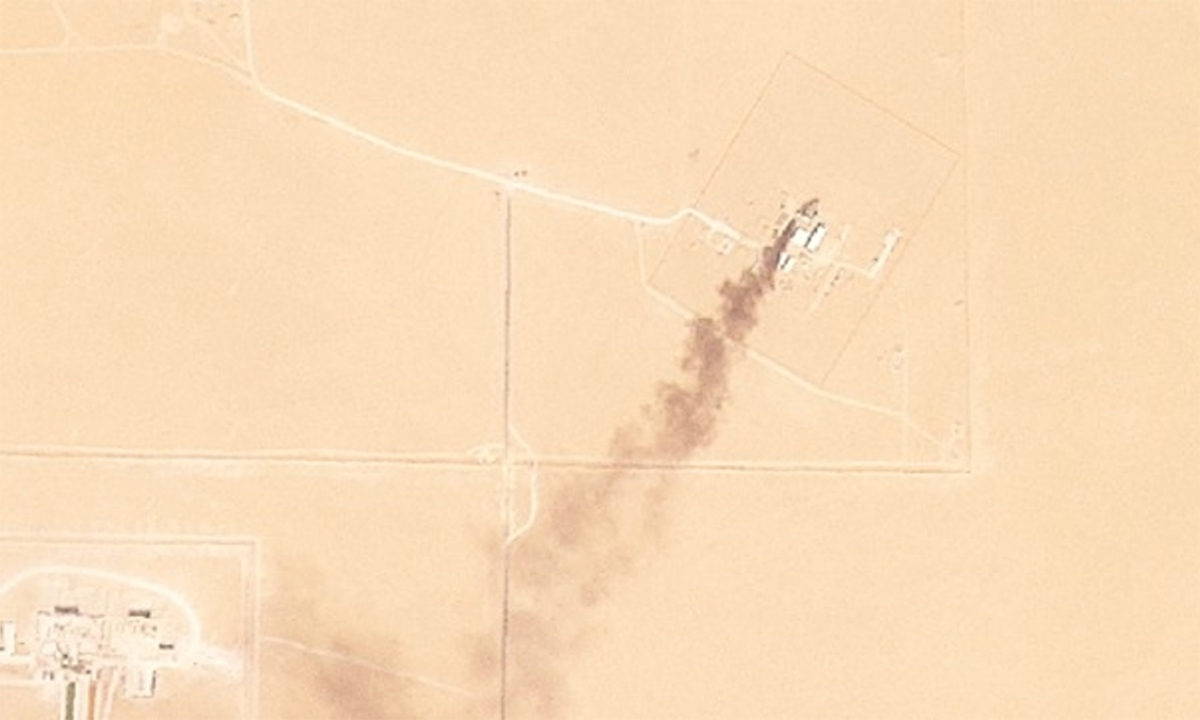 |
Smoke rising from the AN/TPY-2 radar site at Prince Sultan Air Base, Saudi Arabia, on 1/3. Photo: Planet Labs
In addition to the expensive radar stations, over 25 locations at 7 US bases in 5 countries were also attacked, including aircraft hangars, logistics depots, and fuel storage facilities.
According to Alberque, the US defense network deployed in the Middle East was designed "based on a threat model from the 1990s and 2000s", not optimized for intercepting inexpensive, often mass-deployed suicide UAVs.
A CSIS report analyzed by the BBC and released on 21/3 shows that Iran's retaliatory strikes in the first two weeks caused approximately 800 million USD in damage to US military infrastructure in the region. This figure is higher than previous estimates, reflecting the escalating costs for the US if the conflict continues.
"Damage to US military bases in the Middle East has not been fully revealed, but it appears very serious. The actual extent can only be determined when more data becomes available", said Mark Cancian, a senior advisor at CSIS and co-author of the report.
Nguyen Tien (According to ABC News, AFP, AP)