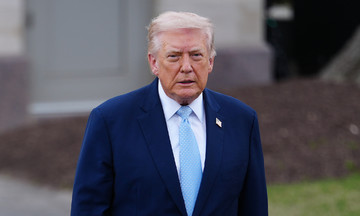
U.S. Treasury Secretary Scott Bessent announced on 20/3 that this is a narrow, temporary measure, consistent with President Donald Trump's objective to "maximize global energy supply" and ensure market stability.
This easing allows Iran to sell 140 million barrels of crude oil and other petroleum products loaded before 20/3, with validity until 19/4. According to the U.S. Energy Information Administration, this volume of oil is sufficient to meet the world's total oil demand for approximately one and a half days.
However, this measure does not apply to oil shipments destined for Cuba, North Korea, or areas of Ukraine controlled by Russia.
"Currently, sanctioned Iranian oil is being purchased by China at low prices," Bessent explained. "By temporarily releasing this available supply to the global market, the U.S. will quickly add about 140 million barrels of oil, thereby increasing global energy supply and temporarily easing the supply pressure caused by Iran."
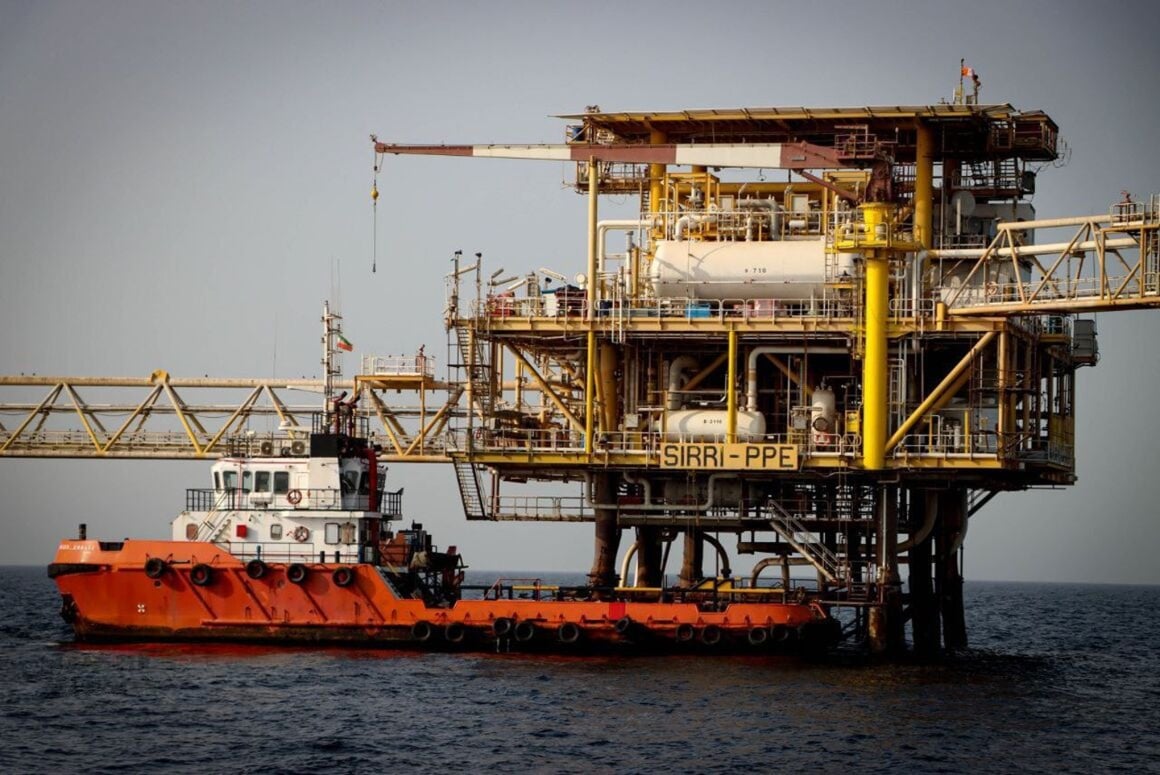 |
A ship anchored next to an offshore oil rig near Ilam city, Iran in the Persian Gulf in 9/2025. *Photo: Iranintl* |
The U.S. has imposed sanctions on Iranian oil for decades. President Donald Trump's administration also blocked Tehran's crude oil sales after withdrawing from the Iran nuclear deal in 2018.
However, following Bessent's statement, Iran declared it had no surplus crude oil to supply the international market. Saman Ghoddoosi, spokesperson for Iran's Oil Ministry, posted on X: "Iran currently has essentially no surplus crude oil at sea or available for other international markets. The U.S. Treasury Secretary's statement merely aims to spark hope for buyers."
Immediately after the U.S. and Israel launched an attack on Iran, Tehran closed the Strait of Hormuz, a crucial waterway for about 20% of global oil and gas transport, and attacked energy infrastructure in the Middle East. These actions caused crude oil prices to surge, reaching approximately 110 USD/barrel.
Iran continues to sell oil by allowing its oil tankers to pass through the Strait of Hormuz. According to CNN, this approach enables Iran to expand its market to Western countries instead of selling exclusively to China.
Huyen Le (According to AFP, CNN)