Eden Johnson, a grade 12 student, recently received an admission offer from Fort Valley State University in Georgia. Notably, she had not submitted an application or undergone any rigorous review process, having only participated in a summer program at the school.
Although she had prepared a list of around 20 schools for traditional applications, the early admission from Fort Valley State helped ease her self-doubt. "It feels really great to be welcomed somewhere", Johnson shared.
A rising number of US universities are adopting this "direct admission" method for new students, according to The Wall Street Journal. This streamlined approach is swift, free, and less challenging than traditional admissions. Students are not required to write essays, answer questions about extracurricular activities, or submit standardized test scores like the SAT or ACT to be accepted.
Applicants simply complete a brief form and submit their transcripts. This process is so straightforward that "you can do it with your eyes closed", stated Chandra Scott, executive director of Alabama Possible, an organization overseeing Alabama's direct admission program. Following this, admission offers are automatically sent to candidates, though universities retain the right to rescind offers if students' final year grades significantly decline.
This method broadens college access for many students, according to Angel Perez, CEO of the National Association for College Admission Counseling. Data from the Niche admissions platform indicates that students of color and first-generation college students are among the primary beneficiaries.
In turn, universities can reach applicants who might not have considered them, especially amidst a shrinking pool of prospective students.
US higher education faces a significant challenge from a "demographic cliff". Projections from the National Center for Education Statistics indicate that the 18-year-old population in 2039 will decrease by 650,000 compared to current figures. This decline translates to fewer college enrollments, potentially making it difficult for some institutions to remain financially viable, as reported by the BBC. Less prominent universities are expected to be most affected.
"We can no longer passively wait for students to find us", stated Karlyn Crowley, president of Kalamazoo College in Michigan.
Jenny Rickard, CEO of the Common App application system, reported that the number of universities using direct admission has more than tripled since the 2023-2024 academic year. This method is now used by about one-fifth of the total schools on the system and is present in 15 states.
This approach has proven effective for many institutions. Jacksonville State University, which primarily attracted applicants from neighboring counties, received approximately 2,000 applications this year from southern and western regions of the state.
However, convincing these admitted applicants to actually enroll remains the biggest challenge.
"Our most effective recruitment strategy is financial transparency from the outset", said Ryan Fewins-Bliss, executive director of the Michigan University Access Network.
Conversely, not everyone supports this method. Critics argue that direct admission offers complicate the college application process for students. Additionally, some universities are vague about accompanying financial aid commitments.
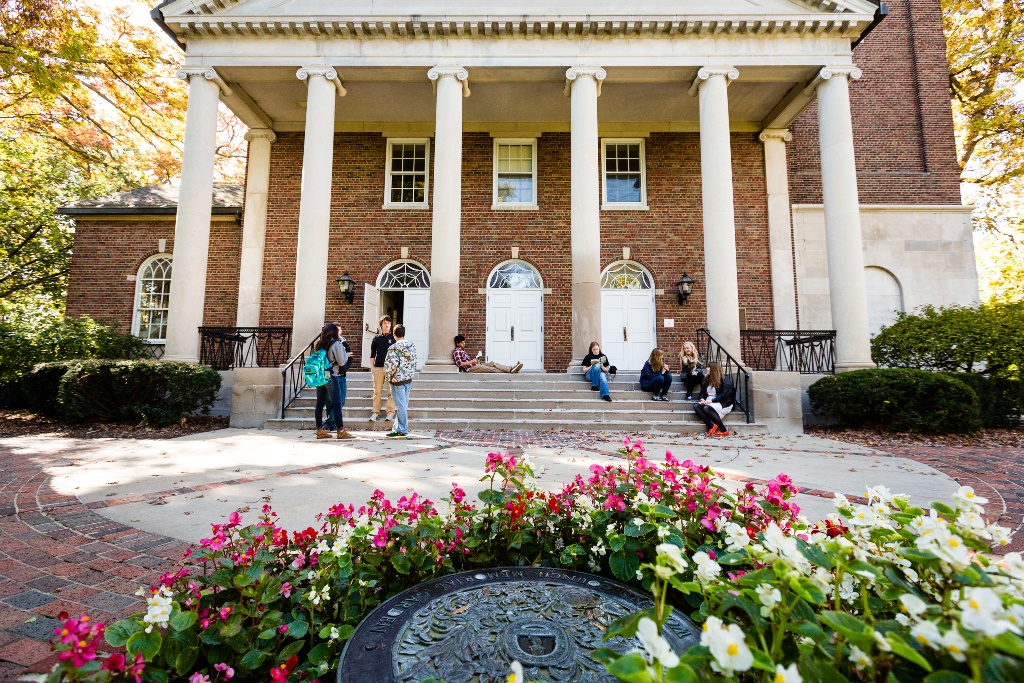 |
A view of Kalamazoo College campus in the US. Photo: University website |
Compiled by Khanh Linh