Iran's Islamic Revolutionary Guard Corps (IRGC) Navy announced on 8/9 that it had seized one of the US military's most advanced and intelligent autonomous underwater vehicles (AUV) at the entrance to the Strait of Hormuz. The capture, described as a "complex operational and intelligence mission", occurred early this morning, with images expected to be released in a few hours. According to the IRGC, this AUV model, equipped with the latest underwater vehicle technology, was slated for delivery to the US military in 2025.
While the IRGC Navy did not specify the model, Tasnim news agency identified it as a Dive-LD, manufactured by US company Anduril. The US Central Command (CENTCOM), responsible for US military operations in the Middle East, has not yet commented on the incident.
Anduril describes the Dive-LD as a large-diameter autonomous underwater vehicle, measuring 5,8 meters in length and 1,2 meters in diameter. It is designed for long-duration deep-sea missions, capable of operating continuously for 10 days and diving to a maximum depth of 6.000 meters.
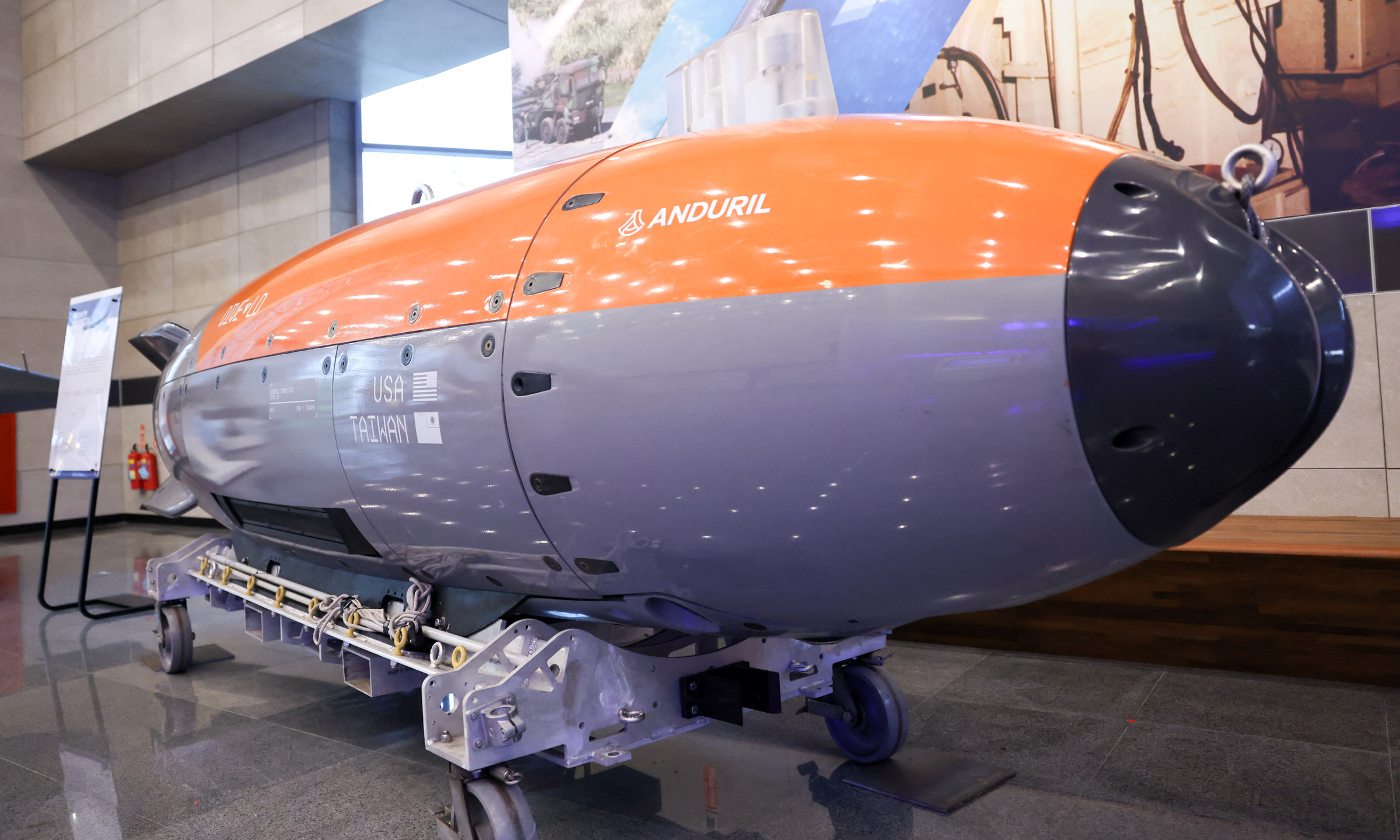 |
AUV Dive-LD was displayed in Taiwan in March. *Photo: AFP* |
Its modular design allows for rapid reconfiguration to perform various missions, including: intelligence, surveillance, reconnaissance (ISR), mine countermeasures, anti-submarine warfare, and high-resolution seabed mapping. A notable feature of the Dive-LD is its hull, manufactured using 3D printing technology, enabling quick and low-cost customization.
If confirmed, this seizure presents a significant opportunity for Iran to reverse-engineer the vehicle's technology. Faced with prolonged sanctions, Iran has long prioritized exploiting every chance to copy Western technology through reverse engineering.
The country has a history of successfully reverse-engineering modern military hardware from the US and its allies. These include unmanned aerial vehicles like the MQ-9 Reaper and the RQ-170 Sentinel stealth reconnaissance aircraft, as well as the SM-2 air defense missile and the Spike guided anti-tank missile. Recovered drones, electronic devices, and fragments of precision-guided weapons are routinely exploited to advance domestic weapon development programs.
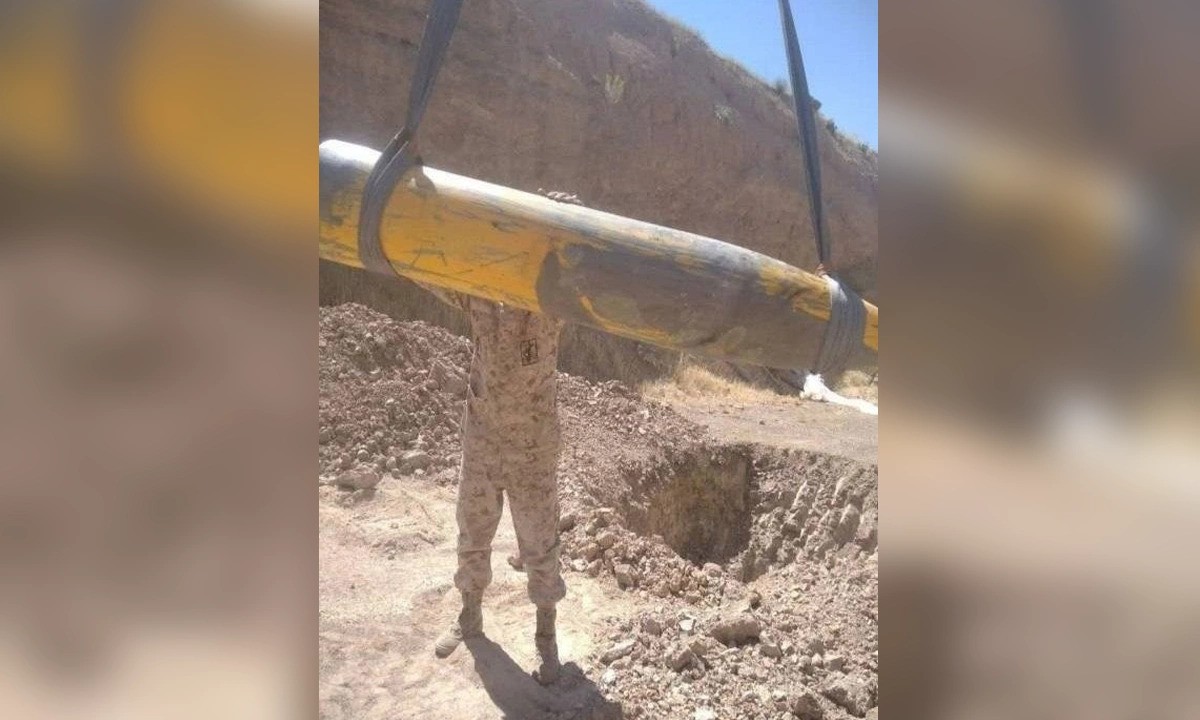 |
An object believed to be an AGM-158 JASSM missile warhead in Kurdistan province, pictured on 7/7. *Photo: X/AryJeayBackup* |
By Pham Giang (AFP, Tasnim)