In an interview with the Guardian on 8/9, Nepal's Foreign Minister Shisir Khanal confirmed that the Ministry of Finance and the Ministry of Environment and Resources of Nepal had sent a joint letter to the United Nations Loss and Damage Fund, an organization established in 2022 under the Paris Climate Agreement, to request 20 million USD in compensation for climate-related damages.
He emphasized that the amount Nepal requested from the United Nations "is clearly not enough to cover the damages we have suffered." According to some estimates, the total damage caused by the floods could exceed 5 billion USD, though Khanal suggested the actual figure could be even higher.
Foreign Minister Khanal called for climate justice, stressing that the world's largest economies must step in to help Nepal recover and rebuild after the devastating flood.
"We bear very little responsibility for the state of climate change," he said. "Major economies, those that pollute heavily and have historically generated huge greenhouse gas emissions, are obligated to share responsibility. This issue affects all humanity."
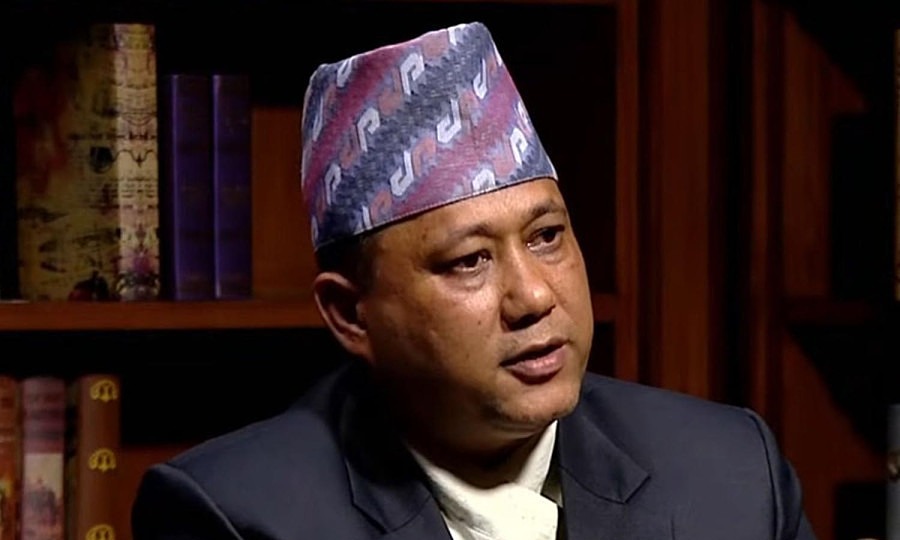 |
Nepal's Foreign Minister Shisir Khanal. *Photo: Kathmandu Post*
Nepal accounts for less than 0.1% of total global greenhouse gas emissions, while neighboring countries like India and China are among the world's largest emitters. The Himalayas, stretching across India, China, Nepal, and Bhutan, are warming nearly 50% faster than the global average.
In 2023, the United Nations stated that Nepal's mountain ranges had lost nearly one-third of their ice in just over 30 years due to global warming.
"The international community should not view the recent flash flood as an isolated disaster. It must be seen in the context of the changing climate in the Himalayas," the Foreign Minister noted. "We understand this will be a recurring scenario that increasingly more communities, not just in Nepal but worldwide, will face."
The destructive path of Nepal's flash flood. *Video: BBC*
Scientists believe the climate crisis played a role in the flash flood on 26/8. The disaster originated from a melting glacier collapse, triggering landslides and flash floods along the Nepal-China border, resulting in over 1,300 fatalities and more than 5,500 missing people. Hopes of finding survivors are fading after 12 days of rescue efforts.
The United Nations stated that the Loss and Damage Fund is facing a "severe financial gap." The Fund has received requests for assistance totaling 2.8 billion USD from approximately 119 countries, but so far, the international community has only contributed about 400 million USD. The US contributed 17 million USD after President Donald Trump withdrew from the Paris Agreement.
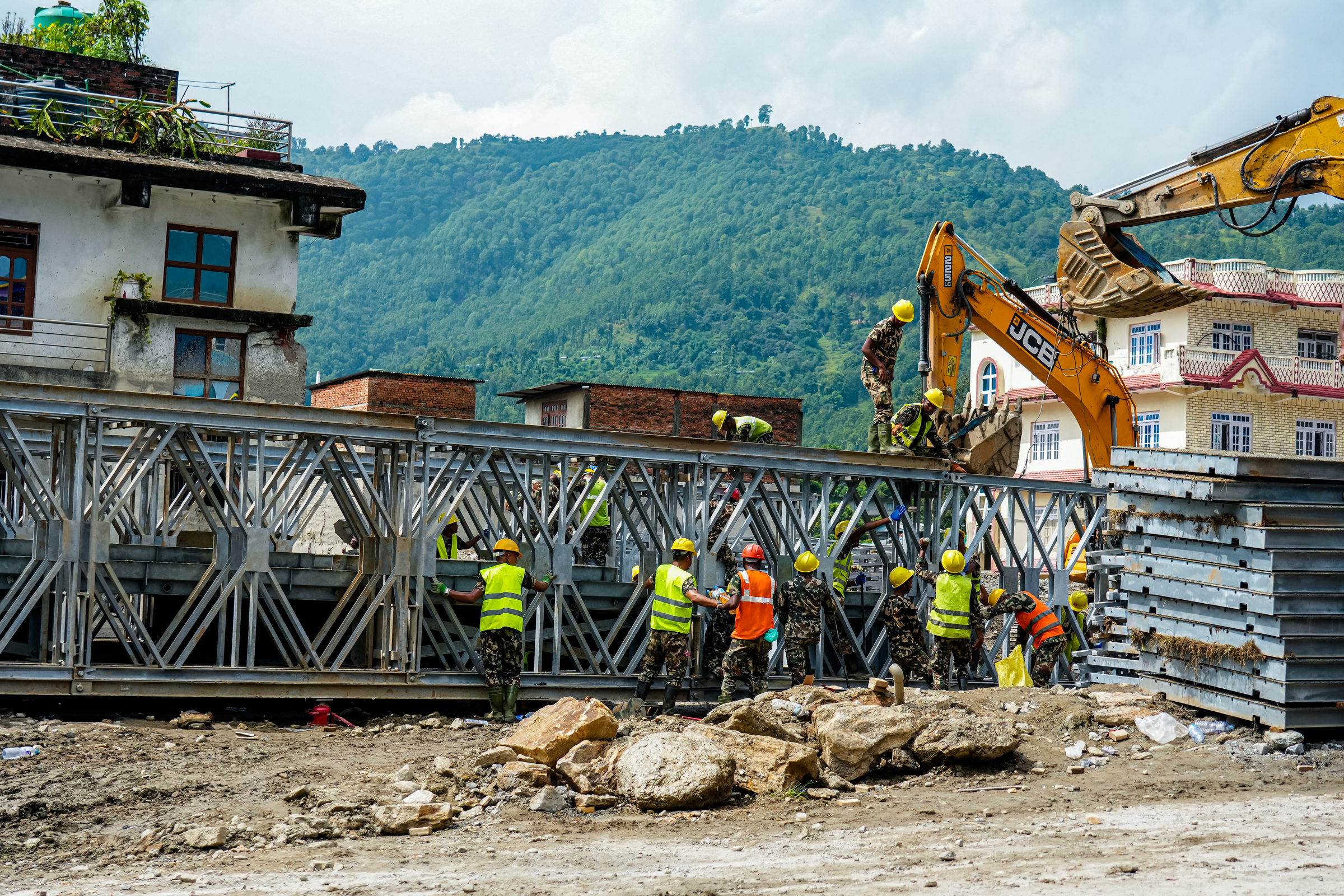 |
The Nepal Army assembles a modular steel bridge over the Tadi River in Devighat, Nuwakot, Nepal, on 7/9, in an effort to rebuild flash flood-affected areas. *Photo: AFP*
Khanal acknowledged "political challenges" in helping Nepal receive the climate compensation it is requesting.
"Indeed, there are always those who disagree with our perspective or deny the existence of climate change, but there are also those who deny that the Earth is spherical," he said.
Hong Hanh (*Source: Guardian*)