Tokyo-based shipping group Mitsui O.S.K. Lines announced on 3/4 that its liquefied natural gas (LNG) carrier, Sohar LNG, successfully traversed the Strait of Hormuz, with all crew members safe. A company spokesperson declined to specify when the passage occurred or if it was facilitated by negotiations with Iran.
According to Bloomberg, the vessel was not carrying cargo and was located in waters off Oman's capital, Muscat, with its destination being the Qalhat LNG port in Oman.
The Sohar LNG had been in the Gulf since 25/2 and was broadcasting its identity as an Omani cargo vessel. It marks the first Japanese ship and the first LNG carrier to cross the Strait of Hormuz since 1/3.
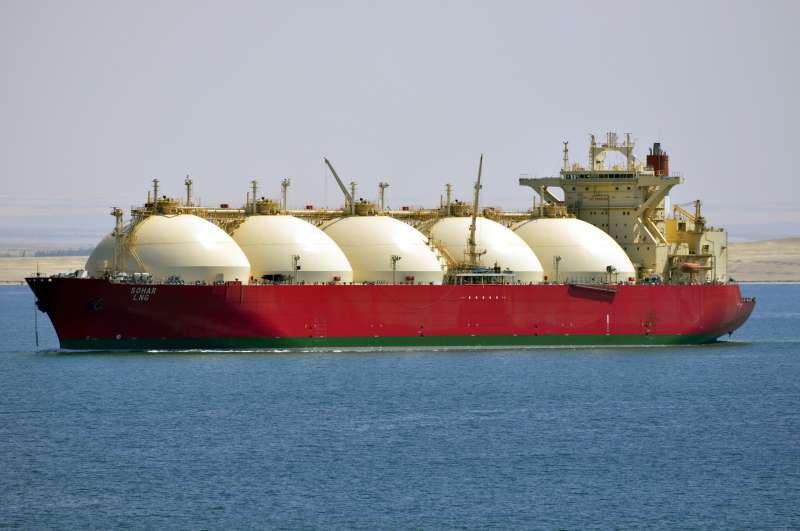 |
The liquefied natural gas carrier Sohar LNG. Photo: Maritime Optima |
Japan's Ministry of Transport reported that as of the morning of 3/4, approximately 45 vessels owned or operated by Japanese companies remained stranded in the Gulf.
Maritime tracking data indicated that the Green Sanvi, a liquefied petroleum gas (LPG) carrier owned by Mitsui, departed the Gulf through Iranian sovereign waters on the morning of 3/4. The vessel was broadcasting its identity as an "Indian vessel, carrying an Indian crew".
Two very large crude carriers and an LNG tanker, operated by Oman Shipping Management, a State-owned Omani shipping and vessel management company, also exited the Gulf on 2/4.
Before the conflict erupted on 28/2, the Strait of Hormuz was a vital artery for approximately 20% of the world's crude oil and gas supply, alongside one-third of global fertilizer production materials for agriculture. Currently, about 1,000 vessels are stranded in the Gulf due to the conflict between Iran and the US-Israel alliance.
According to Kpler data, about 240 vessels transited the Strait of Hormuz between 1/3 and 3/4, representing a 94% decrease compared to pre-conflict levels. Of these, 151 were oil and gas tankers, which is equivalent to the daily traffic density before hostilities began.
On 1/4, Iran's Revolutionary Guard Corps (IRGC) declared that the Strait of Hormuz remains "closed to hostile nations" and that its navy maintains full control over traffic.
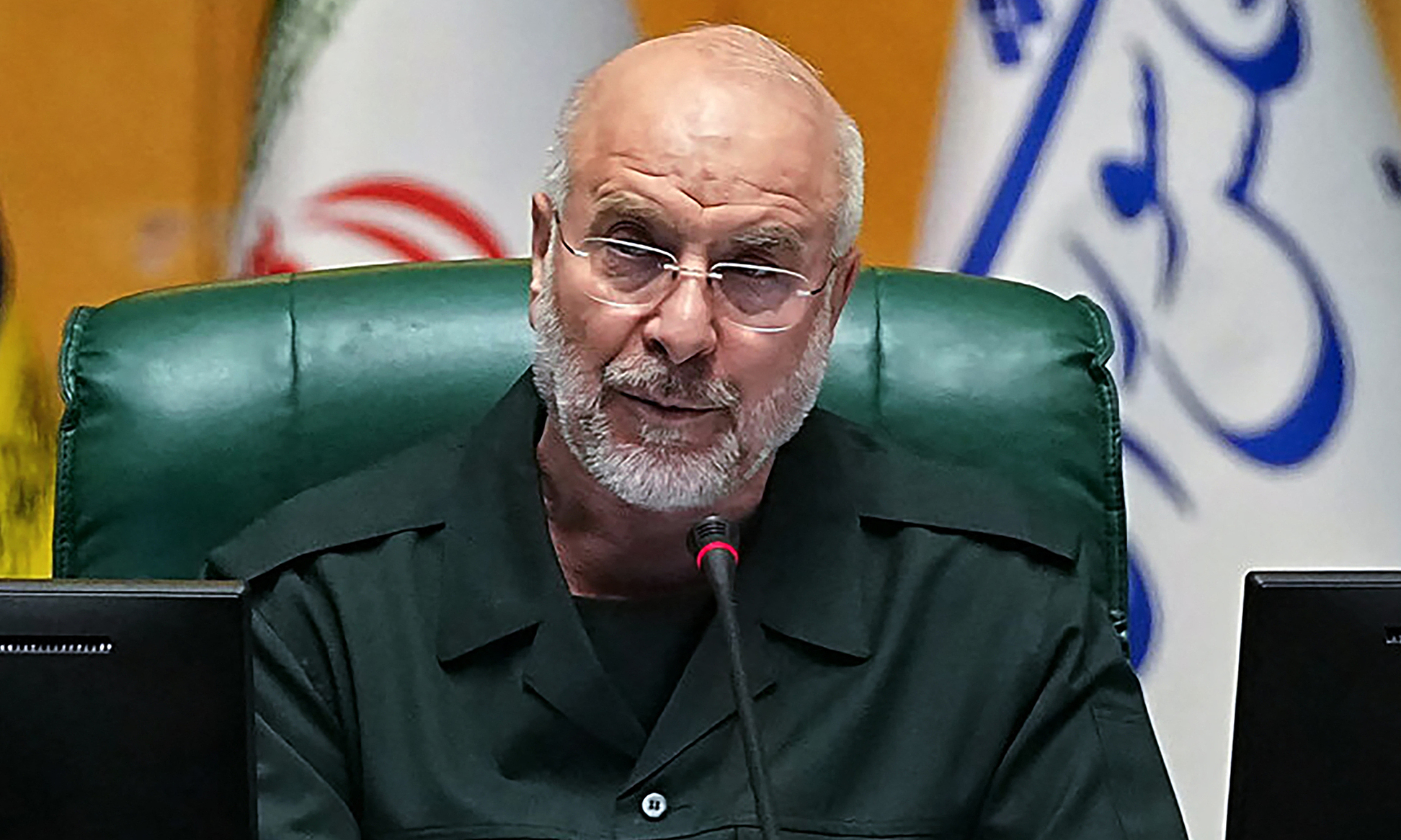
Iran's Parliament Speaker Mohammad Bagher Ghalibaf posted on social media X on 4/4, hinting at a potential blockade of the Bab el-Mandeb Strait in the Red Sea, the second strategic maritime choke point in the Middle East. He questioned, "What percentage of global oil, LNG, wheat, rice, and fertilizer passes through the Bab el-Mandeb Strait? Which nations and companies account for the largest volume of shipments through this strait?"
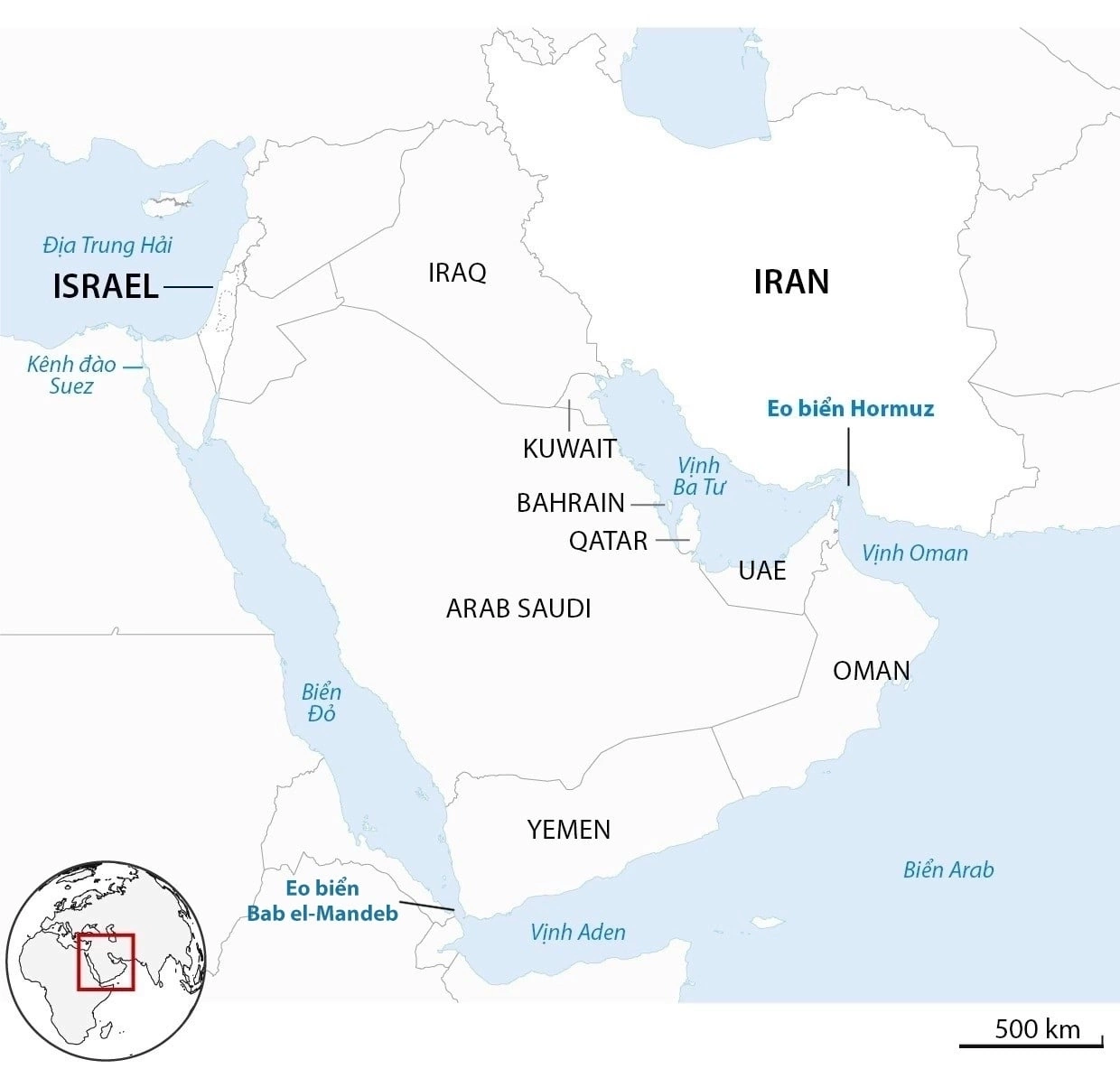 |
Locations of the Bab el-Mandeb Strait, Strait of Hormuz, and surrounding areas. Graphic: Guardian |
Approximately 6% of the world's seaborne oil transit passes through Bab el-Mandeb, according to the US Energy Information Administration. The Red Sea also serves as an alternative route for Saudi Arabian oil exports to bypass the Strait of Hormuz. Yanbu port, located on this sea route, is the terminus of a transnational oil pipeline through which Saudi Arabia can transport 7 million barrels of crude oil daily.
By Huyen Le (According to Reuters, AFP, CNN)