France made the decision to deploy its carrier to shorten the time needed to implement this initiative as soon as circumstances allow, the French Ministry of Defense stated on 6/5. The deployment refers to a multinational mission led by President Emmanuel Macron and British Prime Minister Keir Starmer aimed at restoring freedom of navigation in the Strait of Hormuz.
The announcement came after the aircraft carrier Charles de Gaulle and its escort warships transited the Suez Canal, heading south towards the Red Sea.
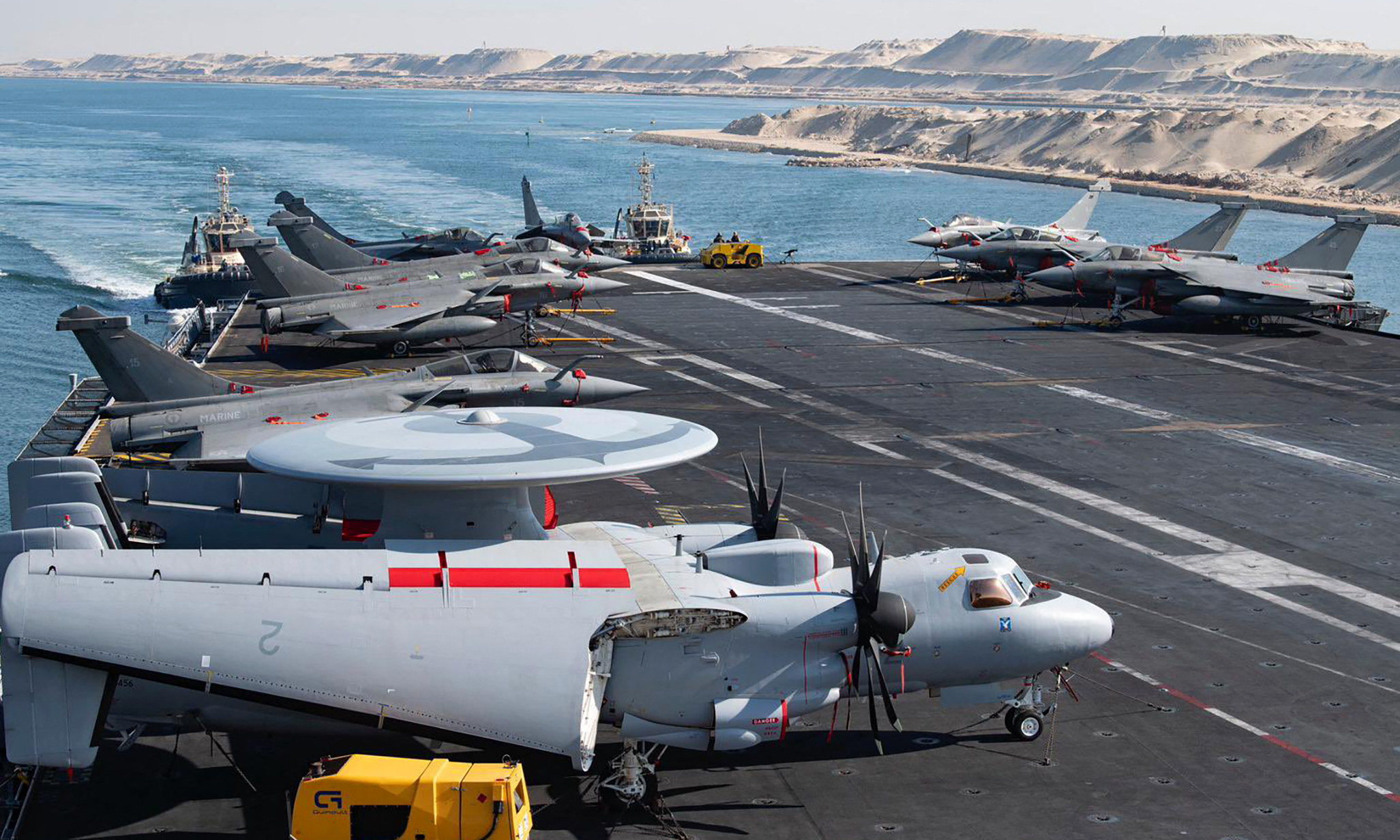 |
Aircraft on the Charles de Gaulle aircraft carrier in a photo posted on 6/5. Photo: French Navy |
European leaders affirmed that the mission is entirely defensive and will only be launched after the Middle East conflict ends. About 40 countries have begun military planning for the mission in the Strait of Hormuz following discussions organized by the United Kingdom.
An assistant to the French president stated the move aims to signal that France is "not only ready to ensure security for the Strait of Hormuz but also capable of doing so". France has proposed to the United States and Iran to "deal with the issue of the Strait of Hormuz separately", distinct from the rest of the conflict.
"We are acting because the Strait of Hormuz continues to be blockaded, and the damage to the global economy is becoming increasingly severe. The risk of prolonged conflict is unacceptable," the official stated.
The French presidential assistant urged Iran to engage in dialogue with the United States to open the Strait of Hormuz. They also pressed Washington to lift the maritime blockade and "take advantage of Tehran's goodwill on key issues".
Traffic through the Strait of Hormuz, a vital shipping lane through which about 20% of the world's crude oil is transported in peacetime, has almost halted since the Middle East conflict erupted in late February, causing global fuel prices to surge.
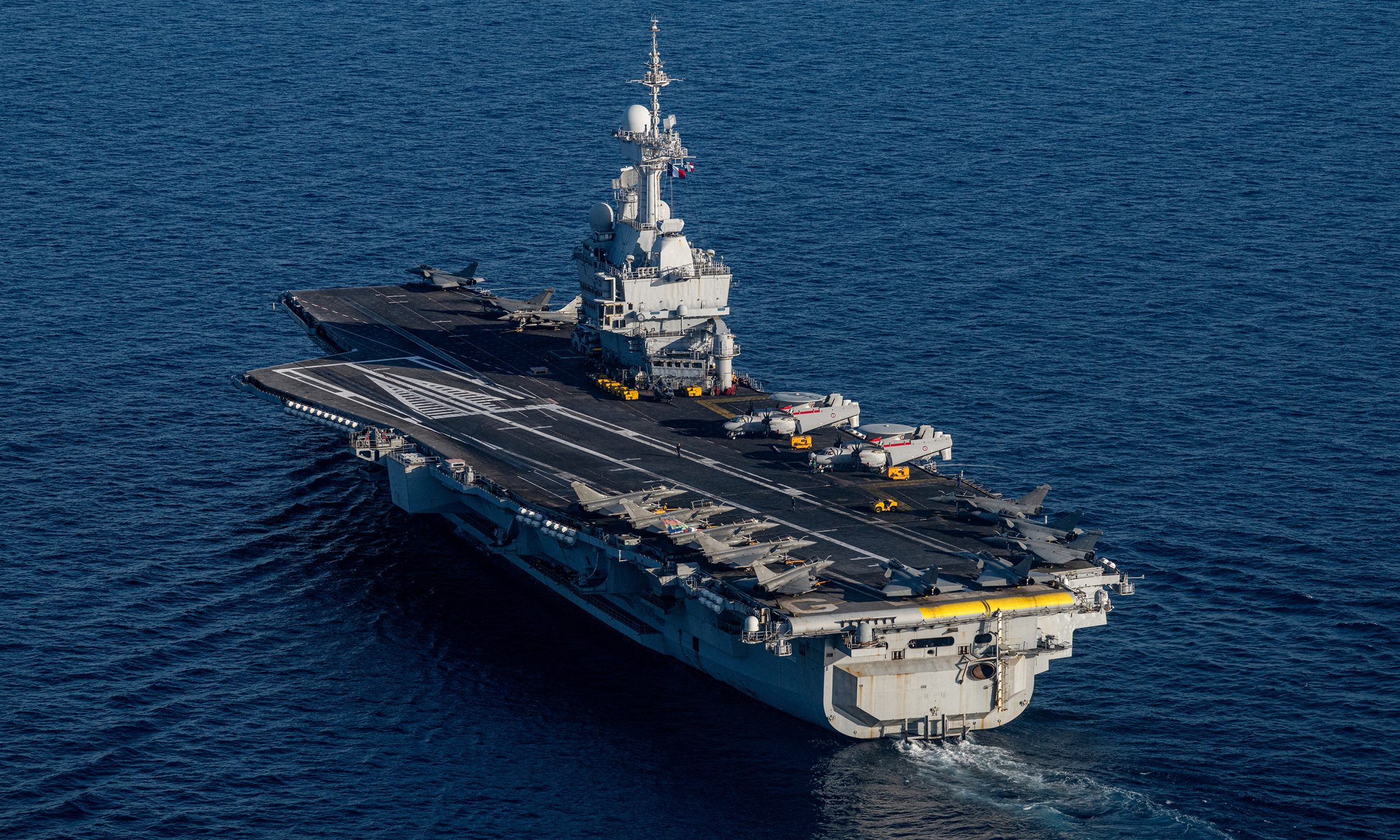 |
The Charles de Gaulle aircraft carrier at the end of a NATO exercise off the coast of Crete, Greece on 26/4. Photo: AFP |
Iran has prohibited most vessels from passing through the strait, except for its own ships and those of some "friendly" nations. The United States also imposed a blockade on all Iranian seaports on 13/4.
President Macron stated he expressed "deep concern" about the escalating situation in the Gulf amid stalled negotiation efforts during a conversation with his Iranian counterpart Masoud Pezeshkian on 6/5. "All parties must lift the blockade of the strait immediately and unconditionally," he said.
The Charles de Gaulle is the largest warship commissioned in Western Europe. It is the only nuclear-powered aircraft carrier in the world not belonging to the US Navy.
The carrier is 261 m long, 64 m wide, and has a full-load displacement of 42,500 tons. Its nuclear engines allow the Charles de Gaulle to travel at a maximum speed of 50 km/h with an unlimited range, depending only on the amount of provisions carried, for a maximum of 45 continuous days. The time between each refueling for the Charles de Gaulle is about 20-25 years.
The Charles de Gaulle aircraft carrier carries about 20 Rafale M multi-role fighter jets. The warship departed from Toulon port in southern France in January to undertake a mission in the North Atlantic. In early March, the Charles de Gaulle changed course to the Eastern Mediterranean to protect the interests of France and its allies targeted by Iran in retaliation for US - Israel operations.
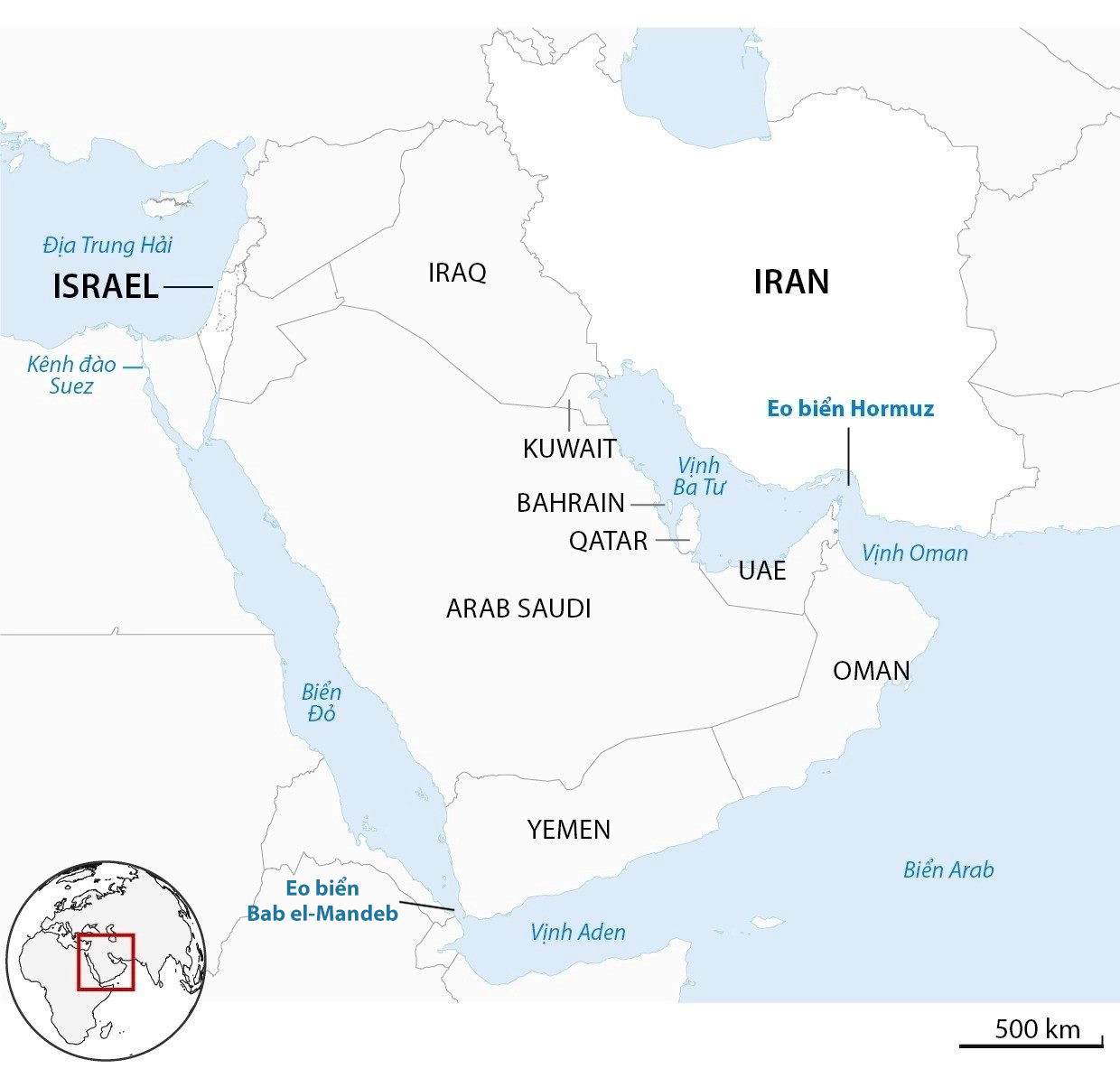 |
Location of the Strait of Hormuz, Suez Canal, and Red Sea. Graphic: Guardian |
By Pham Giang, *AFP*