"Chancellor Friedrich Merz and French President Emmanuel Macron agreed that companies from both nations could not find common ground to build the fighter jet together," a German government official stated on 8/6.
This statement referred to the Future Combat Air System (FCAS) project, launched in 2017. It aimed to replace France's Rafale fighters and Germany and Spain's Typhoon combat aircraft. The plan was a crucial test for European defense cooperation, amidst growing tensions with the United States.
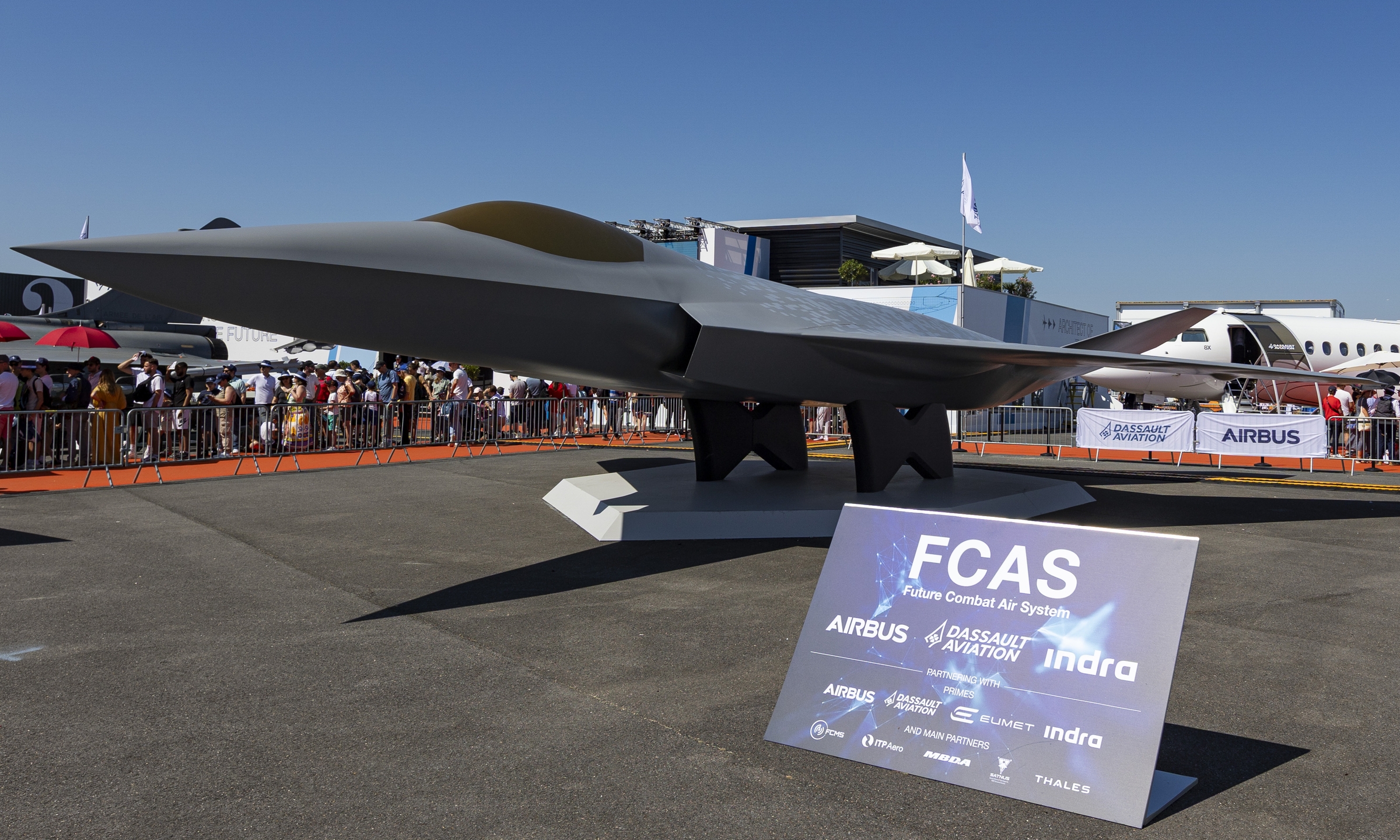 |
A model of the FCAS combat aircraft displayed at the Paris Air Show in 2023. Photo: Reuters |
An unnamed official at the Elysee later confirmed the information, stating that President Macron and Chancellor Merz "discussed thoroughly and regularly" measures to advance the project. Both leaders, however, expressed regret that industrial partners could not reach an agreement to continue the plan.
Despite this, the German government official noted that other parts of the project would proceed. He stated that the "true core of FCAS will be maintained," describing the project as a "nervous system connecting fighter jets, unmanned aerial vehicles (UAVs), and other components into a unified entity."
FCAS aimed to enhance Europe's defense autonomy, amidst increasing tension following Russia's operation in Ukraine and growing friction with the United States. Observers estimated nations would spend about 118 billion USD to develop the new fighter model and associated technology within the project. The aircraft was projected to be operational from 2040.
France, Germany, and Spain aimed to accelerate progress due to competitive pressure from the Global Combat Air Programme (GCAP). This project involves cooperation between the United Kingdom, Italy, and Japan to develop a sixth-generation fighter. This aircraft targets deployment from 2035.
Chancellor Merz and President Macron had previously affirmed their resolve to make FCAS a success. The German leader declared earlier this year that he would "do his utmost and fight to the very end to bring joint European projects into operation, above all the project between Germany and France."
Speaking in april after talks with Chancellor Merz, President Macron denied the project had been scrapped. He said, "we are continuing to move forward. Never has Europe needed a greater spirit of solidarity, self-reliance, and sovereignty than now."
However, disagreements over operational control between Dassault and Airbus stalled the project, preventing it from moving to the next phase. Last-minute efforts to salvage the program failed.
Vu Hoang (According to AFP)