Yahya Saree, spokesperson for the Iran-backed Houthi group, announced on social media platform X that early this morning, their forces launched missile and drone attacks. The targets were two Saudi oil tankers, Encelia and Layla, in the Red Sea, for what the Houthi termed a "maritime blockade violation".
Saree stated the attacks were successful. He added that the Houthi's blockade campaign has so far forced 10 ships to turn back. The Houthi spokesperson affirmed the group would continue maritime operations against Saudi Arabia, upholding the principle of "blockade for blockade". He warned Saudi Arabia that any attacks on Yemen would be met with large-scale retaliatory strikes deep into its territory.
 |
A Houthi fighter in Sanaa, Yemen, in April. *AFP*
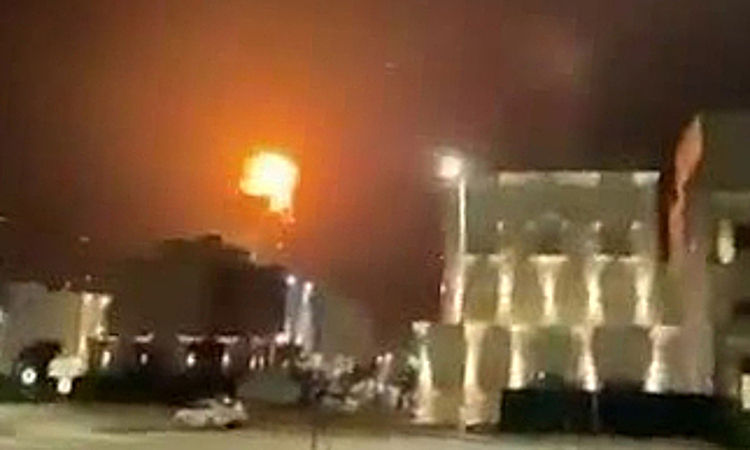
Not long before, the United Kingdom Maritime Trade Operations (UKMTO) reported a fire on an oil tanker after it was hit approximately 130 km southwest of Al Shaqiq, Saudi Arabia. Officials are investigating the incident.
Houthi forces control the strategic Bab el-Mandeb Strait, which connects the Arabian Sea and the Red Sea. Many cargo and oil tankers use this strait, especially since the Strait of Hormuz became blockaded due to the conflict involving Iran.
On 20/7, the Houthi announced a "maritime embargo against enemy Saudi Arabia, based on the principle of tit-for-tat". This move retaliates against Saudi Arabia's "blockade of Houthi ports and airports" and its airstrikes on Sanaa airport in Yemen last week.
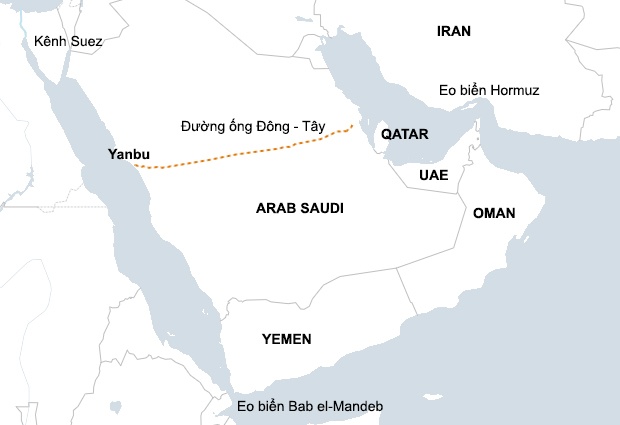 |
Location of the East-West pipeline and the Strait of Hormuz in the Middle East. *WSJ*
Iran is also reportedly pressuring the Houthi to close the Bab el-Mandeb Strait if the United States continues attacking its energy infrastructure. This would open a second front against the United States in the conflict, increasing pressure on Washington and its Gulf allies.
The Red Sea hosts Saudi Arabia's Yanbu port. This allows Riyadh to export millions of barrels of oil, bypassing an Iranian blockade of the Strait of Hormuz and the Persian Gulf.
A complete closure of the Bab el-Mandeb Strait is expected to reduce global oil supply by 7%.
Vu Hoang (According to Reuters, AP, AFP)