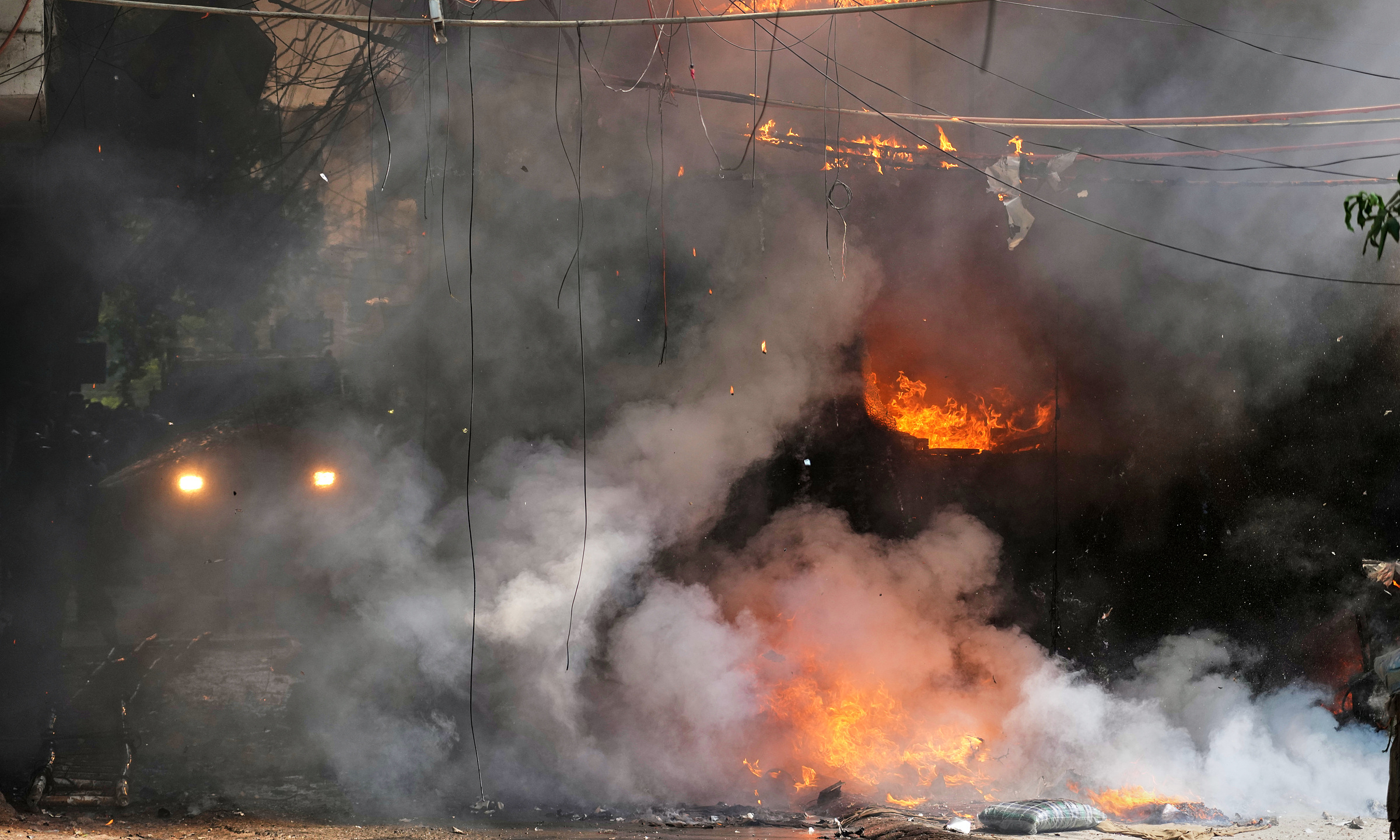
On the night of 23/5, the Russian military launched one of its largest air raids since the start of the Ukraine conflict, firing approximately 600 unmanned aerial vehicles (UAVs) and 30 missiles at Kyiv and surrounding areas. Ukrainian officials reported that the attack resulted in four deaths, over 100 injuries, and damaged numerous apartment buildings, several schools, and museums.
According to Ukrainian military officials, this was one of Russia's typical "tsunami operations," which occur one to three times each month. Planning and executing such large-scale and intense attacks require a complex logistical system.
Yuriy Ihnat, spokesperson for the Ukrainian Air Force, estimated that Russia mobilized "tens of thousands of troops" for the air raid last weekend. He noted that the initial signs of these operations often emerge from the activity of Russia's strategic air force.
"They must prepare their offensive assets before launching, which includes transporting cruise missiles, arming aircraft, and relocating planes from permanent bases to five or six operational airfields," Ihnat explained. "These activities naturally take many hours, even days."
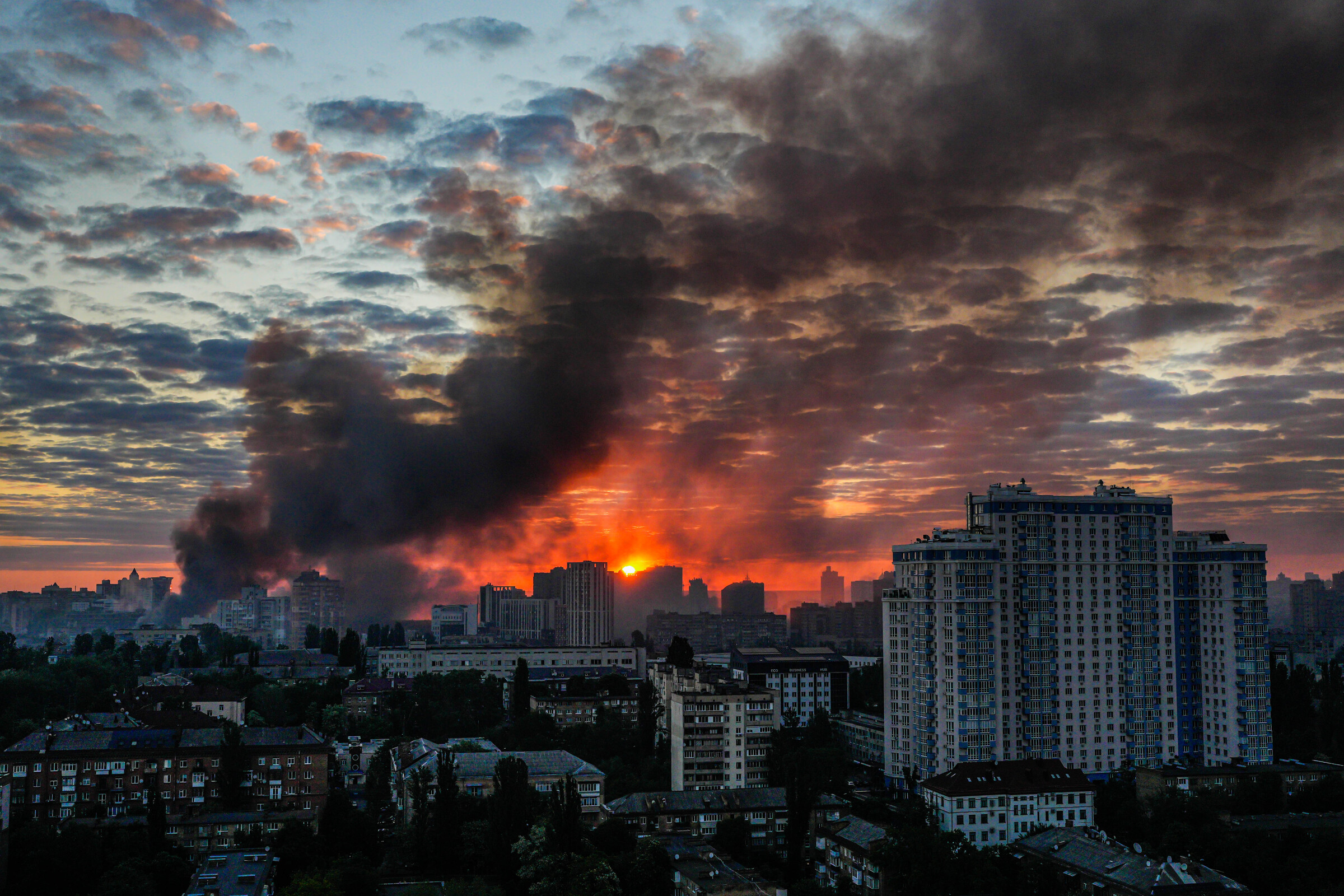 |
Smoke rises in Kyiv on 24/5 after the Ukrainian capital was attacked overnight. Photo: AP |
Both US and Ukrainian intelligence closely monitor Russian movements, sometimes detecting missile launches up to a week in advance.
Ruslan, a commander in his 50s on Ukraine's southern front, told Le Monde that his forces knew six days in advance about the 14/5 attack. During this assault, Russia deployed 1,560 UAVs and 56 various missiles over more than 36 hours, marking the largest aerial attack over two days since the start of the conflict.
"Everything becomes clearer as the attack day approaches, when Russia deploys warships, submarines, and aircraft," Ruslan stated. "Three hours before the attack began, we had a clear picture of the number and types of assets they would use."
Military expert Oleksandr Kovalenko indicated that the decision to conduct such a large-scale coordinated attack comes from the highest levels of the Russian government.
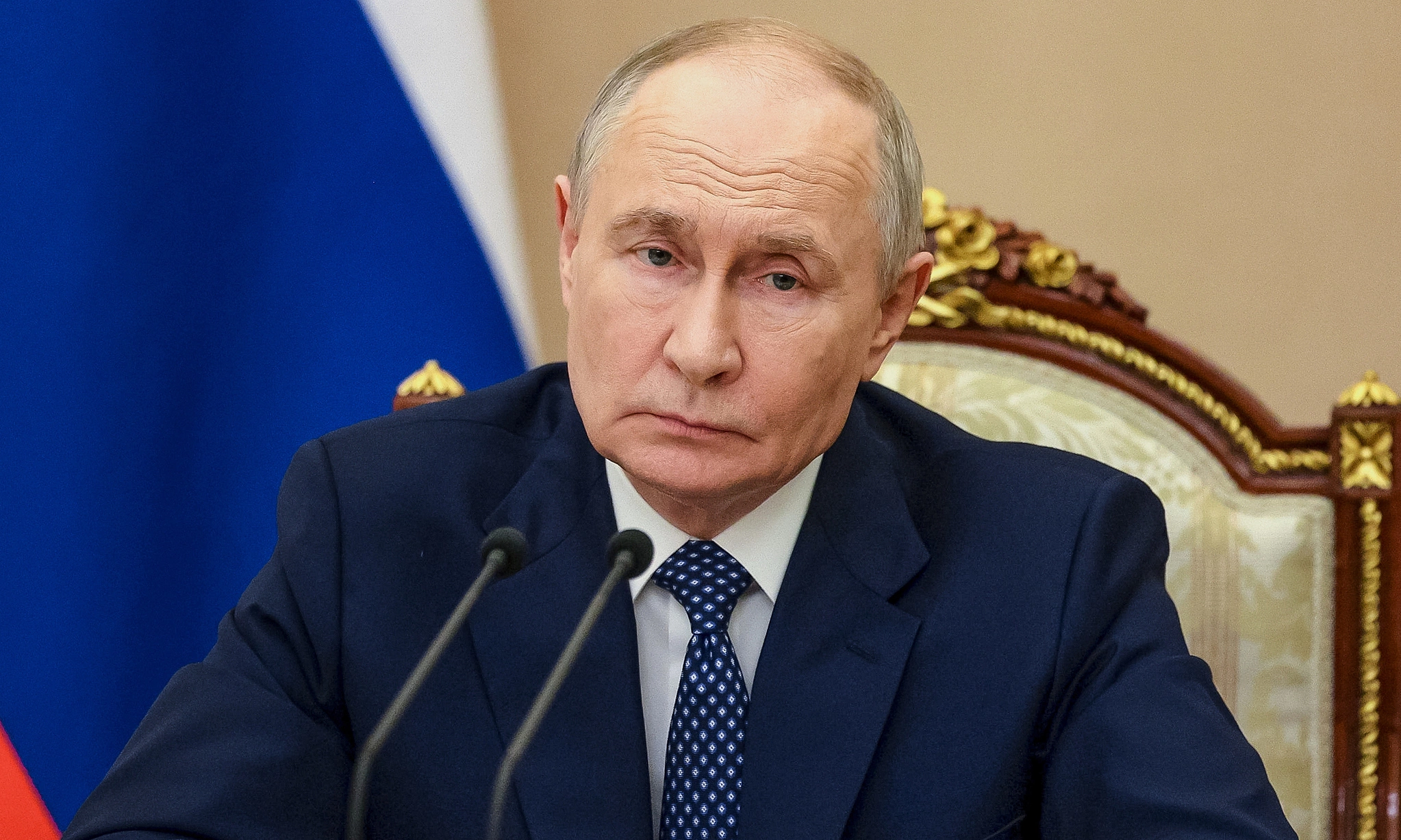
Kovalenko explained that Russian President Vladimir Putin "gives the green light," while Chief of the General Staff Valery Gerasimov and Defense Minister Andrey Belousov are responsible for operational planning. Subsequently, commanders of missile forces, the navy, and strategic aviation carry out the plans.
"The coordination of these operations falls under the authority of Russian Air Force commander Sergey Kobylash and Long-Range Aviation commander Sergey Kuvaldin. Operational orders are issued by the command of the Engels, Olenya, and Shaykovka airbases, as well as the Black Sea Fleet and the Caspian Fleet," the expert elaborated.
Kovalenko identified the biggest limiting factor for the timing of these attacks as the production rate at Russia's weapons factories.
"On average, the preparation for a coordinated attack involving up to 50 missiles and at least 500 UAVs can take up to a week," Kovalenko said. "This includes not only planning but also the time to accumulate weapons, load ammunition, and prepare launch vehicles and platforms. The entire process depends on production capacity."
Russia has significantly ramped up its defense industry to overwhelm Ukraine's air defense systems. Factories in Yelabuga and Izhevsk currently produce approximately 130 attack UAVs daily, along with an equivalent number of decoy UAVs.
Given that Russia typically launches 150 to 200 UAVs into Ukraine each day, Moscow would need at least one week to accumulate 500 UAVs for a "tsunami" wave. For missiles, Russian factories produce, on average, one Kalibr missile per day, two to three Kh-101 missiles, and two to three Iskander ballistic missiles.
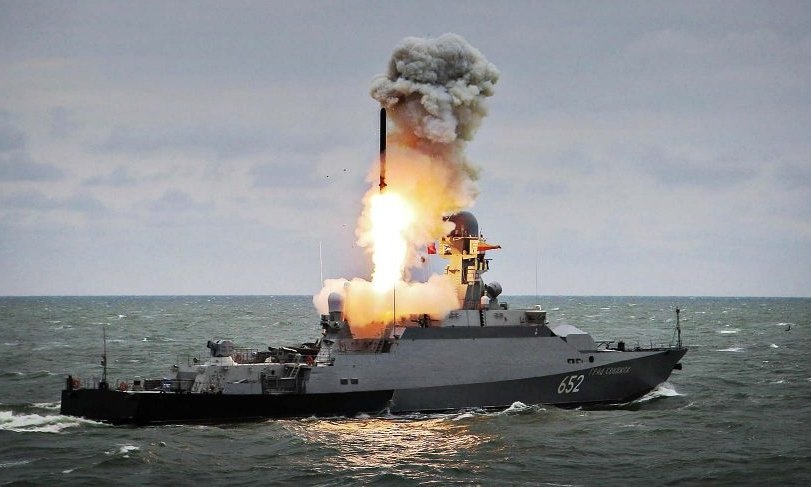 |
A Buyan-M missile ship launches Kalibr rounds during an exercise. Photo: Russian Ministry of Defense |
Beyond production capacity, Russia's large-scale attacks are affected by other factors, including logistical bottlenecks. These are a consequence of Ukrainian attacks, particularly "Operation Spiderweb" in 6/2025, which resulted in the destruction of dozens of Russian aircraft. The Black Sea Fleet has also faced operational limitations due to Ukraine's naval UAVs.
"After Operation Spiderweb, Russia began using Tu-160 aircraft to attack Ukraine because they only had about five to six Tu-95MS aircraft left, capable of carrying 20 to 25 missiles. However, they never load more than four missiles per aircraft due to concerns about wear and tear on the pylons," Kovalenko noted.
Kalibr warships and submarines also do not launch more than 16 missiles per attack. Consequently, Russia increasingly relies on ground-mobile systems, which are harder to target, such as Iskander surface-to-surface ballistic missiles.
"Mobile launchers can be deployed relatively close to the border, prepared in minutes, fired, and then quickly withdrawn to preserve forces," Kovalenko explained.
"No country in Europe is capable of responding to such overwhelming attacks," stated Oleh Katkov, editor-in-chief of the specialized defense publication Defense Express. He added that Russia is rapidly increasing its production of Iskander missiles to about 60 per month, along with 10 Kinzhal hypersonic missiles.
Meanwhile, "the US can only produce 56 PAC-3 anti-ballistic missiles per month, the only type capable of shooting down Iskander. But it takes two PAC-3s to intercept one Iskander or Kinzhal missile," Katkov warned. "History has shown that the sword often pierces the shield."
Nhu Tam (According to Le Monde, Politico, Reuters)