Iran's Consulate General in Mumbai, India, stated today that Iranian Foreign Minister Abbas Araghchi declared, "We allow ships from friendly nations, including Russia, China, India, Iraq, and Pakistan, to pass through the Hormuz Strait." This marks the first time Iran has publicly announced a specific list of nations allowed unimpeded commercial access to the vital waterway.
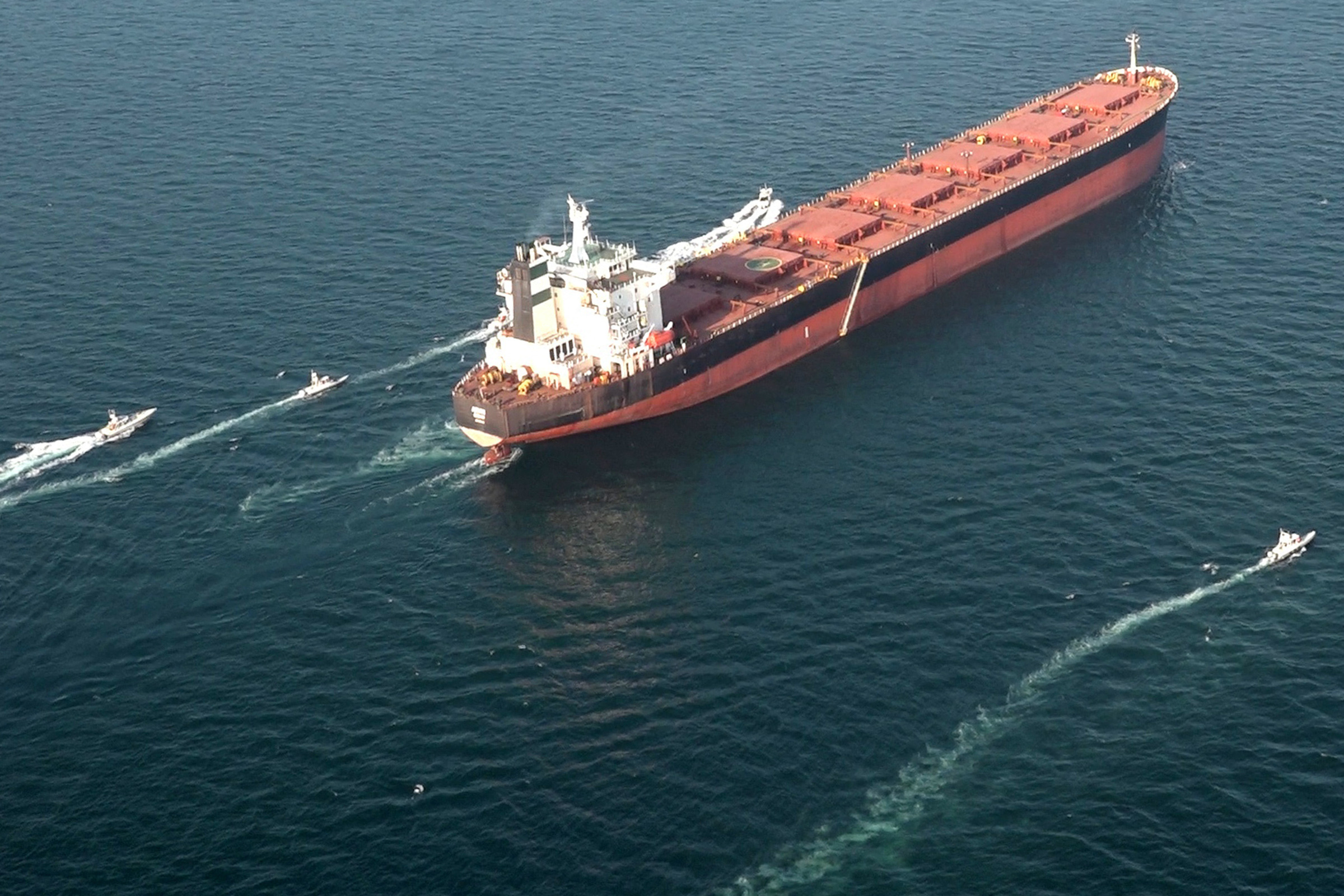 |
IRGC boats move around an oil tanker during an exercise in the Hormuz Strait on 17/2. Photo: AFP
Previously, Iran's mission to the United Nations and military representatives stated that "non-hostile" vessels could transit the Hormuz Strait. This permission was conditional on ships not participating in or supporting actions against Iran and fully complying with security regulations set by Tehran.
The Iran Defense Council, responsible for national defense policy and resource mobilization, affirmed that the decision to permit "non-hostile" vessels to pass currently depends on prior coordination between Iranian forces and relevant parties.
Concurrently, the Iranian Parliament is considering a bill to charge fees for vessels transiting the Hormuz Strait in exchange for security guarantees. This legislation is expected to be finalized next week.
These actions by Iran are believed to aim at controlling global energy transport flows. The intent is to pressure the US to end hostilities and gain leverage in peace negotiations.
India's Ministry of Shipping announced on 25/3 that all Indian ships and crew in the Gulf region remain safe. Two Indian-flagged liquefied natural gas carriers, Pine Gas and Jag Vasant, transited the Hormuz Strait smoothly "without seeking permission" and are en route home.
Malaysian Prime Minister Anwar Ibrahim also stated that Malaysian vessels are permitted to pass through the Hormuz Strait following his discussions with Iranian leaders and several regional nations.
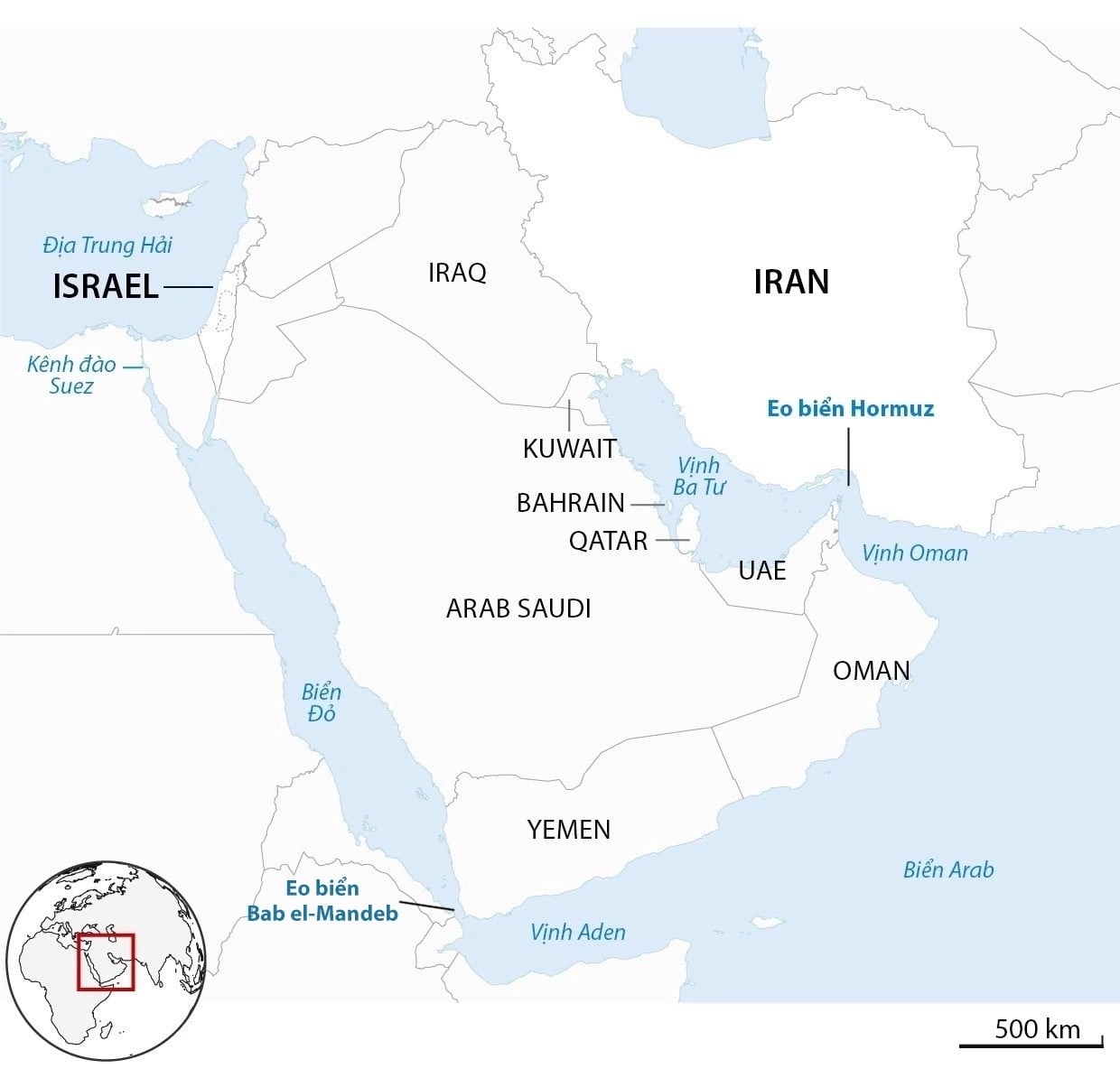 |
The location of the Hormuz Strait and surrounding areas. Graphic: Guardian
The Hormuz Strait plays a crucial role in global energy security. Approximately 20% of the world's oil supply is affected by disruptions here, while vessel traffic has decreased by up to 95% compared to before the conflict.
Thanh Danh (According to Hindustan Times, Reuters).