Iran’s Khatam al-Anbiya Central Command today declared US restrictions on maritime activities and transit in international waters to be illegal and an example of piracy. The command issued a strong warning, stating, "If the security of Iranian ports in the Persian Gulf and Arabian Sea is threatened, no port in these two regions will be safe."
This declaration follows an announcement on 12/4 by the US Central Command (CENTCOM), the entity responsible for US military operations in the Middle East. CENTCOM stated it would begin blocking all maritime traffic to and from Iranian ports from 10 h on 13/4 (21 h Hanoi time). This action aligns with President Donald Trump's previously announced order to blockade the Strait of Hormuz, which he said aims to remove all mines and fully open the strait.
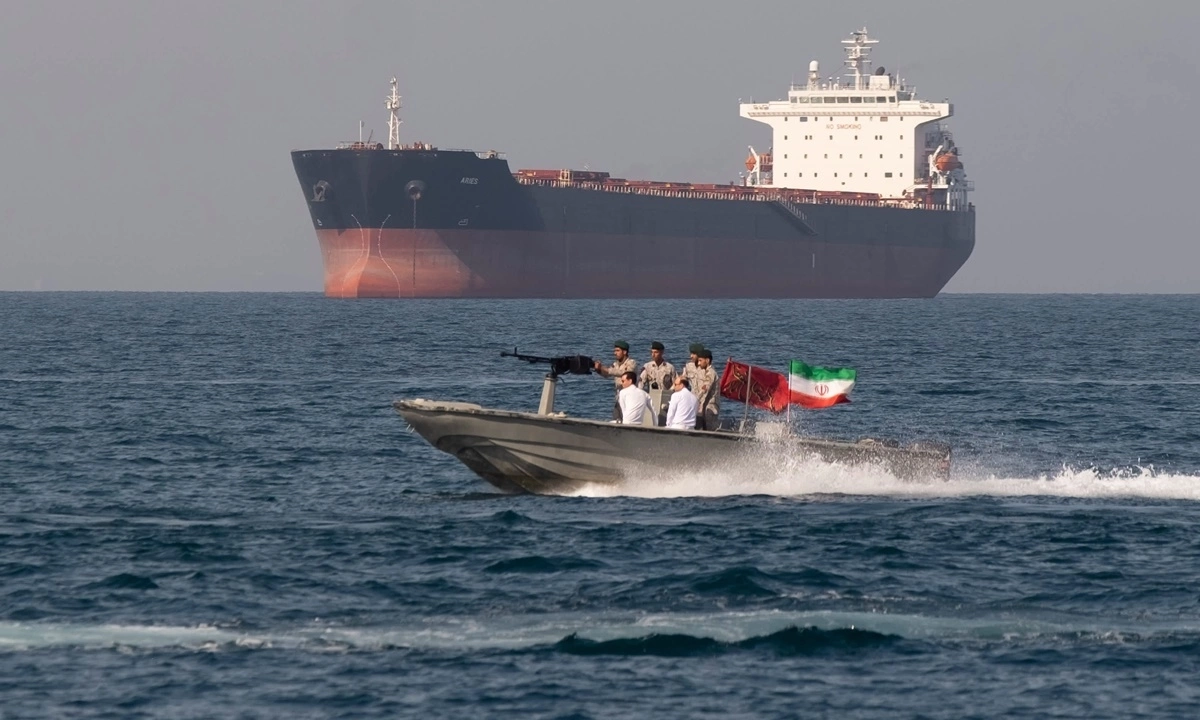 |
An Iranian speedboat carrying soldiers near the Strait of Hormuz in 2019. *AFP*. |
The US blockade plan has drawn criticism from several international figures. Spanish Defense Minister Margarita Robles called Trump's plan "absurd", stating, "This is just another development in the spiral of escalation that we are all caught in." Similarly, UK Prime Minister Keir Starmer announced that the UK would not participate in the naval blockade, emphasizing, "We do not support the blockade," and adding that the UK "will not be drawn" into a war with Iran.
In Beijing today, Chinese Foreign Ministry spokesperson Guo Jiakun highlighted the Strait of Hormuz as a vital international trade route for goods and energy. He stressed that maintaining the security, stability, and smooth flow of traffic through this route serves the common interests of the international community. Guo expressed China's hope that all relevant parties would adhere to the temporary ceasefire agreement, resolve disputes through political and diplomatic means, avoid a resurgence of hostilities, and create conditions for the early restoration of peace and stability in the Gulf.
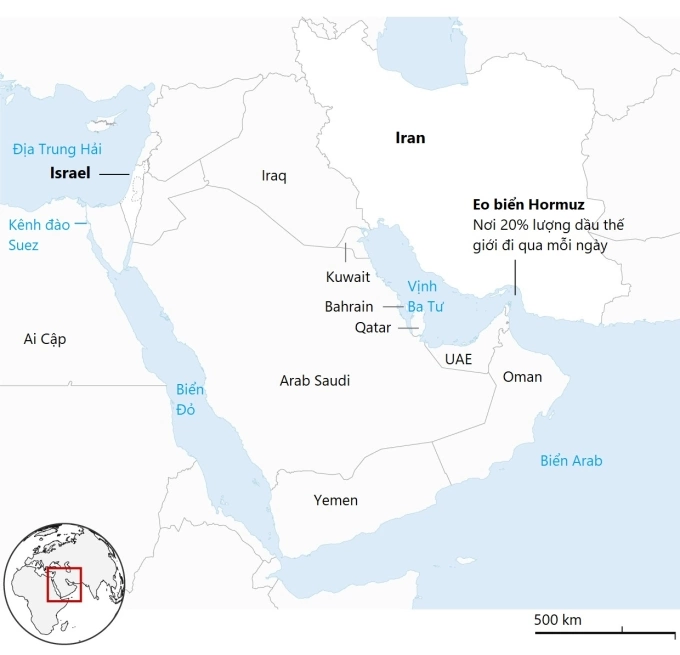 |
Location of the Persian Gulf, Arabian Sea, and Strait of Hormuz. *Guardian*. |
Iranian officials have also voiced strong opposition to the US measures. Iranian Parliament Speaker Mohammad Ghalibaf stated that the country would "not yield to any threats from the US". Echoing this sentiment, Iranian Navy Commander Shahram Irani called Trump's statement on blockading the Strait of Hormuz "ridiculous". Iran's Islamic Revolutionary Guard Corps (IRGC) further declared that it still controls the Strait of Hormuz, warning that "the adversary will be caught in a deadly vortex if they make a miscalculation".
Despite failing to reach an agreement in talks in Pakistan last weekend, US and Iranian forces still adhere to the ceasefire. Many nations have called on all parties to continue pursuing diplomatic solutions. Turkish Foreign Minister Hakan Fidan said on 13/4 that both the US and Iran showed "goodwill" towards the ceasefire and understood the necessity of this agreement.
By Huyen Le (According to AFP, Reuters)