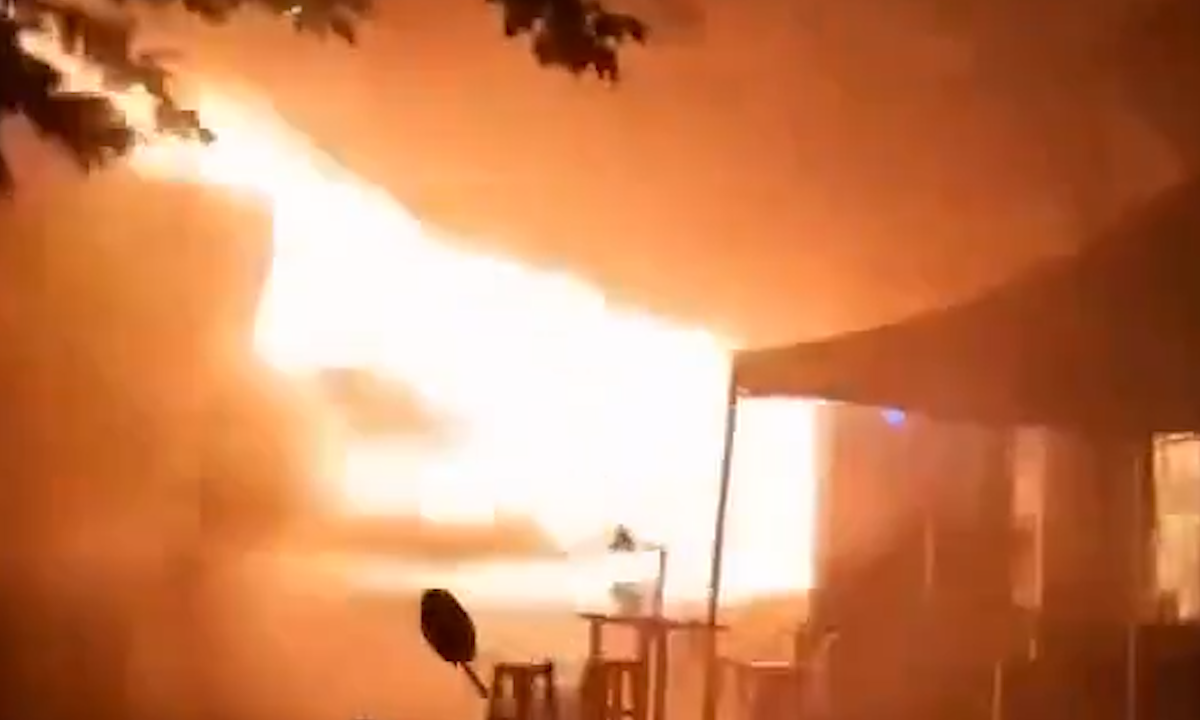
Iran's Fars News, an agency linked to the Islamic Revolutionary Guard Corps (IRGC), reported on 12/7 that IRGC forces deployed drones to attack US High Mobility Artillery Rocket System (HIMARS) launchers in Kuwait, alleging they were "preparing to fire into Iranian territory." The Iranian news agency claimed three US soldiers died, with several others injured in the attack.
According to Fars News, Iran also launched three missiles at the Al Mina oil and gas complex in Ahmadi province, the same location where the US deployed Army Tactical Missile System (ATACMS) tactical ballistic missile launchers. Additionally, Iranian forces targeted US military objectives in Bahrain, Qatar, Jordan, and Oman in attacks on the same day.
Central Command (CENTCOM), the body overseeing US military operations in the Middle East, stated, "There are no reports of US soldier casualties in the region; all personnel are safe." However, CENTCOM did not address the alleged HIMARS attacks by Iran.
The Kuwait Ministry of Defense reported that three northern border control posts and an oil rig, owned by the Kuwait Oil Company, were damaged in an attack by "hostile unmanned aerial vehicles (UAVs)," without identifying the country that deployed the aircraft. One worker was injured and is receiving medical care. Kuwaiti officials did not mention information about UAVs attacking US HIMARS units. The Kuwait Army General Staff stated its forces are on high alert, implementing "all necessary preventative measures to maintain national security and territorial integrity."
HIMARS is a self-propelled multiple rocket launcher system on a wheeled chassis, developed by the US from the M270 system. Each HIMARS launcher is operated by a three-person crew and can carry six 227 mm rockets or one ATACMS tactical ballistic missile with a range of 300 km.
US HIMARS batteries deployed in Kuwait attacked numerous targets in Iran during Operation Horrific Fury in March, using ATACMS rounds and newly developed Precision Strike Missiles (PrSM).
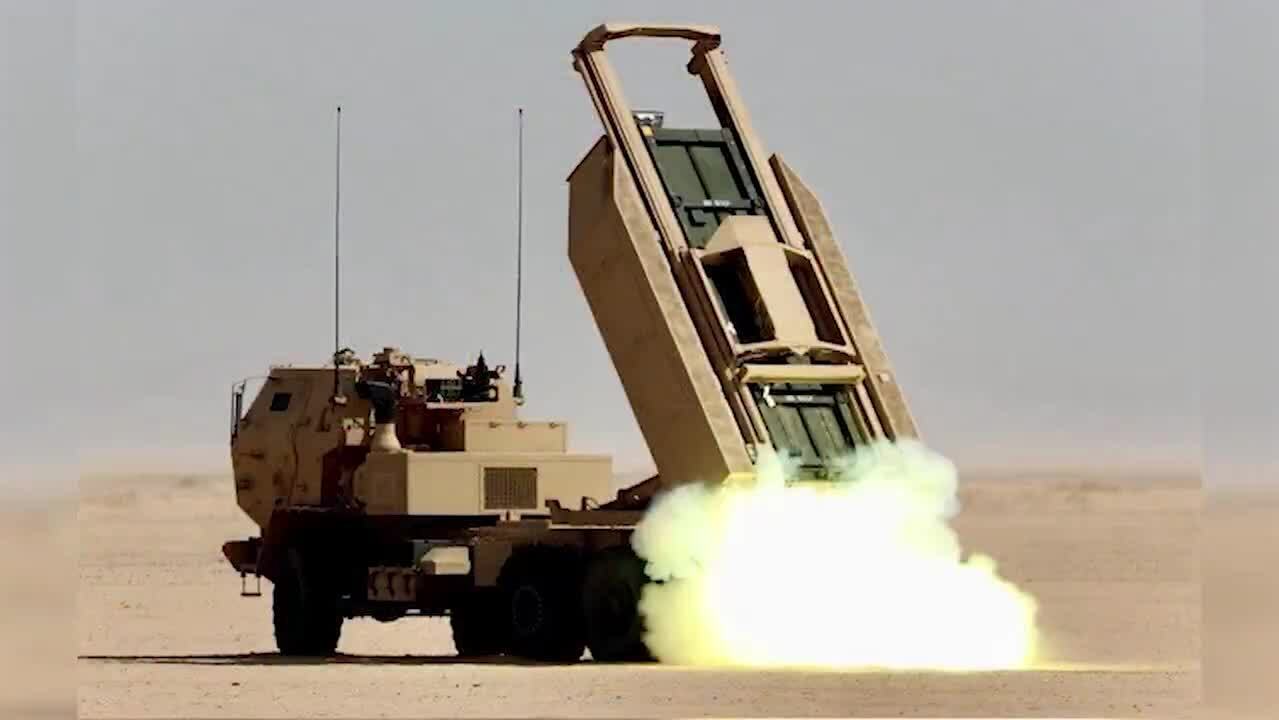 |
US HIMARS complex firing during an attack operation on Iran in March. Photo: CENTCOM |
Jimmy Arter, an official overseeing transformation and lessons learned at the Fires Center of Excellence at Sill Army Base, revealed in April that the US had exhausted its PrSM ballistic missile inventory in the early stages of the conflict. The IRGC also announced in April that it had attacked US HIMARS artillery units stationed on Bubiyan Island in Kuwait.
The regional situation remained calm for about three weeks after the US and Iran signed a memorandum in mid-June. However, tensions escalated when the US, in coordination with Oman and the International Maritime Organization (IMO), established a new route south of the Hormuz Strait, located entirely within Omani territorial waters. This route encourages commercial vessels to use it instead of the northern route through Iranian territorial waters.
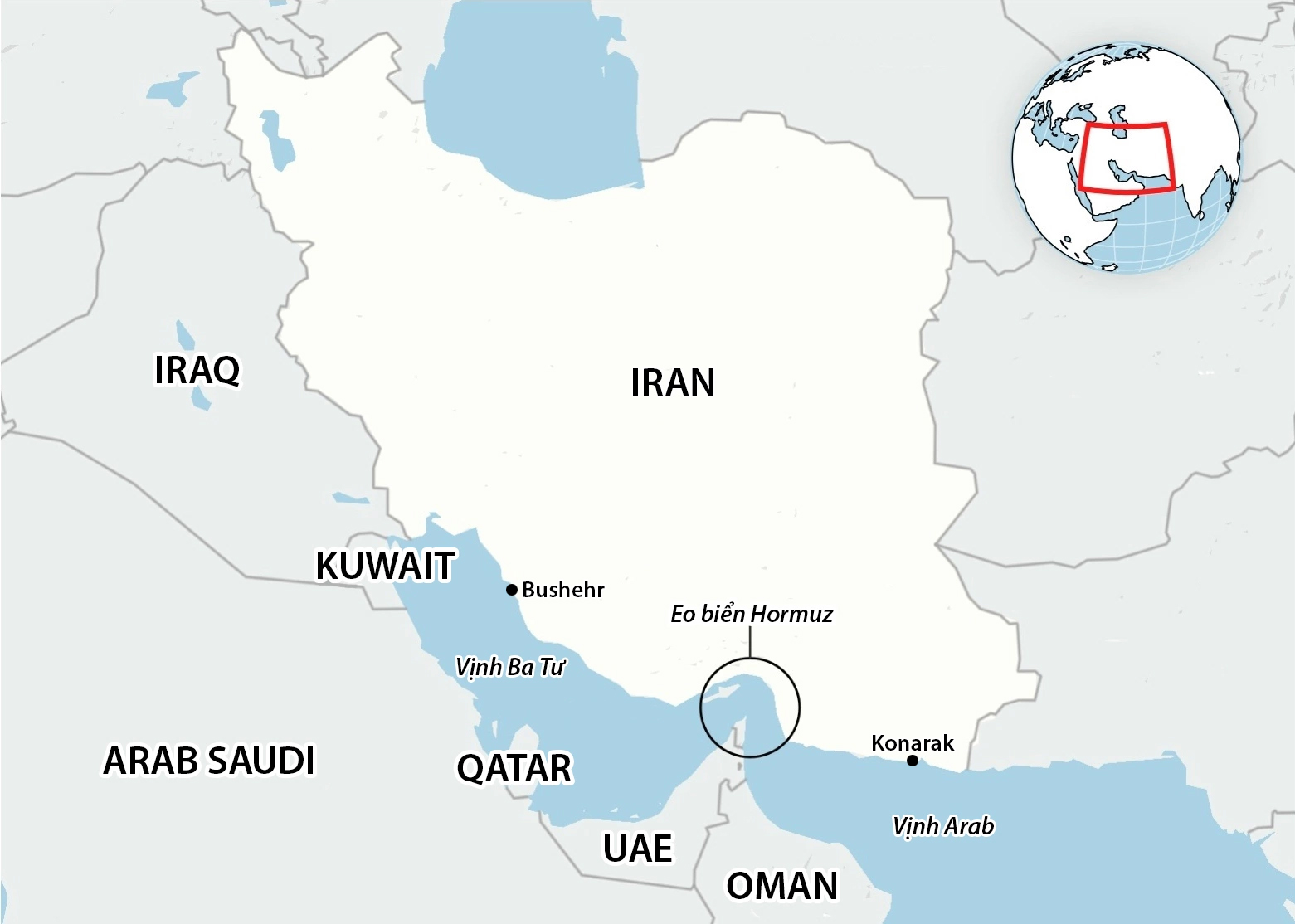 |
Location of Iran and countries in the region. Graphic: Guardian |
The IRGC accused the US of "imposing its will" on the Omani government by seeking to direct more vessels through the Hormuz Strait via an "illegal maritime route" in the southern area. Cargo ships passing through the strait have been attacked, leading to retaliatory strikes between Iran and the US.
Nguyen Tien (According to AFP, AP, CNN, Fars News)