Mohsen Rezaee, an advisor to Iran's Supreme Leader, today accused the United States and Israel of crossing red lines, emphasizing that Iran would respond with a "decisive, appropriate reaction" and considers this a top priority.
"We will defend the Strait of Hormuz, as this strategic maritime route is one of Iran's deterrent pillars, playing an important role in ensuring national security and interests. The Strait of Hormuz is even more vital than dozens of nuclear bombs," the Iranian official said.
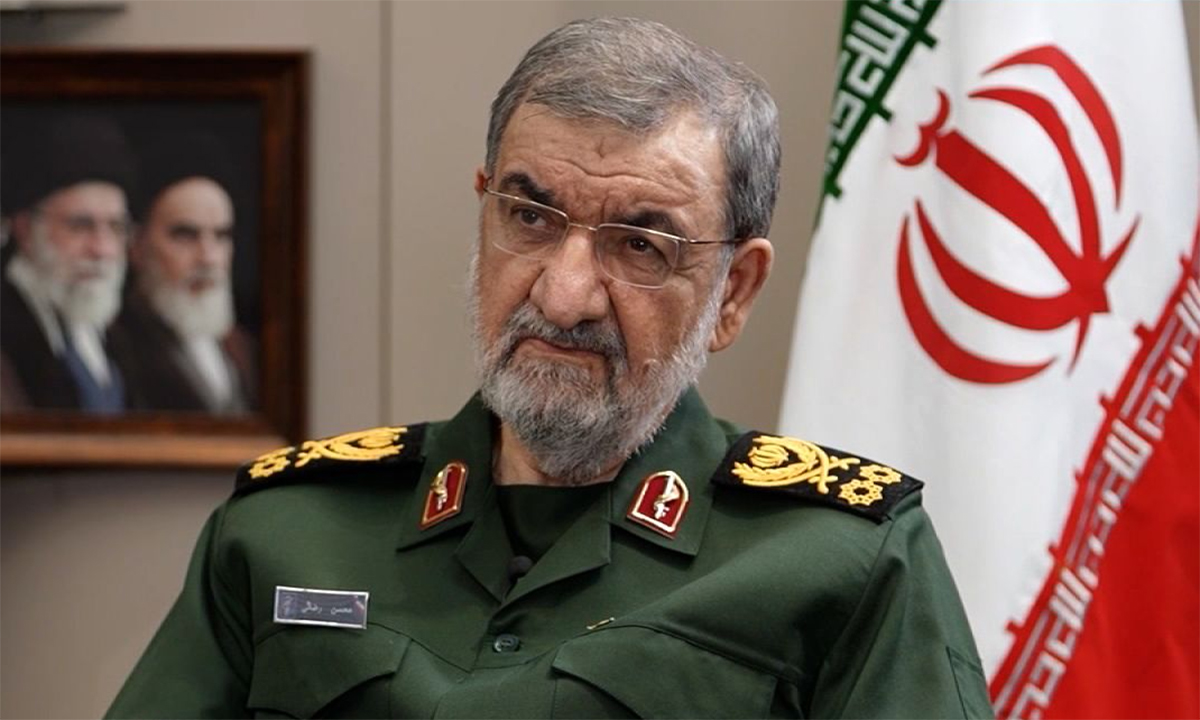 |
Mohsen Rezaee during an interview on 5/6. Photo: CNN |
He also warned that no nation can maintain security if actions targeting leaders become common.
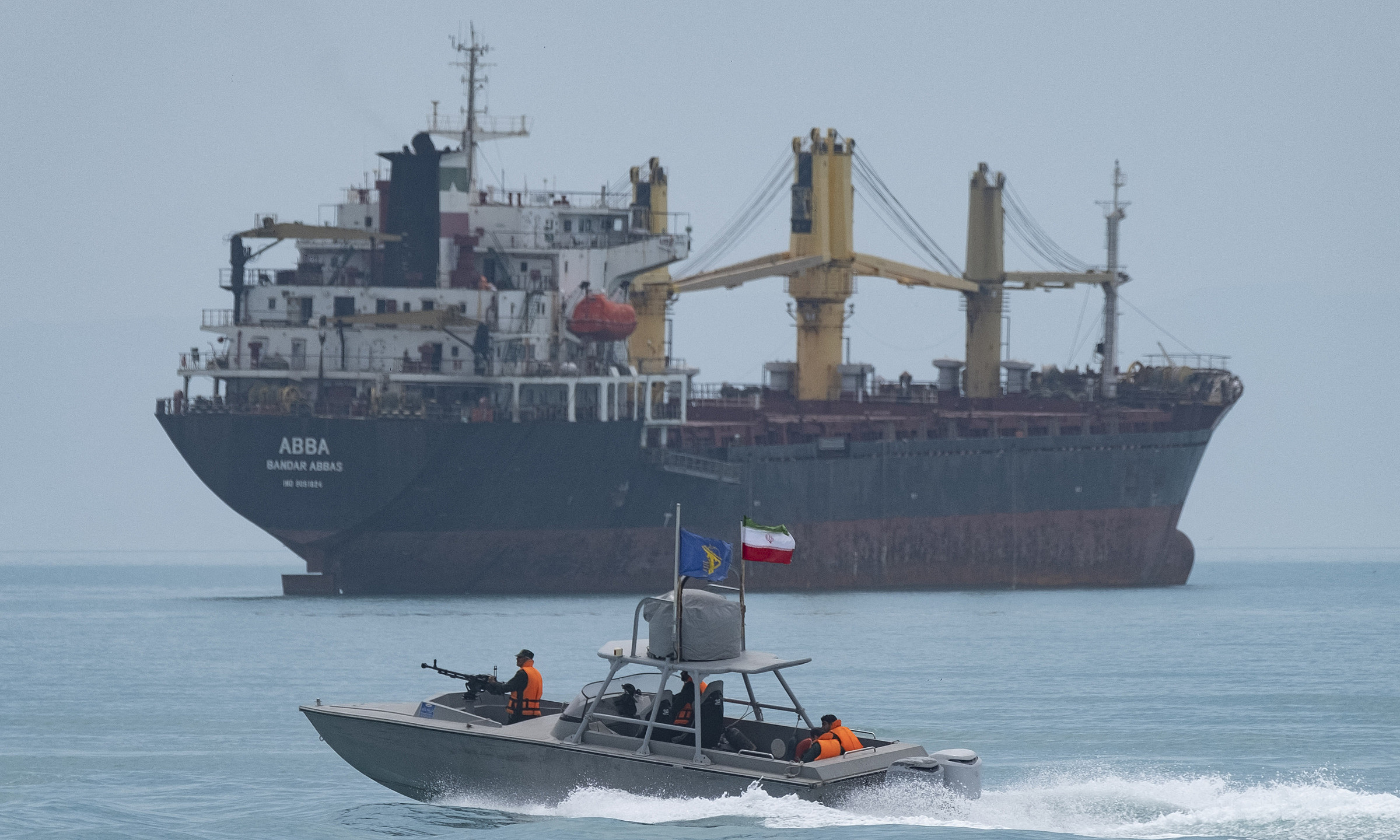
The statement followed an announcement by the naval forces of Iran's Islamic Revolutionary Guard Corps (IRGC) to close the Strait of Hormuz due to "unstable conditions caused by the actions of external forces." The IRGC stated this decision would last until further notice and until "the US ceases interference in the region."
US Central Command (CENTCOM), responsible for US military operations in the Middle East, accused Iran of attacking the Cyprus-flagged cargo ship GFS Galaxy as it passed through the Strait of Hormuz. The attack severely damaged the ship's engine room, preventing it from continuing its journey, and one crew member went missing.
CENTCOM launched its third airstrike of the week against Iran on 12/7 in retaliation. Iran's Tasnim and Mehr News agencies reported that Lieutenant Hamidreza Dehghani, an IRGC naval serviceman, was killed during the US attack on Jask port in the southern part of the country.
The IRGC then launched missile and unmanned aerial vehicle (UAV) attacks on US military bases in Jordan, Qatar, Kuwait, Bahrain, and Oman in retaliation. It claimed to have destroyed a command center and MQ-9 Reaper UAV hangars at Prince Hassan Air Base in Jordan.
The IRGC also announced an attack on Al Udeid Air Base in Qatar, destroying a military aircraft maintenance facility and a command center there. Logistics centers and refueling facilities serving US aircraft carriers at Oman's Duqm port were also targeted.
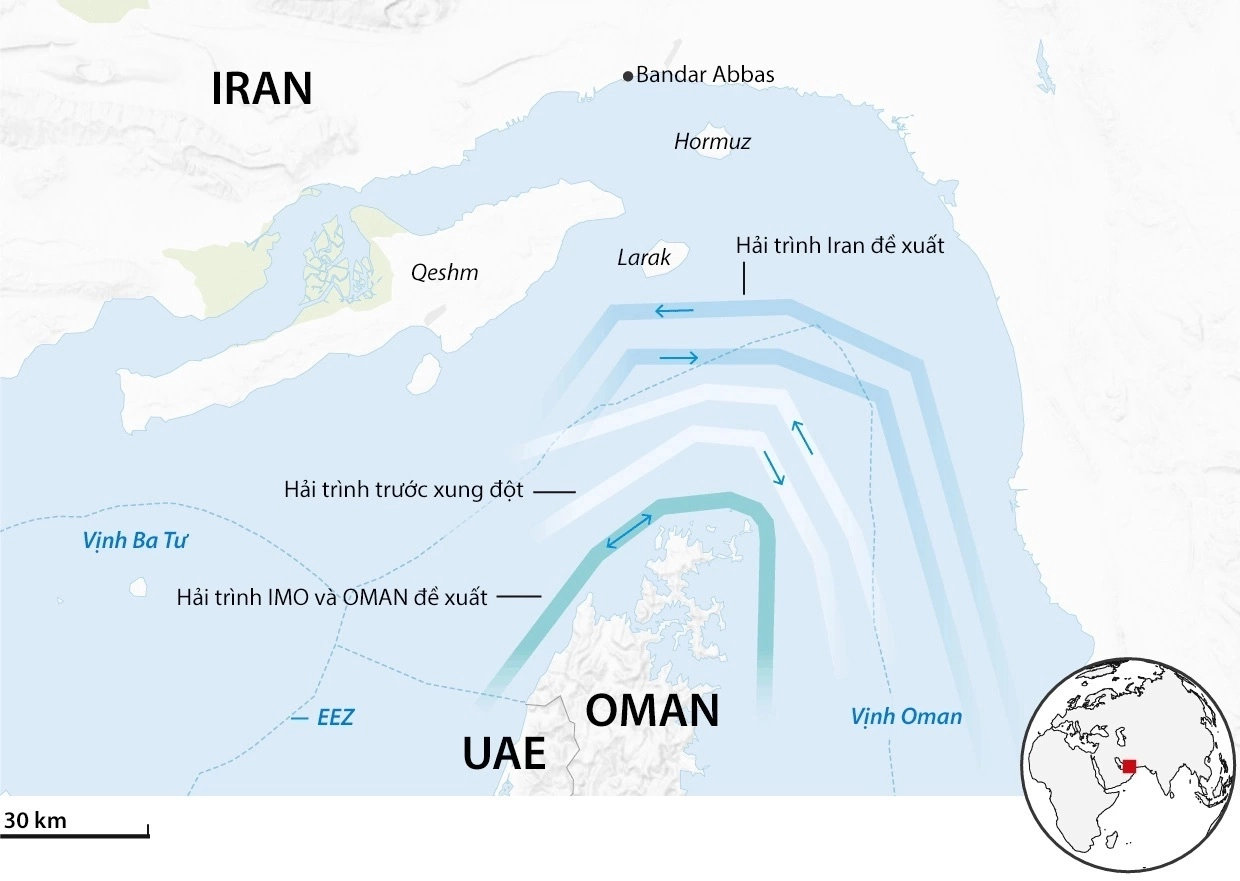 |
Shipping routes through the Strait of Hormuz. Graphic: Guardian |
The reciprocal attacks occurred amidst escalating regional tensions, after the US, in coordination with Oman and the International Maritime Organization (IMO), established a new route south of the Strait of Hormuz, located entirely within Omani territorial waters. They encouraged commercial vessels to choose this option instead of the northern route through Iranian territorial waters.
Iran opposes "attempts to establish illegal maritime routes in the region," having repeatedly attacked vessels it deems to be moving illegally through the Strait of Hormuz. Tehran also warned it is ready to respond to any attack or action it considers a violation of regulations, and to expand its retaliatory targets.
Nguyen Tien (According to AFP, AP, Tasnim, ISNA)