Iran's Islamic Revolutionary Guard Corps (IRGC) announced on 12/7 that it launched retaliatory attacks following US airstrikes, targeting military facilities in several US allied countries across the Middle East.
The IRGC Aerospace Force launched ballistic missiles at Prince Hassan Air Base in Jordan, located about 100 km from the capital Amman, where US forces are stationed. Iran's state television (IRIB) reported that the attack destroyed a command and control center and hangars for US MQ-9 unmanned aerial vehicles (UAVs) at the base.
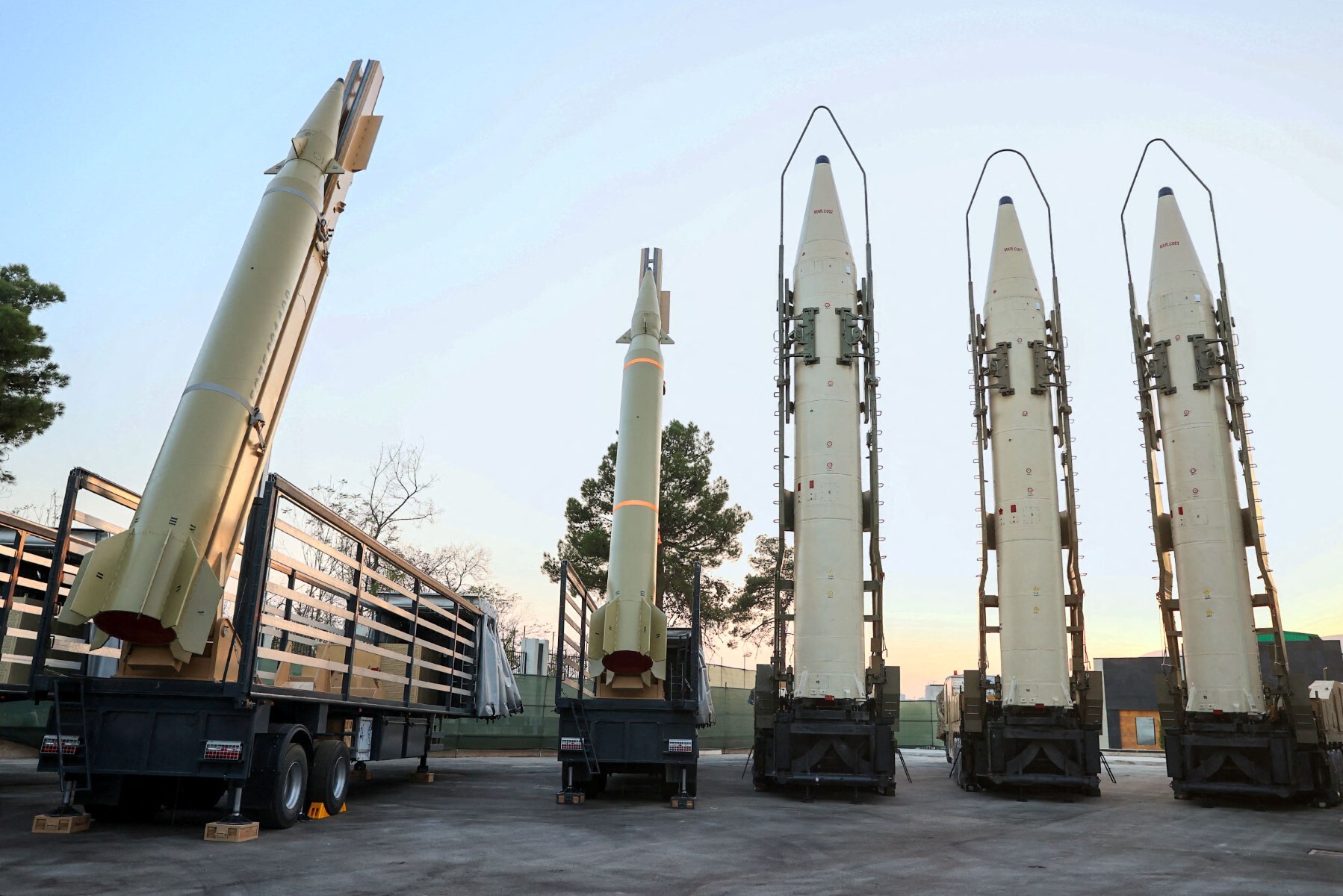 |
Ten lua tam xa Haj Qasim va Khorramshar trong trien lam ve quoc phong Tehran 8/2023. Anh: AFP
The IRGC also claimed to have targeted Al Udeid Air Base in Qatar, stating it destroyed a fighter jet maintenance center and a command and control center.
Qatar's Ministry of Defense previously stated it "successfully intercepted a missile attack" targeting its territory. However, hours later, Qatar's Ministry of Interior raised its security alert, urging residents to stay indoors or seek shelter, seemingly as a continued precaution against Iranian missiles.
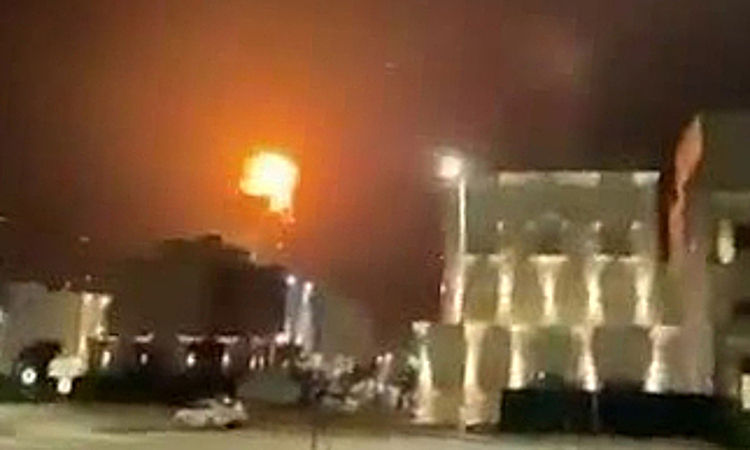
The IRGC also carried out a "surprise and large-scale" strike on logistics centers and refueling facilities serving US aircraft carriers at Duqm port in Oman, stating that these targets were "destroyed" in the attack.
Iran's military simultaneously announced multiple unmanned aerial vehicle (UAV) attacks on US military facilities in Kuwait and Bahrain. Earlier, some X accounts tracking the Middle East conflict posted videos appearing to show HIMARS rocket artillery firing in both countries, amid the US's third strike this week targeting Iran.
IRIB reported that Iranian suicide UAVs attacked the patriot air defense system, ammunition depots, and radar stations of the US military in Kuwait. Another strike targeted US communication systems and a radar station in Bahrain.
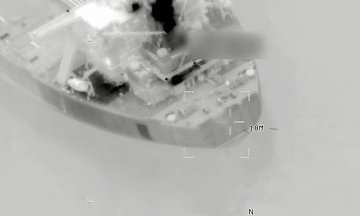
Tau san bay, chien ham va may bay My trien khai cac cuoc tap kich Iran 6-11/7. Video: CENTCOM
Concurrently, US Central Command (CENTCOM) announced it had completed its third airstrike last week targeting Iran, hitting about 140 military targets. These included missile and unmanned aerial vehicle sites, naval capabilities, ammunition depots, communication networks, and Iran's coastal surveillance facilities.
CENTCOM stated that the US military attacked over 300 targets across three consecutive nights, contributing to a reduction in Iran's ability to threaten commercial shipping through the Strait of Hormuz. The US said it has supported over 800 commercial vessels, carrying a total of about 400 million barrels of oil, safely through the Strait of Hormuz since early May.
Iran's large-scale retaliatory strikes triggered air defense alarms across several Gulf nations this morning. Tehran frequently accuses these countries of "supporting the US" in carrying out airstrikes against Iran.
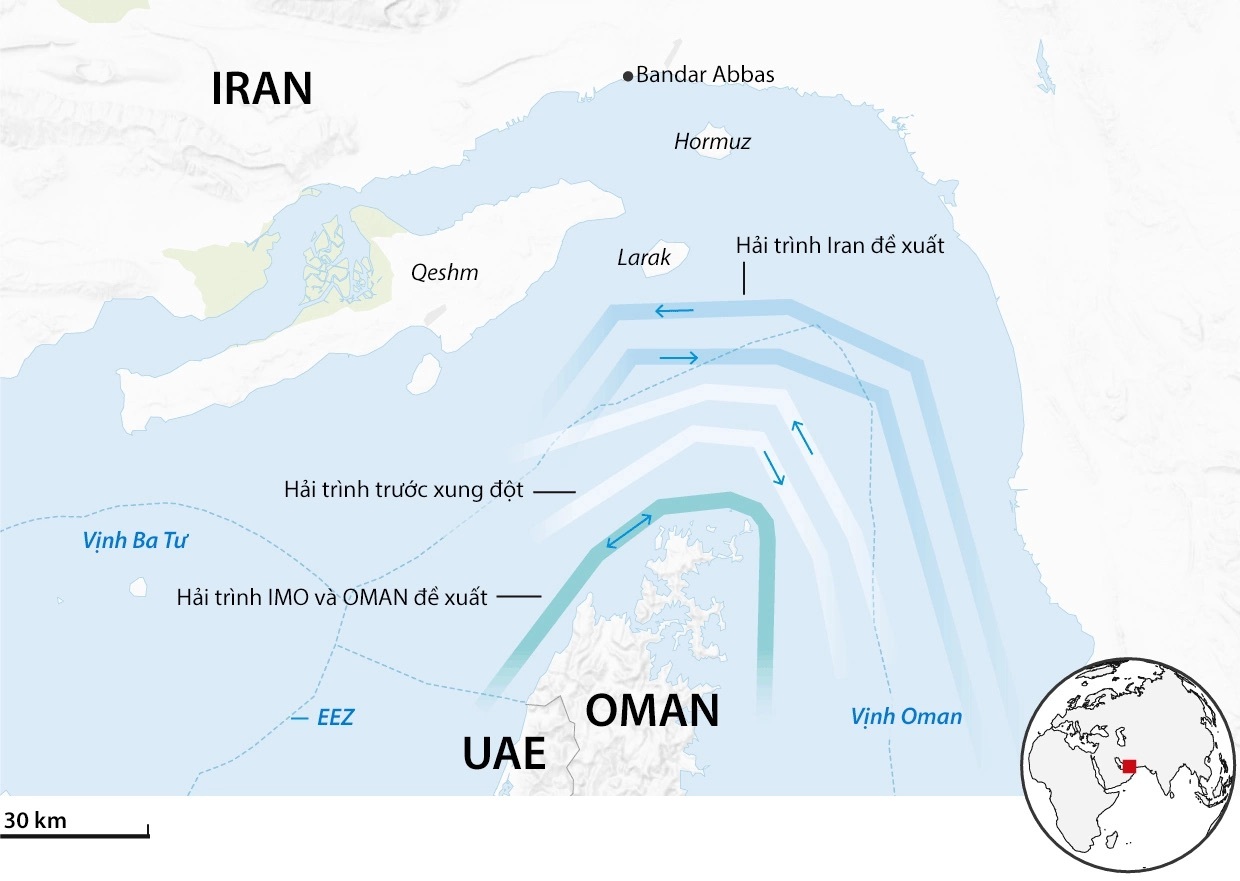 |
Cac hai trinh di qua eo bien Hormuz. Do hoa: Guardian
Following a memorandum signed by the US and Iran in mid-June, the regional situation had been quiet for about three weeks. However, tensions escalated when the US, in coordination with Oman and the International Maritime Organization (IMO), established a new shipping route south of the Strait of Hormuz, located entirely within Omani territorial waters. Commercial ships were encouraged to use this option instead of the northern route, which passes through Iranian territorial waters.
The IRGC accused the US of "imposing its will" on Oman's government by seeking to direct numerous vessels through the Strait of Hormuz via an "illegal maritime route" south of the area, along Oman's coast.
The force confirmed that the US carried out airstrikes this morning against several coastal bases and telecommunication towers in southern Iran, compelling Tehran to execute a "crushing retaliation". It also warned that this was only the first phase of its retaliatory campaign. The IRGC cautioned that if the US continues military actions, Iran will respond with "stronger" measures.
Thanh Danh (Theo Al Jazeera, IRIB, PressTV, AFP)