US President Donald Trump announced on 23/3 that he was engaged in "good, effective" negotiations with Tehran and requested the Pentagon to postpone all military strikes against Iran's power plants and energy infrastructure for a 5-day period to facilitate discussions. This effectively canceled the 48-hour ultimatum, issued by Trump on 21/2, demanding Iran reopen the Strait of Hormuz.
Despite Iran's denial of any formal negotiations with the US, Trump's statement helped Iran avoid the risk of a large-scale US military air campaign targeting its power grid.
Iran relies primarily on thermal power plants, which generate over 95% of the electricity supplied to approximately 40,6 million users, including 32,3 million households, according to Iran's Ministry of Energy.
There are approximately 130 thermal power plants nationwide with a total capacity of 78,000 MW. Among these, about 20 plants have a capacity exceeding 1,000 MW, and three plants exceed 2,000 MW.
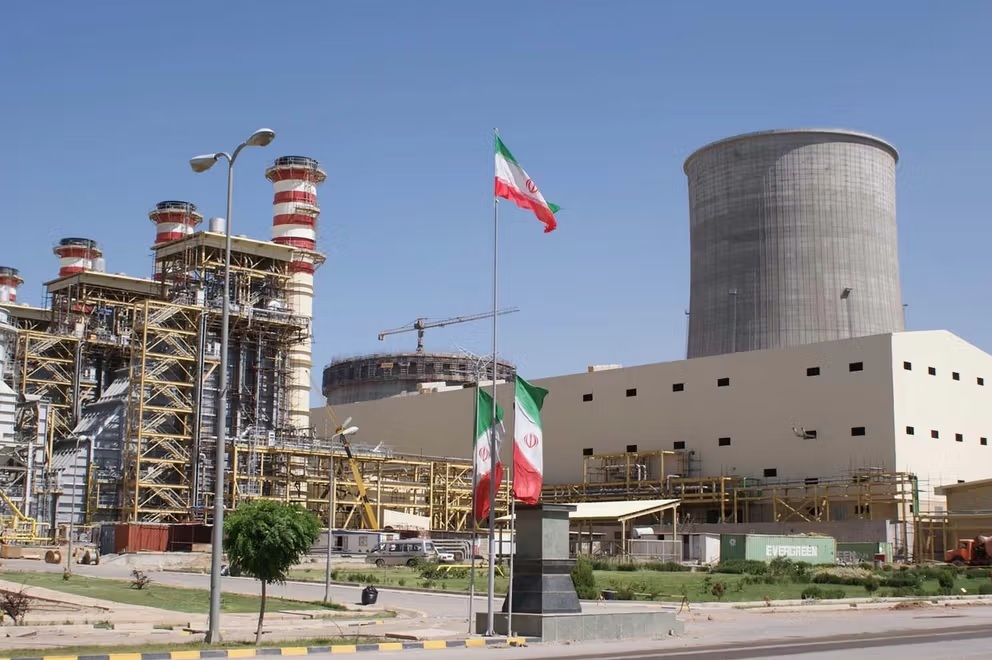 |
A power plant in Iran. Photo: Iran International |
Although official figures indicate hydropower accounts for 13,4% of Iran's total power generation capacity, the actual figure is below 5%, as water levels in its reservoirs are dwindling due to prolonged drought conditions.
Hamed Seyrfianpour, acting deputy director of the Thermal Power Plants Holding Company (TPPH), stated that Iran is currently among the top 10 countries globally in terms of thermal power capacity.
Iran's largest thermal power facility is the Damavand power plant, with a capacity of approximately 2,900 MW. Also known as the Pakdasht plant, this facility was built on about 200 ha of land, located approximately 50 km east of central Tehran. Construction costs for the plant were around 2 billion USD.
The Neka (Behshahr) power plant, also covering about 200 ha, is situated along the Caspian Sea in Mazandaran province and has a capacity of approximately 2,200 MW.
The Rajaei power plant, located along the Karaj-Qazvin route, produces about 2,000 MW of electricity and spans an area of approximately 350 ha.
Five main plants surrounding Tehran, including Damavand, Rajaei, Montazer Ghaem, Roudshour (Rudshur), and Mofatteh, play a central role in electricity supply.
Within the Iranian capital itself, smaller plants such as Besat, Rey, Tarasht, and Parand operate at much lower capacities. The largest of these, Parand, produces about 950 MW, while Besat generates approximately 250 MW, and Tarasht only 50 MW.
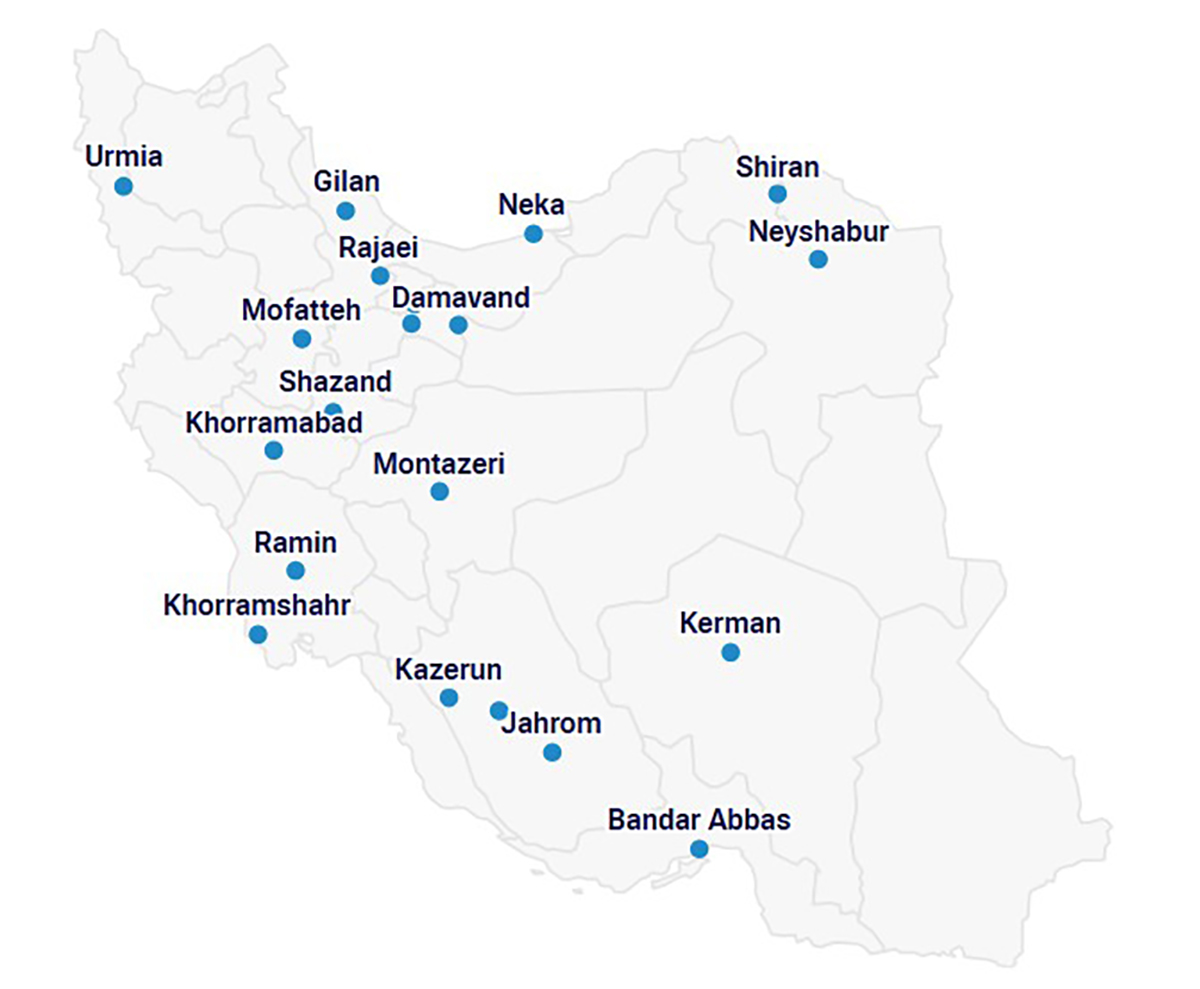 |
Iranian power plants with capacities over 1,000 MW. Graphic: Iran International |
Resilience and Limited Impact of Attacks
Although Trump once threatened to eliminate Iran's power plants, these are not easy targets. A facility like Damavand, with its numerous cooling towers and scattered operational units, would only be completely paralyzed after one or multiple widespread attacks. Even if this plant ceased operations, the impact on Iran's national power grid would remain limited.
The complete destruction of Damavand would only remove 3,7% of Iran's total power generation capacity. The country could partially offset this loss by ceasing the export of approximately 400 MW of electricity abroad, including to Iraq.
Iran's electricity system is not concentrated in a few locations. The transmission and sub-transmission network extends approximately 133,000 km. Including urban and rural lines, the total length of Iran's power transmission system exceeds 1,3 million km.
The system is supported by 857,000 transformers and an estimated 2,000-5,000 large and medium-sized substations nationwide. Attacks on substations could cause temporary local power outages, but they can be replaced relatively quickly.
Given the scale and dispersion of the power grid, targeting one or a few power plants is unlikely to cause a nationwide blackout, according to observers.
"An attack on power plants would be counterproductive. It would rally more people to defend the country," said Mohsen Borhani, a lawyer in Tehran.
In response to Trump's ultimatum threat, Iran's armed forces declared that if their power plants were attacked, all energy, information technology, and desalination infrastructure across the Middle East would be targeted. Should this occur, the Gulf region, heavily reliant on desalination plants for drinking water from seawater, could face a severe humanitarian disaster.
Mehr News Agency, close to the Islamic Revolutionary Guard Corps (IRGC), published a map showing power plants in the region, including the United Arab Emirates (UAE), Saudi Arabia, Qatar, and Kuwait, with the message: "Prepare to say goodbye to electricity!"
Electricity enables the gleaming desert cities in the Gulf region to sustain life. It is also the power source for desalination plants, providing 100% of drinking water for millions in Bahrain and Qatar, 80% of drinking water needs in the UAE, and 50% in Saudi Arabia. Without electricity, these critical desalination plants cannot operate.
Some sources indicated that Gulf countries sought to persuade Trump to retract his threat against Iran's power grid, fearing that an IRGC retaliatory strike could cut off water supplies, the "lifeline" for millions in the region.
Thanh Tam (According to Iran International, Japan Times, NY Times)