"United States leaders cannot calculate which critical assets would be within our forces' reach if they strike our infrastructure," the Islamic Revolutionary Guard Corps (IRGC) said in a statement today. "Our response will extend beyond the region if United States forces cross our red line."
"United States regional partners also need to understand that until now, we have shown significant restraint for the sake of neighborly relations and considered our retaliation targets, but all those limitations are now gone," the IRGC stated.
"We will target the infrastructure of the United States and its partners, potentially depriving them and their allies of the region's oil and gas supplies for many years," the statement read.
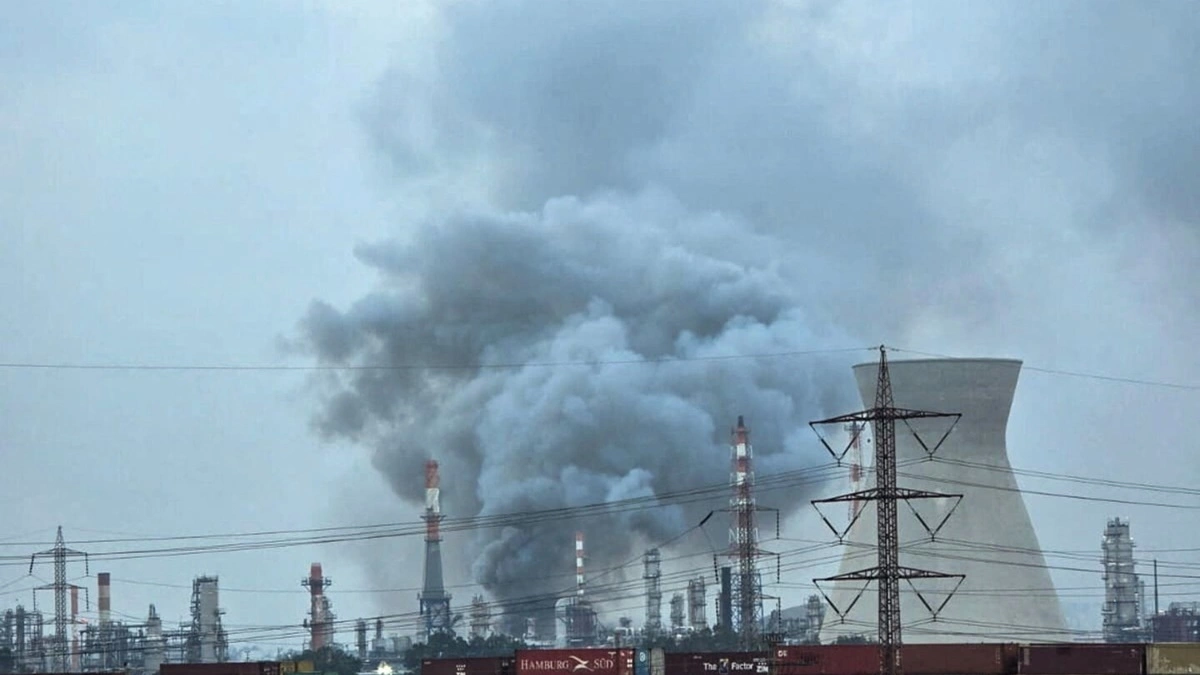 |
A refinery in Haifa province, Israel, was damaged following an Iranian attack on 19/3. *Photo: Reuters*.
United States President Donald Trump last week set a deadline for Iran to reopen the Strait of Hormuz by 7/4 at 20h (8/4 at 7h Hanoi time), warning that civilian infrastructure, including bridges and power plants, would otherwise be destroyed.
On 6/4, he further declared that the entire country of Iran "could be wiped out in one night, and that could be tomorrow night" if the ultimatum to reopen the strait was not met.
Iranian officials rejected President Trump's ultimatum, warning that "any reckless action" by the United States would plunge the entire region "into a sea of fire".
In recent days, United States-Israel forces have begun targeting Iran's strategic infrastructure and energy facilities, following airstrikes on thousands of military targets over more than 5 weeks of fighting. While attacking civilian infrastructure in conflict risks violating international law, United States and Israeli officials argue these are legitimate targets as they produce supplies or are used to transport weapons for the Iranian military.
On 7/4, Qatar warned that the conflict in the Middle East is approaching an uncontrollable threshold. "That is why we call on all parties to seek a solution to end the war before it's too late," said Majed al-Ansari, spokesperson for Qatar's Ministry of Foreign Affairs.
By Huyen Le (AFP, Al Jazeera)