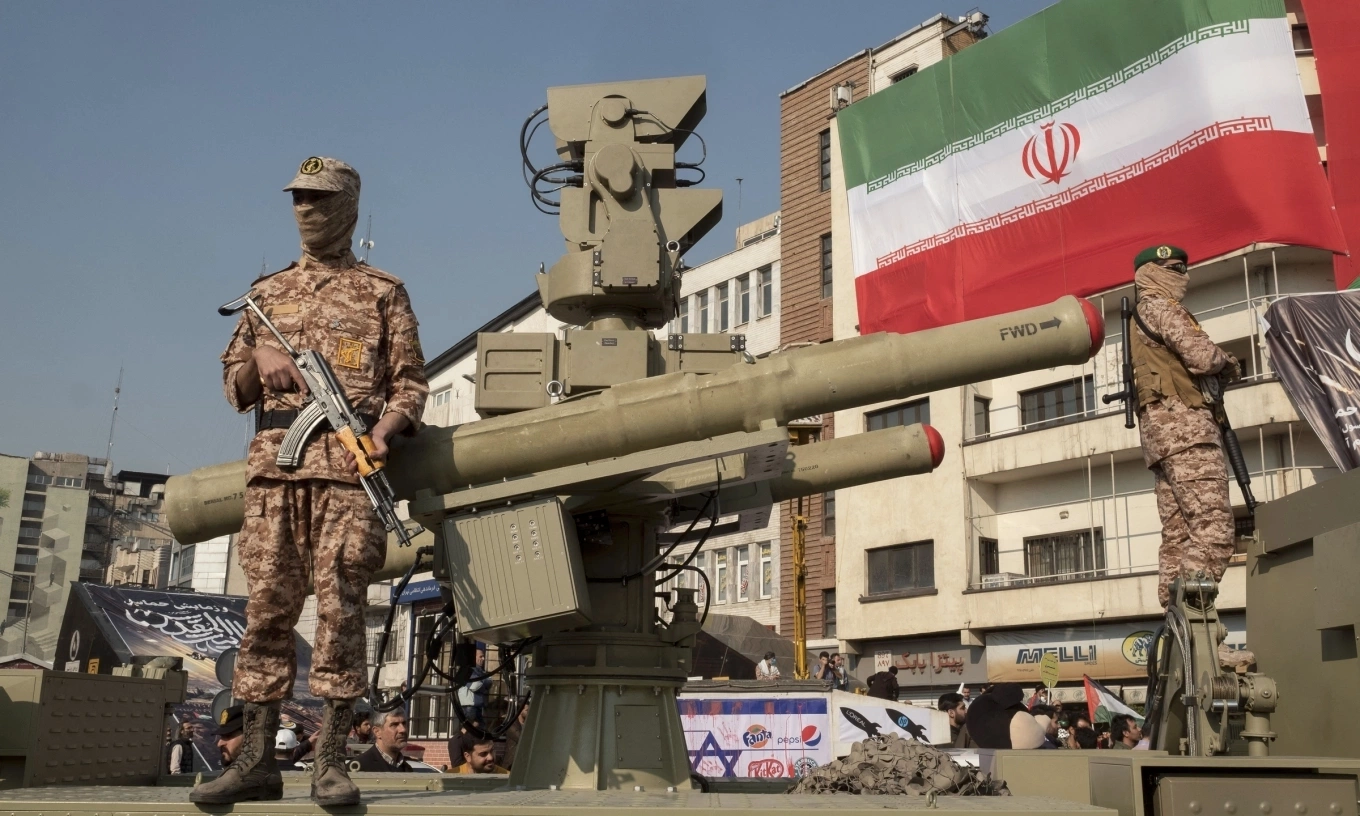
From now on, nations siding with the US to implement sanctions against Iran will certainly face issues when transiting the Strait of Hormuz. "We have established new legal and security systems in the region, and all vessels passing through will have to coordinate with Iran," General Mohammad Akraminia, spokesperson for the Iranian military, announced today.
The Iranian general stated that the new legal system has come into effect and will bring "economic, security, and political benefits."
Ebrahim Azizi, head of the National Security and Foreign Policy Committee of the Iranian parliament, earlier conveyed a similar message on social media. "We warn governments, including small nations like Bahrain, that supporting the US-backed resolution will lead to severe consequences. The Strait of Hormuz is a vital artery; do not take risks and cause it to be permanently closed to you," he wrote.
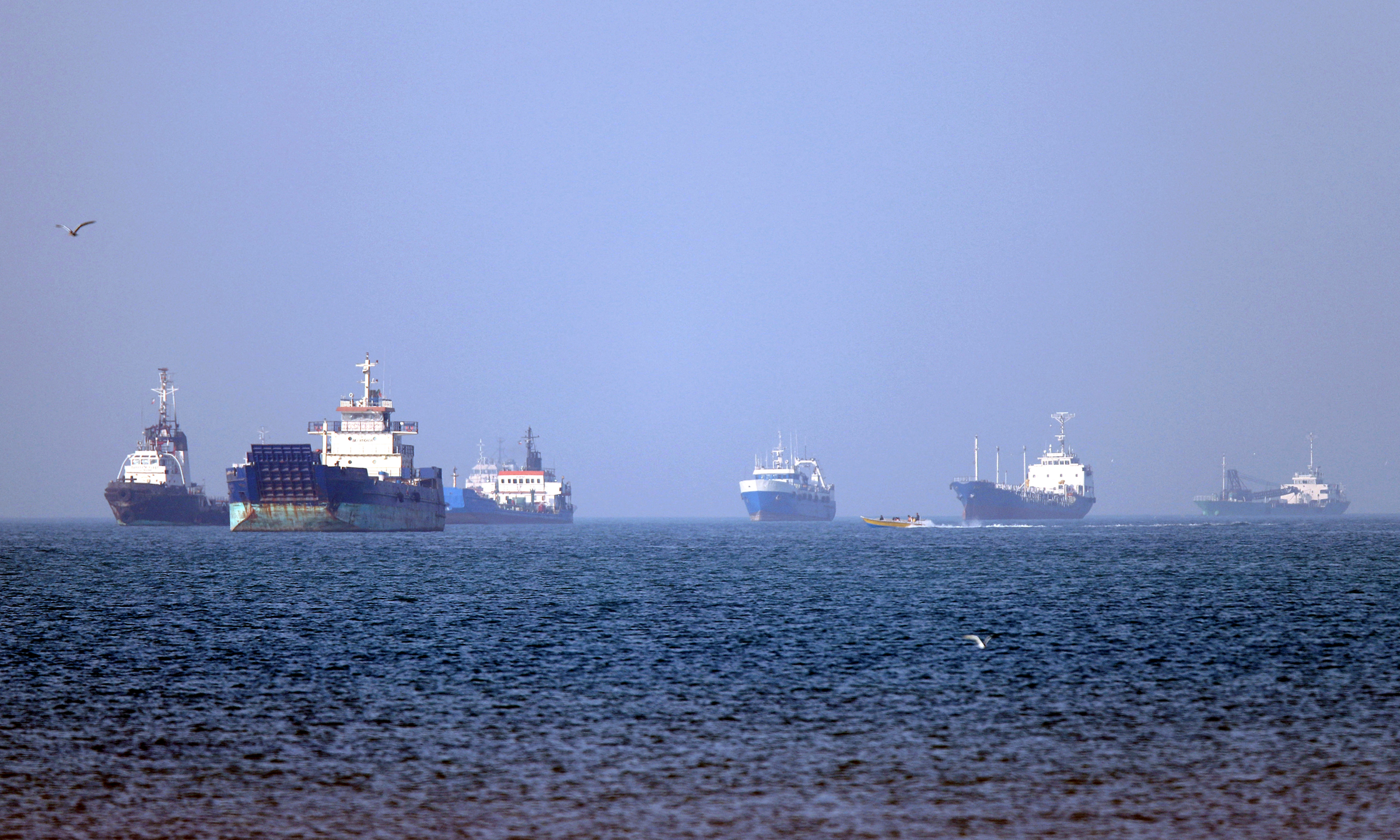 |
Ships in the Strait of Hormuz, off the southern Iranian city of Bandar Abbas, in a photo posted on 4/5. Photo: *AFP* |
Tasnim news agency today quoted Iranian naval commander Shahram Irani as saying the country has deployed domestic light submarines, nicknamed "Persian Gulf dolphins", to counter hostile naval vessels in the Strait of Hormuz. He added that the light submarine fleet is being expanded, affirming their capability for long-duration underwater operations to monitor and destroy targets.
US and allied officials have not commented on the information.
The US has imposed numerous sanctions on Iran over decades, stifling its economy. Many countries, including members of the European Union (EU), the UK, and Australia, have also implemented embargoes, citing concerns about Iran's weapons program and its support for regional armed groups.
Earlier this month, the US imposed new sanctions targeting Iranian interests, demanding that vessels not pay fees to Tehran for transit through the Strait of Hormuz. The US, along with Bahrain, also drafted a United Nations resolution calling on Iran to cease restricting maritime activities in the area.
The Strait of Hormuz is a focal point in the conflict between the US and Israel with Iran. In peacetime, it is a sea lane transporting 20% of the world's oil supply from the Gulf region, with commercial vessels free to pass in accordance with international law.
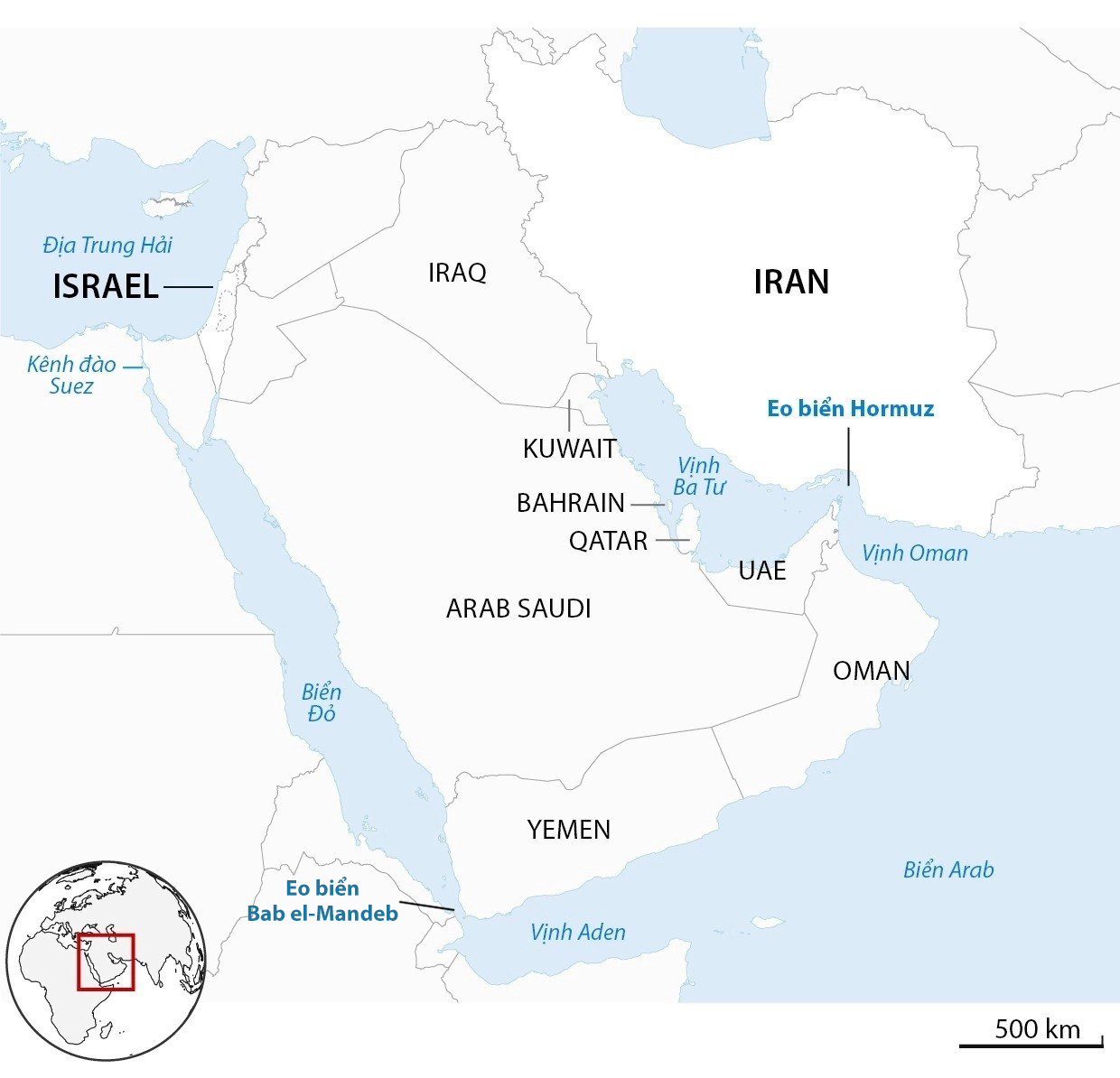 |
Location of the Strait of Hormuz. Graphic: *Guardian* |
Since the outbreak of hostilities, Iran has blockaded the Strait of Hormuz, only allowing vessels from "friendly" nations to pass, citing reasons of national security.
To transit the Strait of Hormuz, vessel operators must seek an intermediary capable of contacting the Islamic Revolutionary Guard Corps (IRGC) and providing complete information about the vessel. If the documentation passes scrutiny, the IRGC will issue an approval code and specific instructions on the route the vessel must take to traverse the Strait of Hormuz.
Iranian Deputy Speaker Hamidreza Hajibabaei stated last month that the country had collected its first payment from transit fees imposed in the Strait of Hormuz.
By Pham Giang, with additional reporting from AFP, CNN, and Tasnim.