"We attacked Hezbollah's headquarters in the Dahiyeh area. This facility served Hezbollah members in their efforts to attack Israeli citizens and units of the Israel Defense Forces (IDF) operating in southern Lebanon. We will continue to eliminate all threats to Israel", the IDF stated today.
A video released by the IDF showed the target as a multi-story building on a busy road. The explosion occurred on a middle floor, with smoke and debris erupting from three sides of the structure, but the building did not appear to collapse.
Moment the building in Dahiyeh, Beirut, Lebanon was attacked on 14/6. *Video: IDF*.
Dahiyeh is a densely populated southern suburb of Lebanon's capital, Beirut. The area is considered a stronghold for Hezbollah, where the armed group concentrates its political and military apparatus.
The Lebanese National News Agency (NNA) later reported that the target of the attack was a residential building on Ghobeiry street in the Dahiyeh suburb.
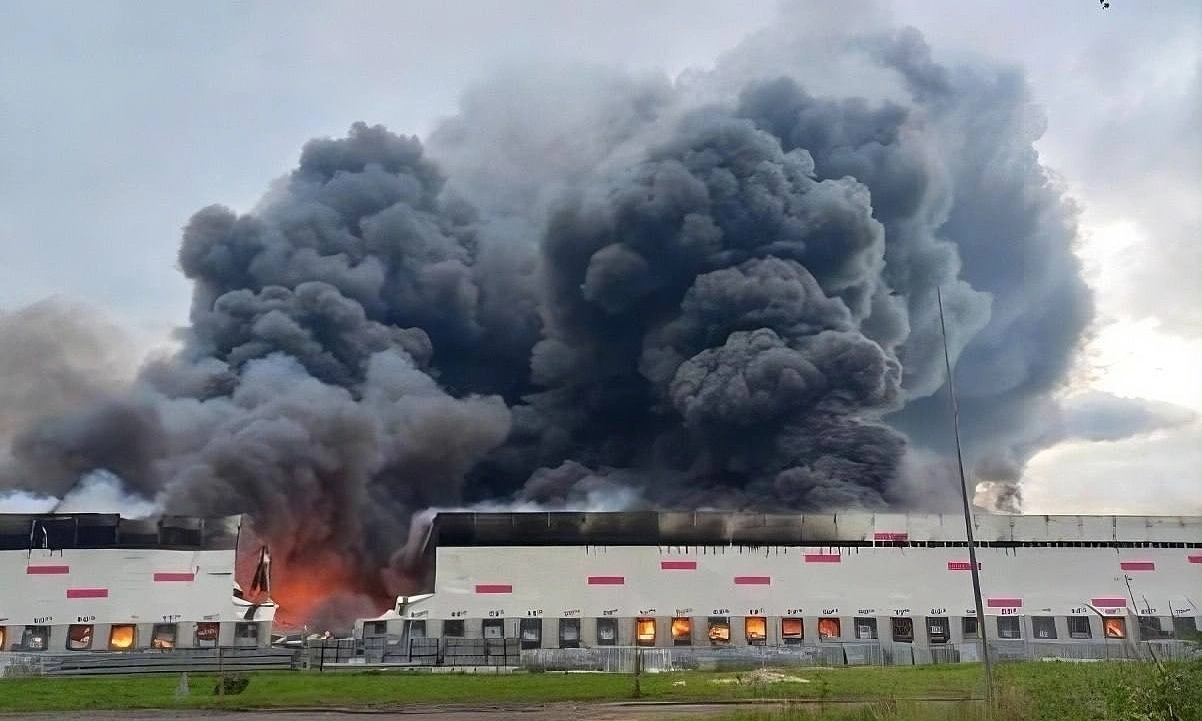
An AFP correspondent reported that the structure was severely damaged, with debris scattered across the streets. Local residents were searching for survivors, and many appeared panicked after the attack on the densely populated neighborhood.
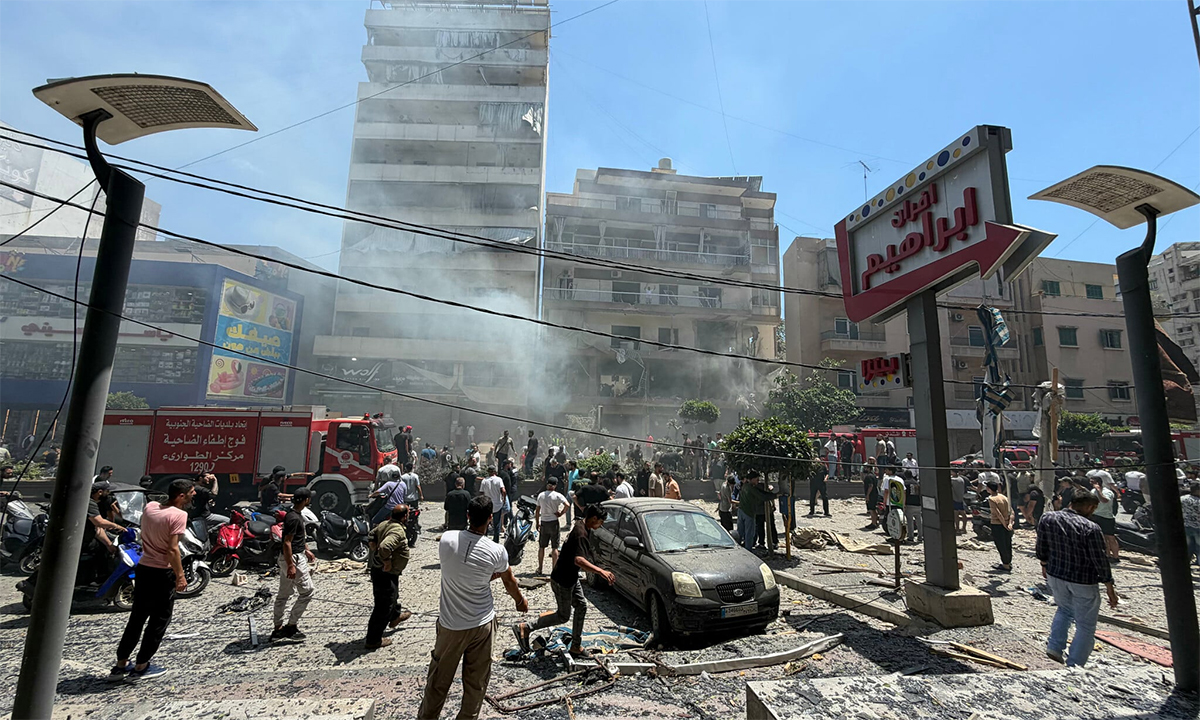 |
The scene of the airstrike in the southern suburb of Lebanon's capital, Beirut, on 14/6. *Photo: AFP*.
The operation followed the IDF's statement that three unmanned aerial vehicles (UAVs), suspected to belong to Hezbollah, had attacked northern Israel, causing no casualties. Hezbollah, on the same day, announced attacks on positions of Israeli soldiers in southern Lebanon, but did not mention any operations targeting the neighboring country.
Mohammad Jafar Assadi, deputy commander of the Khatam al-Anbiya Central Command, the supreme command of the Iranian military, warned that Israel's airstrike "would be met with a response". Iranian Parliament Speaker Mohammad Baqer Qalibaf stated that the incident showed the United States "lacked the will or ability to fulfill its commitments" regarding an end to the conflict in Lebanon.
Fighting between Israel and Hezbollah erupted on 2/3, when the armed group launched rockets into the neighboring country to retaliate for the death of former Iranian supreme leader Ali Khamenei. The conflict has since killed over 3,700 people in Lebanon.
Israel and Lebanon began direct negotiations in Washington in April to end hostilities, with the 5th round of discussions expected to take place later this month. Both Israel and Hezbollah have not implemented a ceasefire announced in April.
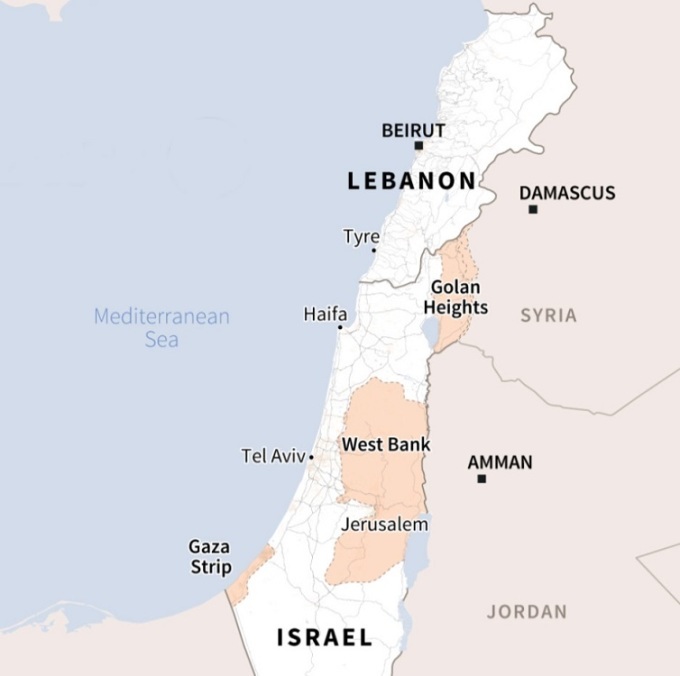 |
Location of Israel and Lebanon. *Graphic: AFP*.
Hezbollah rejected direct negotiations and denied a conditional ceasefire agreement announced in early June. This proposal required Hezbollah to cease attacks, but did not mention Israel taking similar action or withdrawing troops from Lebanon.
On 7/6, the IDF attacked a southern Beirut suburb, hitting two buildings after accusing Hezbollah of launching rockets at Israel. Iran then launched missiles at Israel in retaliation. Iranian officials have repeatedly stated they would attack Israel if Lebanon's capital were targeted.
Nguyen Tien (According to AFP, Reuters, Times of Israel, Tasnim)