The Israeli Defense Forces (IDF) announced today that its air force conducted strikes on Iran's key naval mine and missile production facility in the central city of Yazd. According to the IDF, Iran uses this facility to develop, assemble, and store advanced missiles designed for launch from surface vessels, submarines, and helicopters, targeting mobile or fixed objects at sea.
"This is where the Iranian navy develops the majority of its missiles and naval mines", the Israeli military stated, asserting it was a significant blow to the Iranian navy's production capabilities.
Earlier today, the IDF announced it had carried out widespread strikes on infrastructure in the heart of Iran's capital, Tehran. In another statement, the force said it attacked facilities producing air defense systems and ballistic missiles across Iran, including a missile manufacturing site in Tehran, as well as missile launchers and storage depots in the western region.
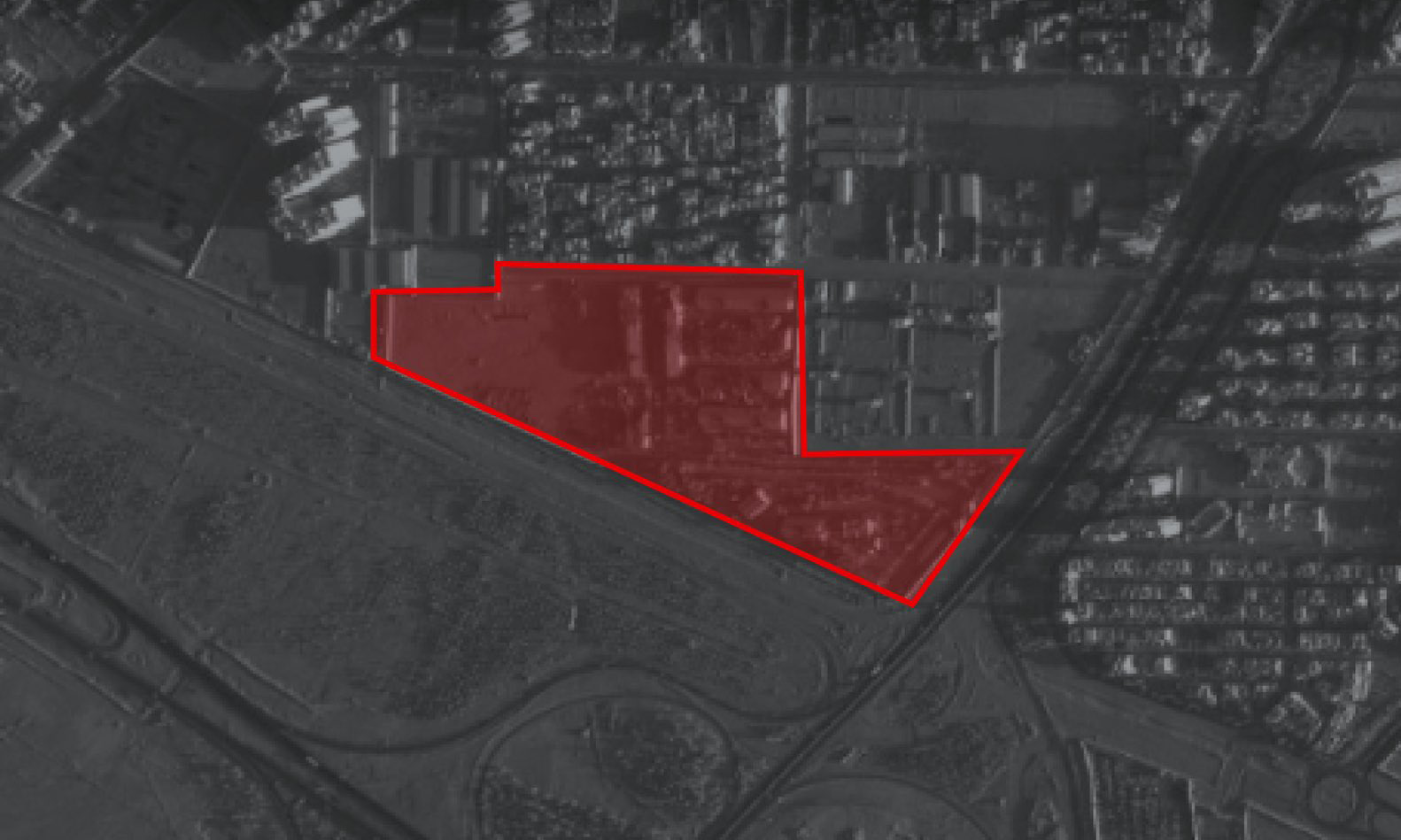 |
The location believed to be Iran's missile and naval mine production facility in Yazd. *Graphics: IDF*
In retaliation, Iran's Revolutionary Guard Corps (IRGC) on 27/3 launched its 83rd attack as part of its campaign against US and Israel, targeting military facilities of both nations with missiles and drones.
According to the IRGC, targets included oil tanks and depots in Ashdod, Israel, a military gathering point in the Modi'in residential area, and a US military information exchange center in the region. The force also claimed to have struck military bases housing US forces, including transport aircraft and drone hangars at Ali Al-Salem airport in Kuwait.
After being attacked by US and Israel on 28/2, Iran initiated a retaliatory campaign by targeting military objectives and energy infrastructure in the Middle East.
Tehran also imposed a near-total blockade of the Strait of Hormuz, through which approximately 20% of the world's crude oil passes. This action halted oil and gas shipments, causing global fuel prices to surge.
A moment believed to be cluster munitions from Iranian missiles falling on Tel Aviv, Israel, in a video posted on 27/3. *Video: PressTV*
CNN reported early this month, citing two sources familiar with the matter, that Iran had begun laying naval mines in the Strait of Hormuz. These are among the simplest yet most destructive weapons the US Navy has faced, having damaged more warships than any other attack method since World War II, according to a US Naval Institute report.
The narrowest point of the Strait of Hormuz is only about 34 km wide, and the maritime lane for ships is even narrower, making the risk from naval mines more serious. Vessels passing through have limited room to maneuver, increasing the likelihood of striking these explosive devices.
Nevertheless, the Iranian military on 23/3 declared it "does not need naval mines" to control the Strait of Hormuz.
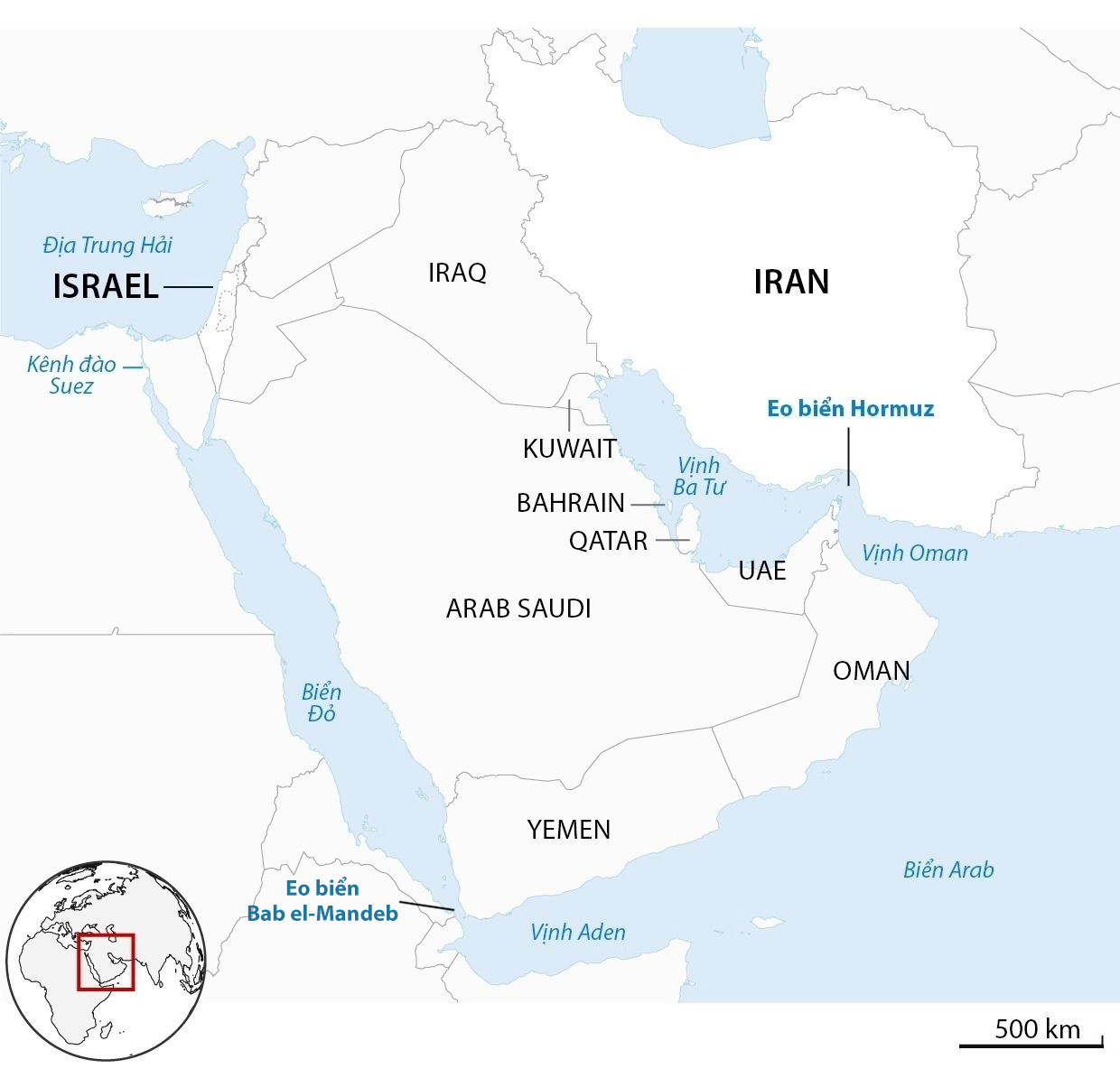 |
The location of the Strait of Hormuz. *Graphics: Guardian*
Pham Giang (According to AFP, Times of Israel, PressTV)