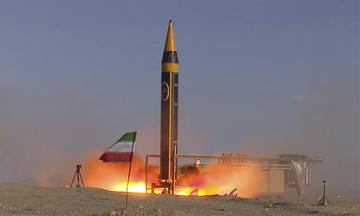
Israel Defense Forces (IDF) spokesperson Nadav Shoshani announced today that Iran launched over 400 ballistic missiles at Israel. He reported, "We achieved a high interception rate, successfully shooting down about 92% of these targets."
The Times of Israel reported that 5 Iranian conventional warhead missiles, each carrying hundreds of kilograms of explosives, struck populated areas in the country. Four of these incidents caused significant damage. Additionally, Israel's air defense failed to intercept cluster warhead missiles over 20 times, with submunitions impacting about 100 locations.
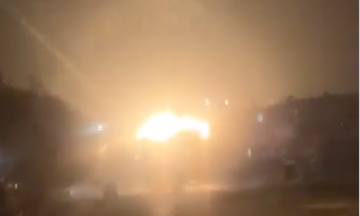
Missiles struck Dimona, Israel on the evening of 21/3. Video: BRICS News
The Israeli Air Force (IAF) acknowledged on the same day that two Iranian ballistic missiles targeting the southern cities of Dimona and Arad on the night of 21/3 had penetrated defenses. Israeli air defense units launched interceptors, but they missed their targets.
The IAF affirmed these were isolated incidents, asserting "no systemic failure" in the air defense network, nor any operational errors.
The two attacks injured 150 people and caused significant damage. Israeli officials believe the missiles targeting Dimona and Arad carried conventional warheads, possibly Ghadr series, with a range of 1,800-2,000 kilometers.
Dimona is believed to be the only nuclear weapons storage site in the Middle East, though Israel has never admitted possessing nuclear weapons. Iranian media reported the attack on Dimona was retaliation for a previous strike on the Natanz nuclear facility. Meanwhile, the IDF stated it was "unaware of an attack" on Natanz.
The conflict between the US, Israel, and Iran is entering its 4th week with no signs of ending. Instead, it escalates with attacks on energy and nuclear facilities, raising concerns about a larger crisis.
Three weeks of US-Israeli bombardment appear not to have weakened Iran's retaliatory capabilities with missiles and drones.
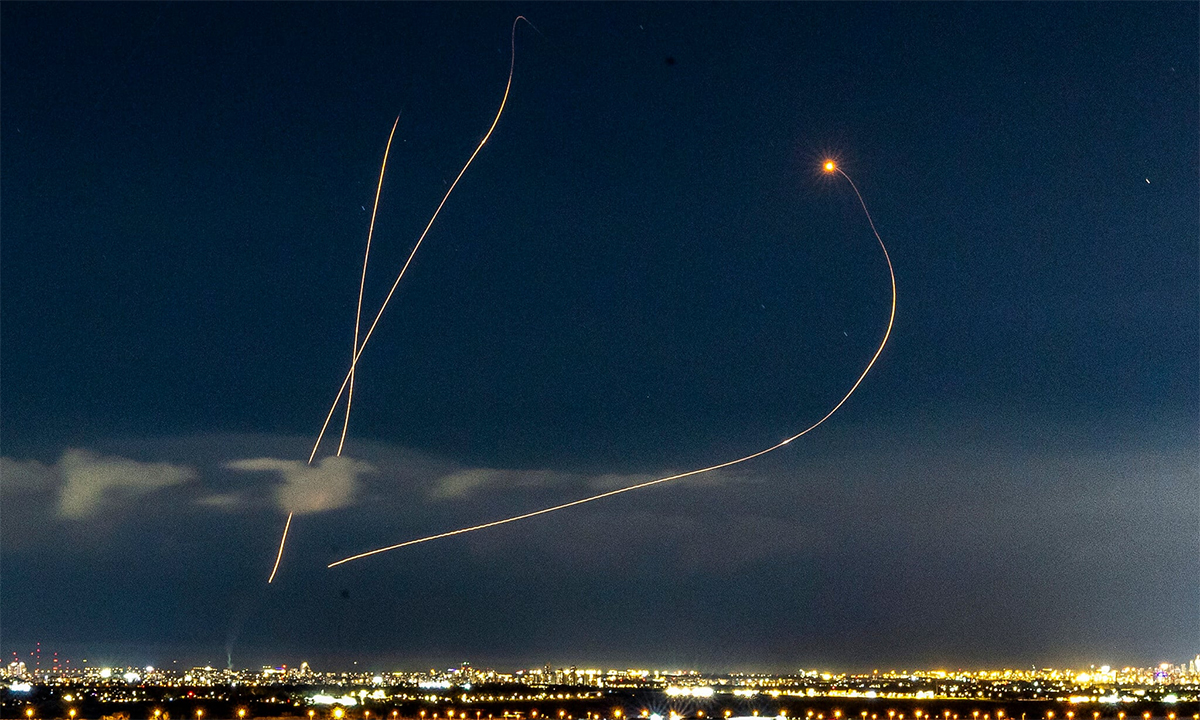 |
Israeli air defense missiles launched in the central area on 9/3. Photo: Flash90
Experts warn Iran's initial attacks might use older ballistic missiles to stretch the adversary's air defense network, forcing the US, Israel, and their allies to expend expensive missiles. More advanced weapons could deploy as gaps appear in US and allied defense systems.
According to closed-door meetings between defense officials and the US Congress last week, Iran may still have up to 50% of its missile arsenal and launchers hidden in underground bunkers.
By Nguyen Tien (AFP, Times of Israel, AP)