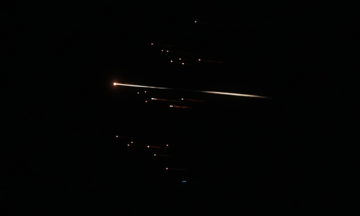
Habima Square, in central Tel Aviv, remained bustling just hours after a submunition from an Iranian cluster munition missile landed on a nearby street.
The submunition had low destructive power, causing no significant damage. However, Einat, 62, considered it a worrying sign for Israel's air defense system against Iran's continuous missile attacks over the past three weeks. "But it's still better than nothing," she said.
Aviad, 67, was more pessimistic, describing life under the missile threat from Iran as "Russian roulette." He worried that Israel's current air defense systems were inadequate to counter Iran's cluster munition missiles.
Iran's attacks in recent days have begun causing significant casualties in Israel. Missiles striking Dimona and Arad on 21/3 injured over 115 people, including children and the elderly. After three weeks of conflict with low casualties, the ballistic missile attack on Arad was seen as a "wake-up call" for Israel's air defense system.
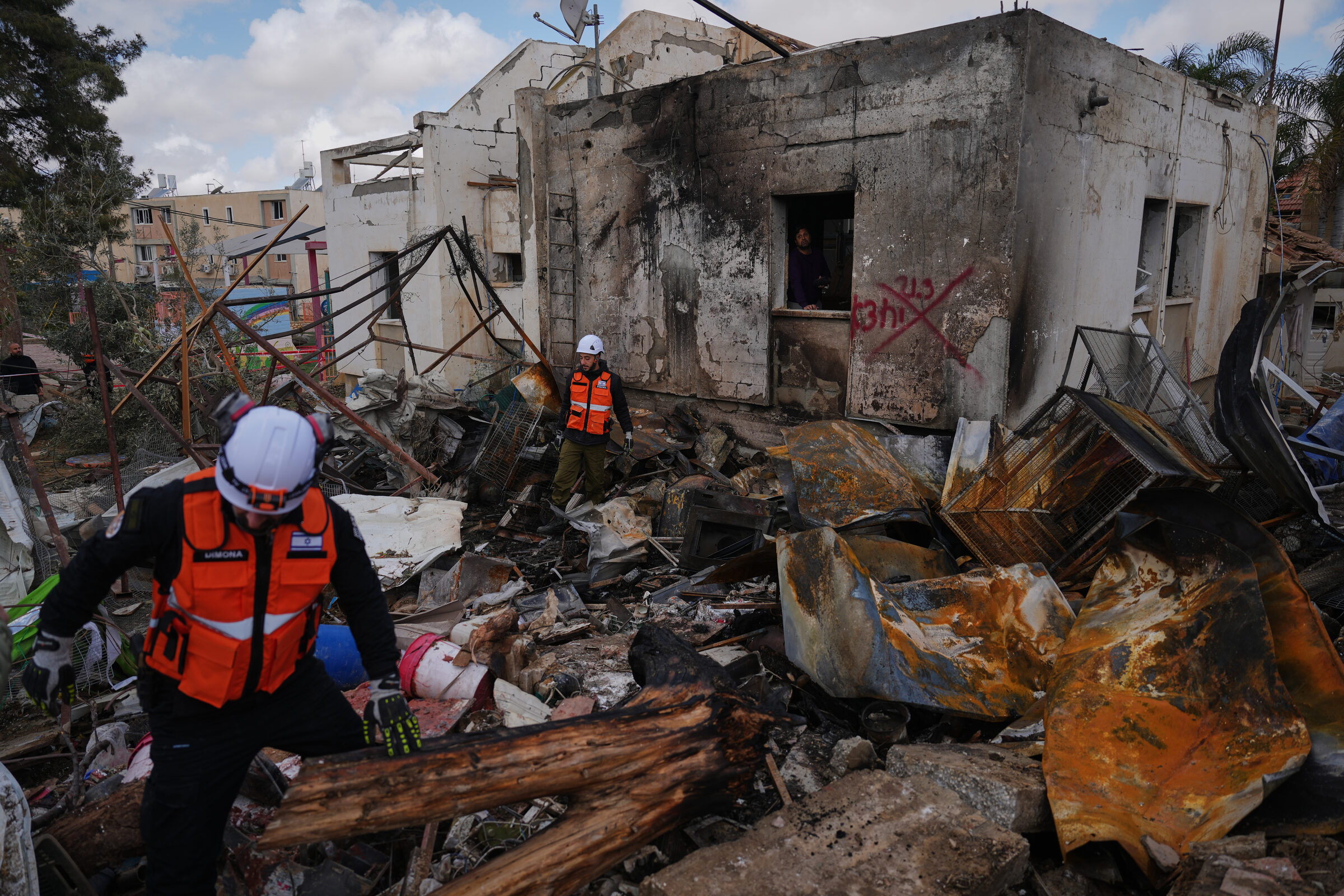 |
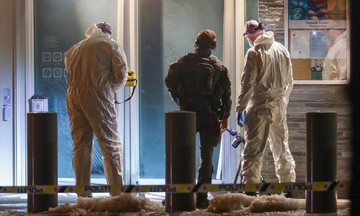
Israeli security personnel inspect the scene of a missile attack from Iran on Dimona in the south on 22/3. *Photo: AP* |
Although many missiles were intercepted, debris from at least 7 interceptions also caused additional injuries in Tel Aviv. Israeli officials stated that 14 people have died since the conflict began.
The low casualty rate partly reflects the effectiveness of Israel's air defense system, which has been tested over years of countering rockets from Hezbollah and Hamas.
The Israel Defense Forces (IDF) affirmed that their multi-layered air defense system remains effective, with an interception rate of about 92%. This system combines various technological tiers, including Arrow 3 for exoatmospheric interception, Arrow 2 and THAAD for high altitudes, and David’s Sling and Iron Dome for low-altitude protection.
According to the IDF, a crucial aspect of the multi-tiered air defense system is its close coordination with the United States. Both sides operate joint command centers, share data, and make real-time decisions. The IDF emphasized that these systems do not operate in parallel but coordinate to form a comprehensive shield against various aerial threats.
Nevertheless, officials admitted that the security environment remains complex. Each Iranian missile presents its own challenge, especially high-speed systems and advanced technology. A cluster munition attack in Ramat Gan killed two civilians, demonstrating the danger of these weapons.
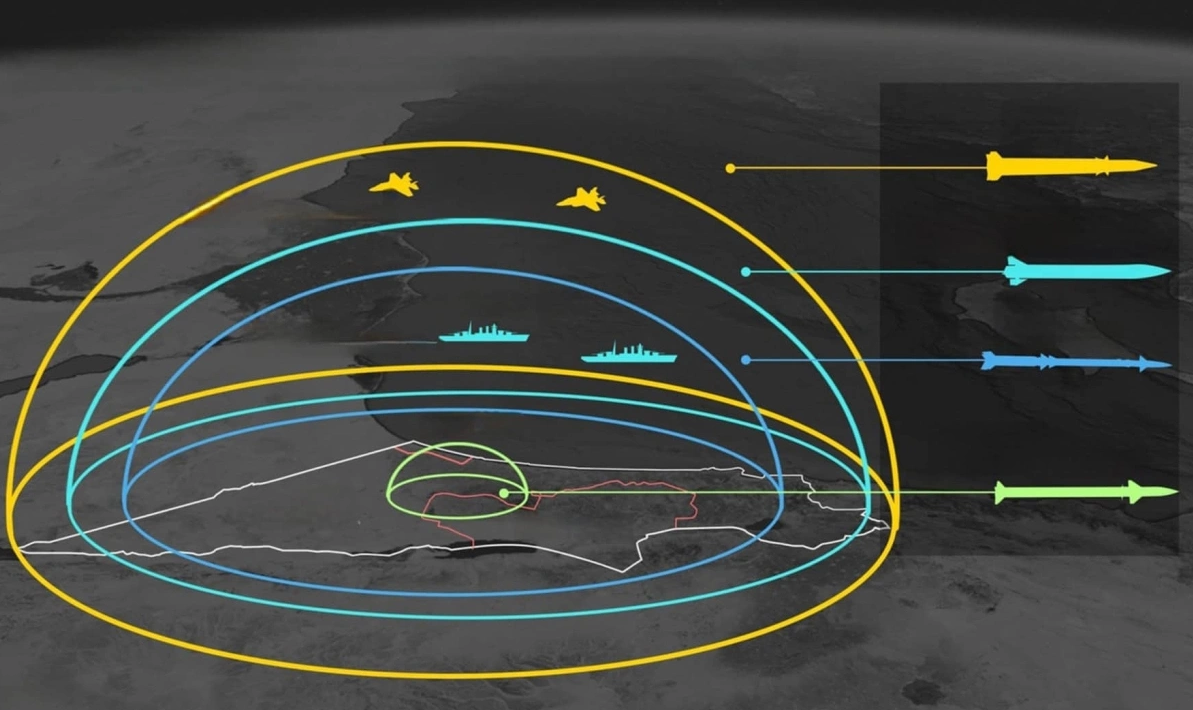 |
Multi-layered air defense system protecting Israeli territory. Click to see details |
Recent incidents have also revealed the limitations of Israel's air defense system. IDF spokesperson Nadav Shoshani conceded that "even the best system in the world is not perfect," but he maintained that Iran's attack capability has significantly decreased, with the number of missiles in each wave dropping from hundreds to just a few.
Jennifer Hassan Smith, 52, also believed that Iran's use of many cluster munitions made her feel "safer" because their destructive power is lower compared to the hundreds of kilograms of warheads on conventional ballistic missiles. Meanwhile, Orna, a Tel Aviv resident, stated that she still preferred to sleep in the parking garage at Habima Square rather than at home, despite the IDF's very high missile interception success rate.
"Nothing in this world is perfect. Air defense systems are no different. Sometimes there will be casualties and errors. The military is studying and learning from experience. I hope there will be fewer casualties next time," she said.
Thanh Danh (According to CNN, CNBC, Defence Industry Europe)