"We recommend that Americans worldwide, especially in the Middle East, increase their vigilance," the US State Department stated in a security alert issued on 22/3.
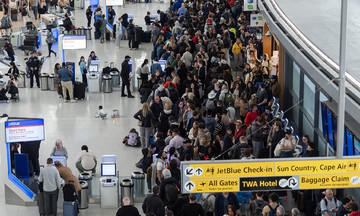
The agency highlighted that "periodic airspace closures" could occur in various locations, disrupting travel plans. Several US diplomatic facilities, including some outside the Middle East, have been targeted recently, indicating a security risk to US citizens, property, and interests far from conflict zones.
"Iran-backed groups may target US interests abroad, or locations associated with the United States and/or Americans worldwide," the US State Department said, advising citizens to continuously monitor security guidance from nearby embassies and consulates.
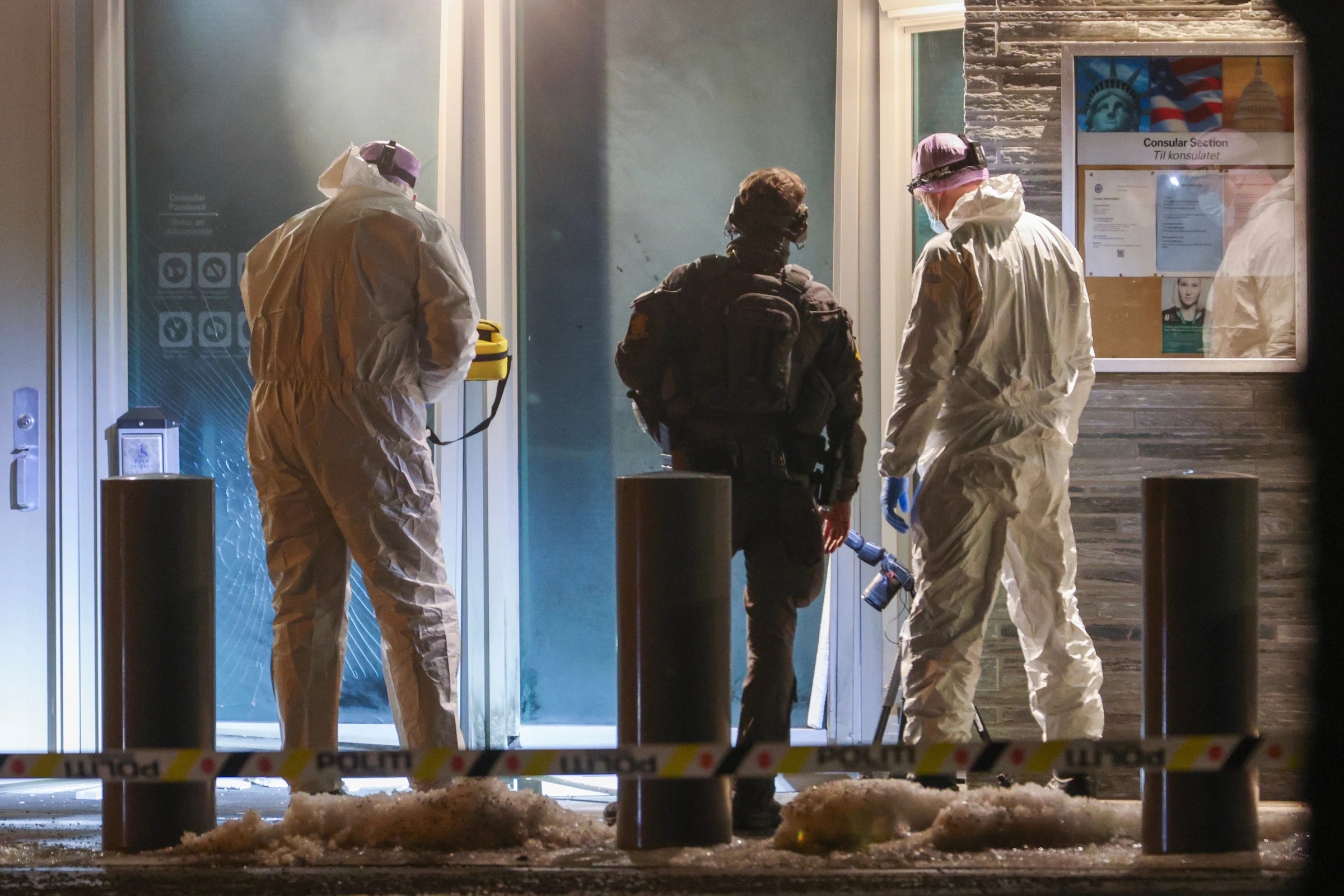 |
The US Embassy in Oslo, Norway, was attacked with an improvised explosive device in the early hours of 8/3. Photo: AP |
The US rarely issues security warnings on a global scale. Such actions are only taken during periods of extremely high international tension or when a clear threat to US citizens exists.
Similar warnings were issued during the Iraq War in 2003, following the death of terrorist leader Osama bin Laden in 2011, the rise of the Islamic State (IS) in 2014, and the outbreak of the Israel-Hamas conflict in 2023.
The US State Department's travel warning system typically applies to specific countries and is divided into four levels, with Level 4 being the highest, advising citizens not to travel to the named country.
Since the conflict erupted on 28/2, the US State Department has classified most Middle Eastern countries as Level 3, including Saudi Arabia, Qatar, the United Arab Emirates (UAE), Jordan, Israel, and Oman. Cyprus, due to its proximity to the Middle East, is also on this list, with US citizens advised to reconsider travel.
Travel warnings for Syria, Iraq, Lebanon, and Iran have been elevated to Level 4, while Egypt and Turkey remain at Level 2, recommending "increased caution".
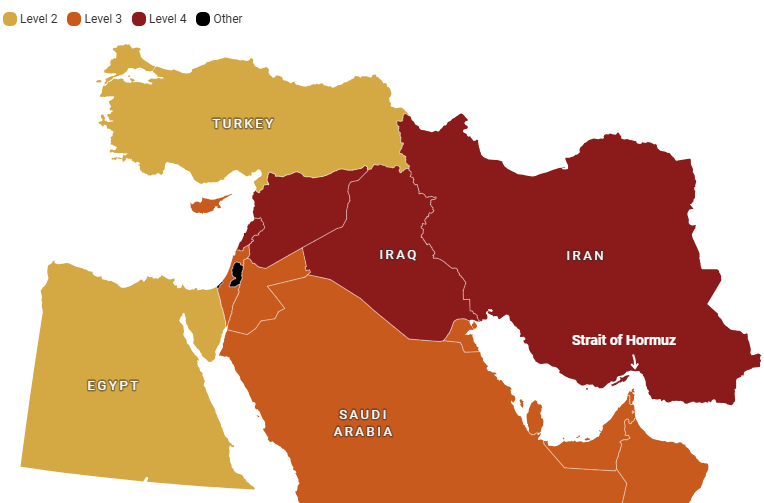 |
US travel warnings for Middle Eastern countries. Graphic: US News |
The US State Department describes the warning levels as reflecting security agencies' assessments of severe risks such as terrorism, civil unrest, and kidnapping. In Level 4 countries, the US government's ability to assist citizens in distress is very limited.
The global warning was issued shortly after President Donald Trump delivered an ultimatum, cautioning that the US would attack and destroy Iran's power plants, starting with the largest, if Tehran did not open the Strait of Hormuz and cease threatening vessels passing through it within 48 hours.
Iran has vowed to destroy energy infrastructure across the Gulf in retaliation and threatened to expand its target list to include US-related financial interests.
Thanh Danh (Source: US News, Haaretz, Reuters)