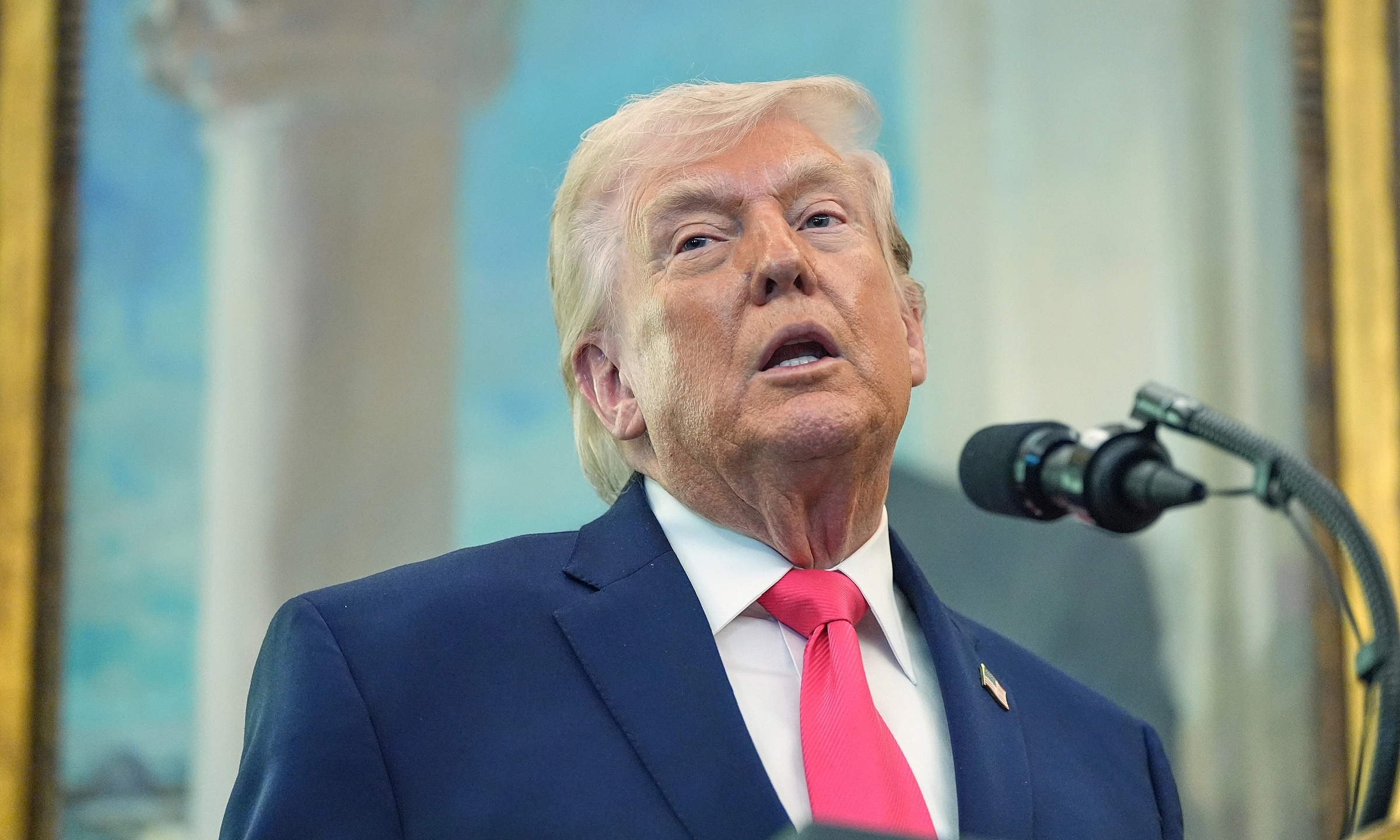
On 31/3, Judge Richard Leon of the federal court in Washington DC granted a request from the National Trust for Historic Preservation (NTHP), issuing a construction halt for the White House ballroom project. The NTHP filed a lawsuit three months prior, alleging the Donald Trump administration lacked authority to demolish the East Wing of the White House for new construction.
"Unless Congress authorizes the project, construction must cease," Judge Leon wrote in his 35-page ruling.
He stressed that the Trump administration failed to cite any statute permitting the demolition of the White House's East Wing last year without congressional approval. He also noted that "no provision grants the president the kind of authority he claims to possess".
"The US president is merely a steward of the White House, preserving it for future First Families. He is not its owner", Judge Leon asserted.
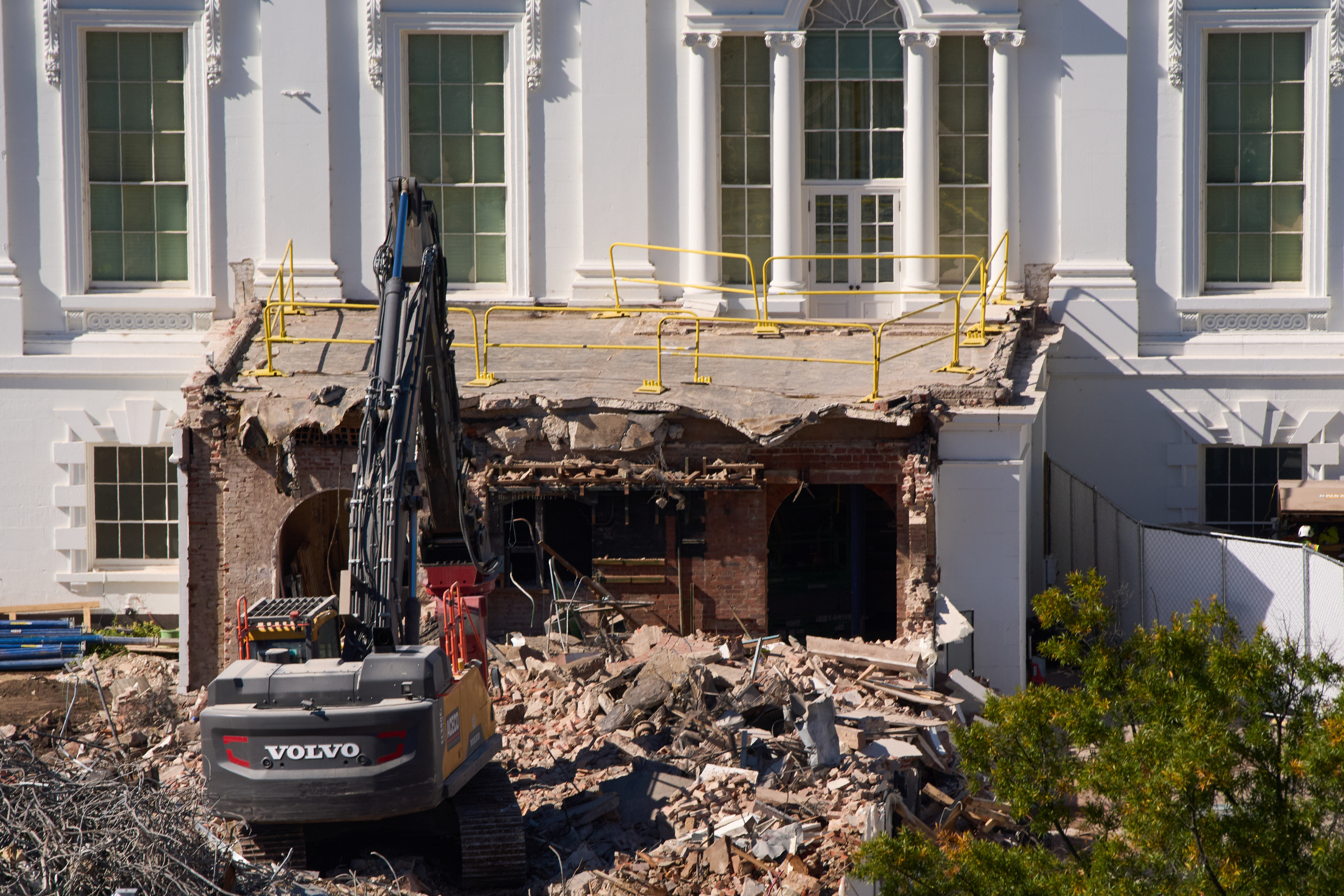 |
An excavator demolishes the White House East Wing for ballroom construction on 23/10/2025. Photo: AP |
Judge Leon allowed a 14-day stay on the ruling's implementation for the Trump administration to appeal, while emphasizing the order does not apply to construction activities critical for White House security. The US Department of Justice immediately filed an appeal with the appellate court in Washington.
Reacting on social media, Mr. Trump criticized the plaintiff organization as a "far-left group", asserting the ballroom project is cost-effective, ahead of schedule, and does not use taxpayer funds.
Meanwhile, NTHP leader Carol Quillen welcomed the ruling, calling it "a victory for the American people" against a project with lasting impact on one of the nation's most iconic structures.
The Trump administration previously argued that the US president has the right to renovate and modernize the White House without congressional approval, especially when a project is entirely funded by private contributions.
The White House East Wing, built in 1902 and expanded under President Franklin Roosevelt, was demolished in 10/2025 to make way for the new project. However, the NTHP contended that neither President Trump nor the National Park Service had the authority to proceed.
The ballroom project was seen as a major highlight of Mr. Trump's term, intended to create a large-scale event space replacing temporary outdoor structures. The administration claimed the project would modernize infrastructure and enhance White House security. Last week, Mr. Trump revealed the US military was constructing an underground complex beneath the structure.
Nevertheless, the project has sparked controversy regarding oversight and transparency, particularly concerning funding from major corporations. Plaintiff attorneys argued that private fundraising further necessitates clear congressional approval.
A federal planning committee is scheduled to discuss and vote on the plan this week, as the court's ruling applies only to construction activities and does not affect the review process.
Thanh Danh (According to Reuters, The Washington Post)