On 30/3, Reuters, citing two US officials familiar with the situation, reported that the 82nd Airborne Division's deployment to the Middle East includes a combat brigade, part of the division headquarters, and logistics and support units. The specific location of these forces remains undisclosed.
One official added that while the US has not made a decision regarding a ground deployment into Iran, the partial deployment of the 82nd Airborne Division will bolster forces for future regional operations.
The US Department of Defense has not yet commented on this information.
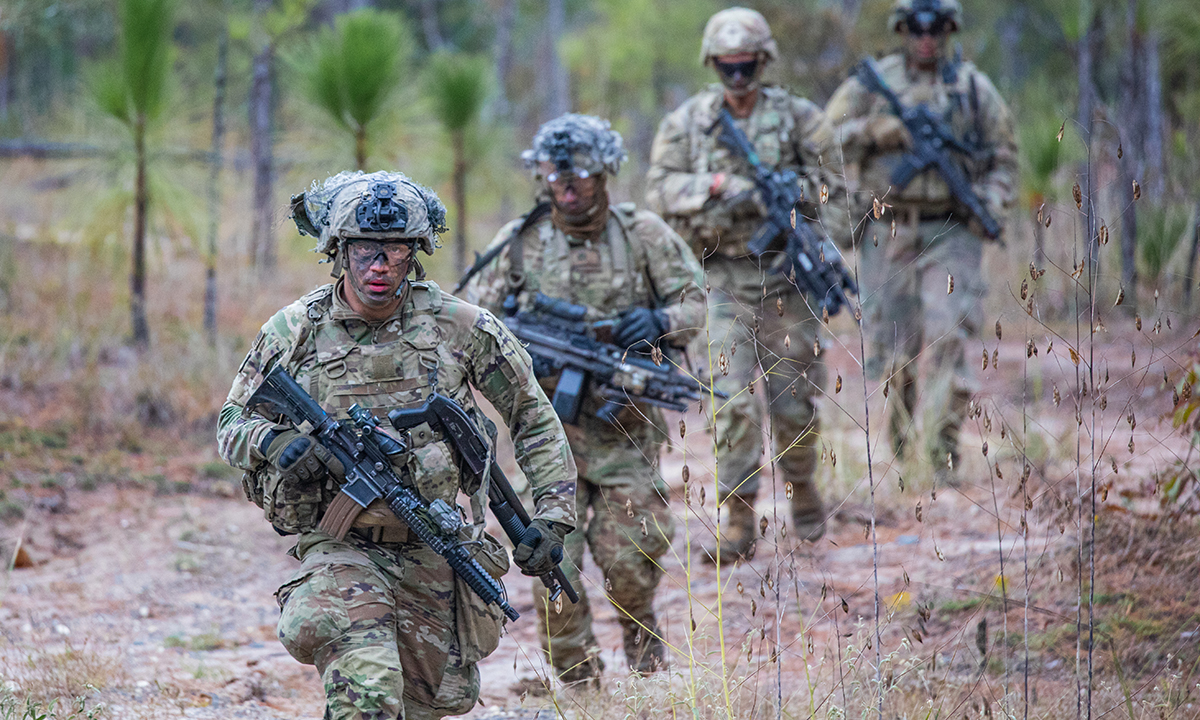 |
US 82nd Airborne Division soldiers conduct a drill at Fort Polk base, Louisiana, 11/2022. *US Army*
On 23/3, The New York Times, citing unnamed US defense officials, reported that the brigade under consideration for deployment to the Middle East is the "Immediate Response Force." This unit consists of approximately 3,000 service members, capable of deploying anywhere in the world within 18 hours of receiving orders.
AP later cited three informed sources, stating that the US military is preparing to deploy at least 1,000 personnel from the 82nd Airborne Division to the Middle East.
The 82nd Airborne Division serves as a highly mobile assault unit within the US Army. Its operations include parachute and air assault missions, airfield seizure, and securing areas until reinforcements arrive. A key limitation of the unit is its lack of heavy equipment, such as tanks and armored vehicles, which can hinder its defensive capabilities against large-scale enemy counterattacks.
The 82nd Airborne Division's Immediate Response Force has seen several deployments in recent years: to the Middle East in 1/2020 following an attack on the US embassy in Baghdad; to Afghanistan in 8/2021 to support evacuations; and to Eastern Europe in 2022 to aid operations in Ukraine.
In early March, US media reported discussions within the Trump administration regarding an operation to seize Kharg Island, identified as Iran's "oil lifeline." US officials also reportedly considered deploying forces into Iranian territory to retrieve enriched uranium or ensure the safe passage of oil tankers through the Strait of Hormuz.
Experts, however, warned that deploying troops to Kharg Island would represent a significant escalation. Such an operation would be large-scale, prolonged, and inherently risky, potentially leading to severe consequences, including within the US.
Accessing the island alone poses extreme danger, as landing forces would need to navigate the Strait of Hormuz, which Iran currently blockades. This route would expose US forces to ballistic missiles, anti-ship missiles, and drones, which could be launched continuously from the coastline and deeper inland.
By Nguyen Tien (Reuters, AFP, AP)