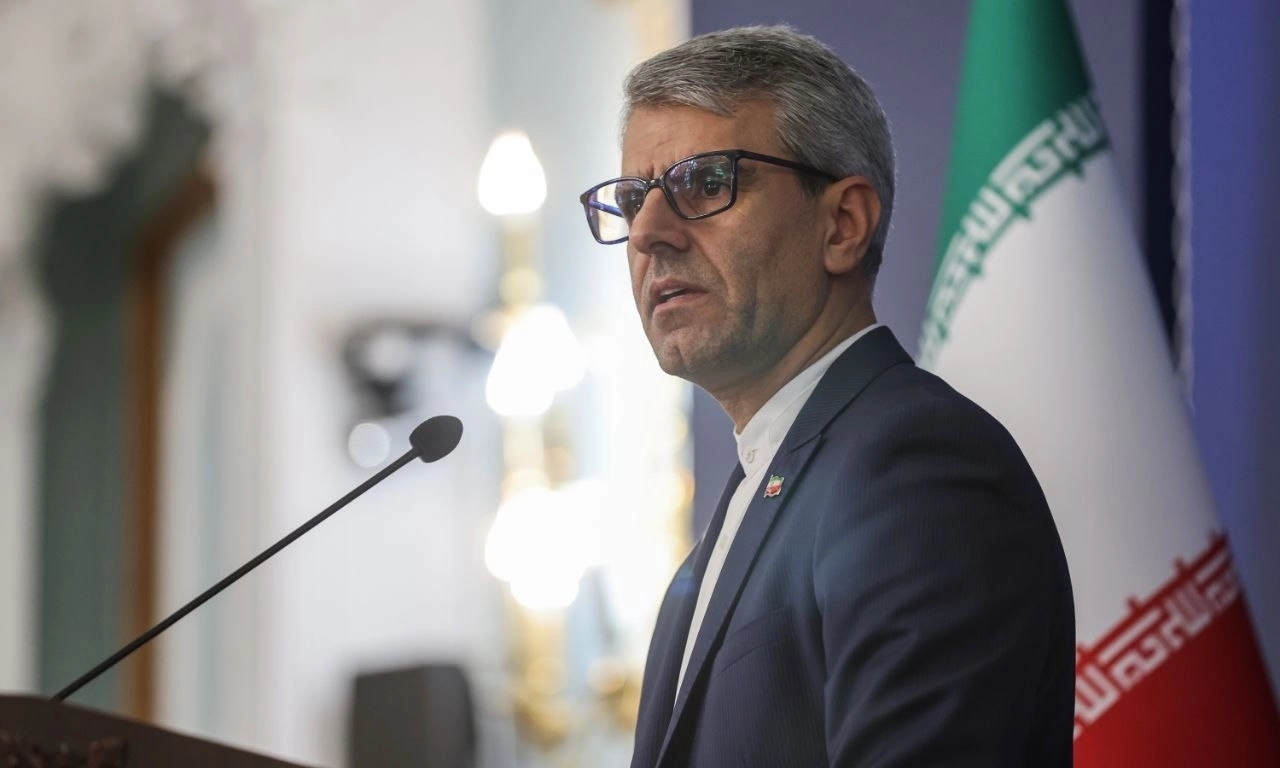
The US and Iran agreed on a preliminary deal to end the Persian Gulf conflict on 15/6, ahead of a formal signing ceremony on 19/6 in Geneva, Switzerland.
This development marks a turning point after nearly four months of conflict that shook the Middle East and profoundly impacted the global economy. The specific contents of the document remain undisclosed, and both sides must continue negotiations to achieve a lasting ceasefire.
Initial information released by the US and Iran indicates the document to be signed is a joint memorandum of understanding (MoU), not a peace agreement. The document outlines 14 points, including extending the April ceasefire by 60 days and reopening the Hormuz Strait, a shipping lane almost completely blockaded since the conflict began in late February.
"The MoU is about one and a half pages long, a very general document", US Vice President JD Vance stated on CNN on 15/6.
For the world, this is a positive development, as the Hormuz Strait is a crucial route for approximately 20% of the global oil supply. Iran tightened control over Hormuz since the conflict erupted in late February. The resumption of shipping traffic through the strait will ease pressure on economies from rising fuel prices and transport costs.
However, Jeremy Bowen, BBC's Middle East editor, noted that the MoU primarily focuses on ending hostilities rather than addressing the root causes of the crisis. Contentious issues such as Iran's nuclear and missile programs, and the fate of its enriched uranium stockpile, will only be negotiated by both parties over the next 60 days.
Although US President Donald Trump declared this a major victory, Bowen believes the agreement highlights the disconnect between military success and political outcomes.
When launching Operation Horrific Fury, a large-scale attack on Iran on 28/2, President Trump aimed to achieve regime change in the country, eliminate Tehran's military capabilities and nuclear program, and reshape the geopolitical landscape of the Middle East. Over three months later, even with an agreement reached, the US has not achieved its core objectives.
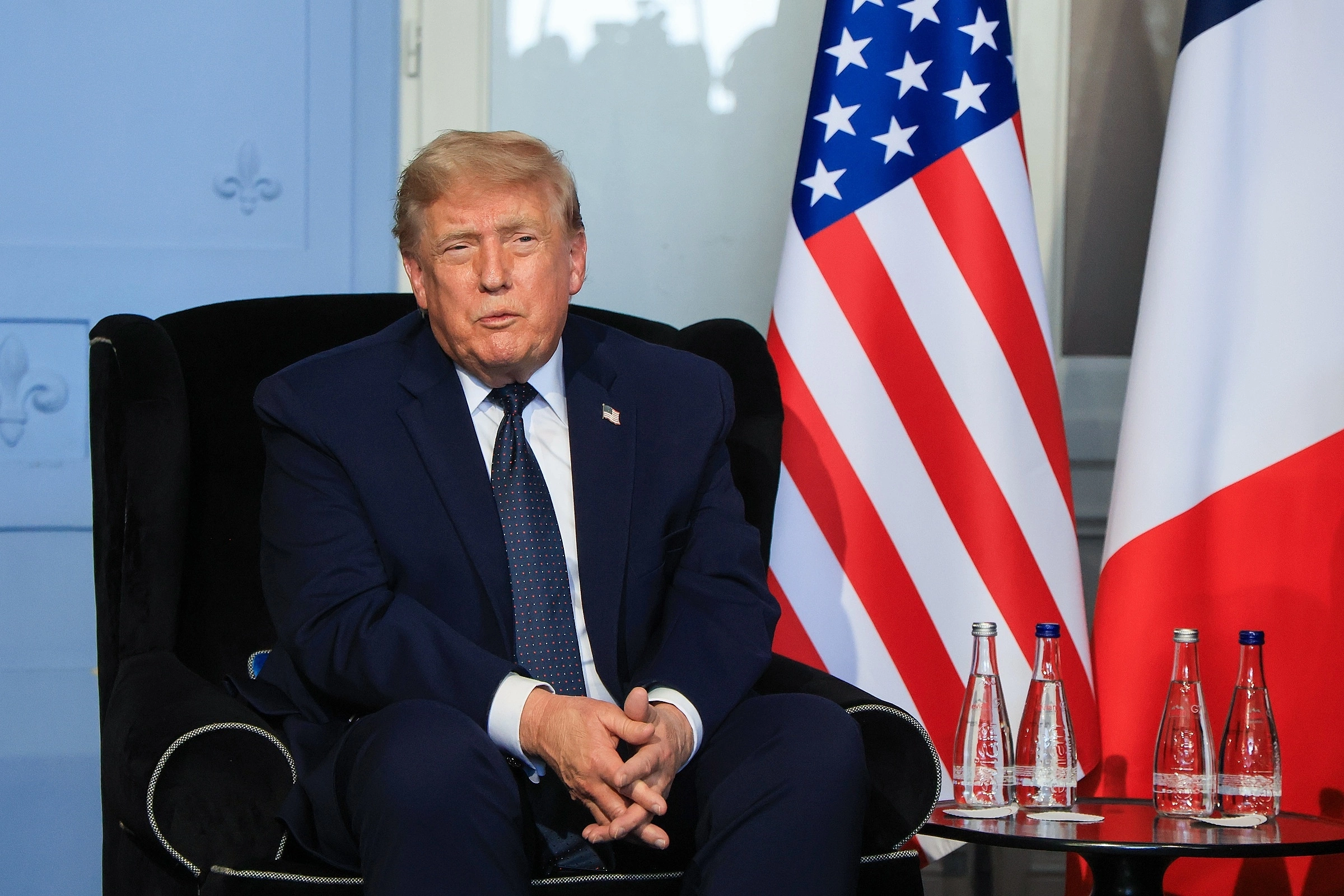 |
US President Donald Trump in Evian-les-Bains, France, 15/6. Photo: AP |
US President Donald Trump in Evian-les-Bains, France, 15/6. Photo: AP
The nuclear issue is the biggest point of contention between the two sides. The US repeatedly demanded Iran cease uranium enrichment and dismantle key nuclear facilities. Tehran rejected these demands, asserting that peaceful uranium enrichment is a sovereign right. This disagreement caused previous negotiation rounds to collapse.
When the US and Israel began Operation Horrific Fury, many predicted that Washington's military pressure could compel Tehran to accept conditions it had previously rejected at the negotiating table. However, actual events show that achieving complex political objectives is much harder than gaining battlefield superiority.
"The US and Israel once believed the campaign would create a decisive turning point for Iran. Instead of causing the Iranian government to collapse or change its stance, the war brought the parties back to square one: the negotiating table", said Bowen, a seasoned Middle East war correspondent.
He suggested that the US and Israel misjudged Iran's resilience and are incurring significant costs as the conflict extended beyond the six weeks President Trump initially envisioned.
The continuous attacks over the past three months depleted large quantities of US and Israeli ammunition, while Iran's retaliatory strikes forced the US and its allies to expend most of their interceptor missile stockpiles. Global trade suffered as the Hormuz Strait was paralyzed, causing energy prices to fluctuate sharply. Many Middle Eastern nations, allies of Washington, bore economic and security impacts from the conflict.
Iran also suffered heavy losses, with senior leaders and military commanders killed, and numerous bases and assets destroyed. President Trump declared "the Iranian navy has been wiped out" and its military "has nothing left", but Iranian armed forces continued to launch retaliatory missiles and unmanned aerial vehicles (UAVs) after each attack, while its leaders affirmed their readiness to "fight to the end".
The ultimate outcome shows that military power can create pressure but does not necessarily yield desired political concessions, according to Bowen.
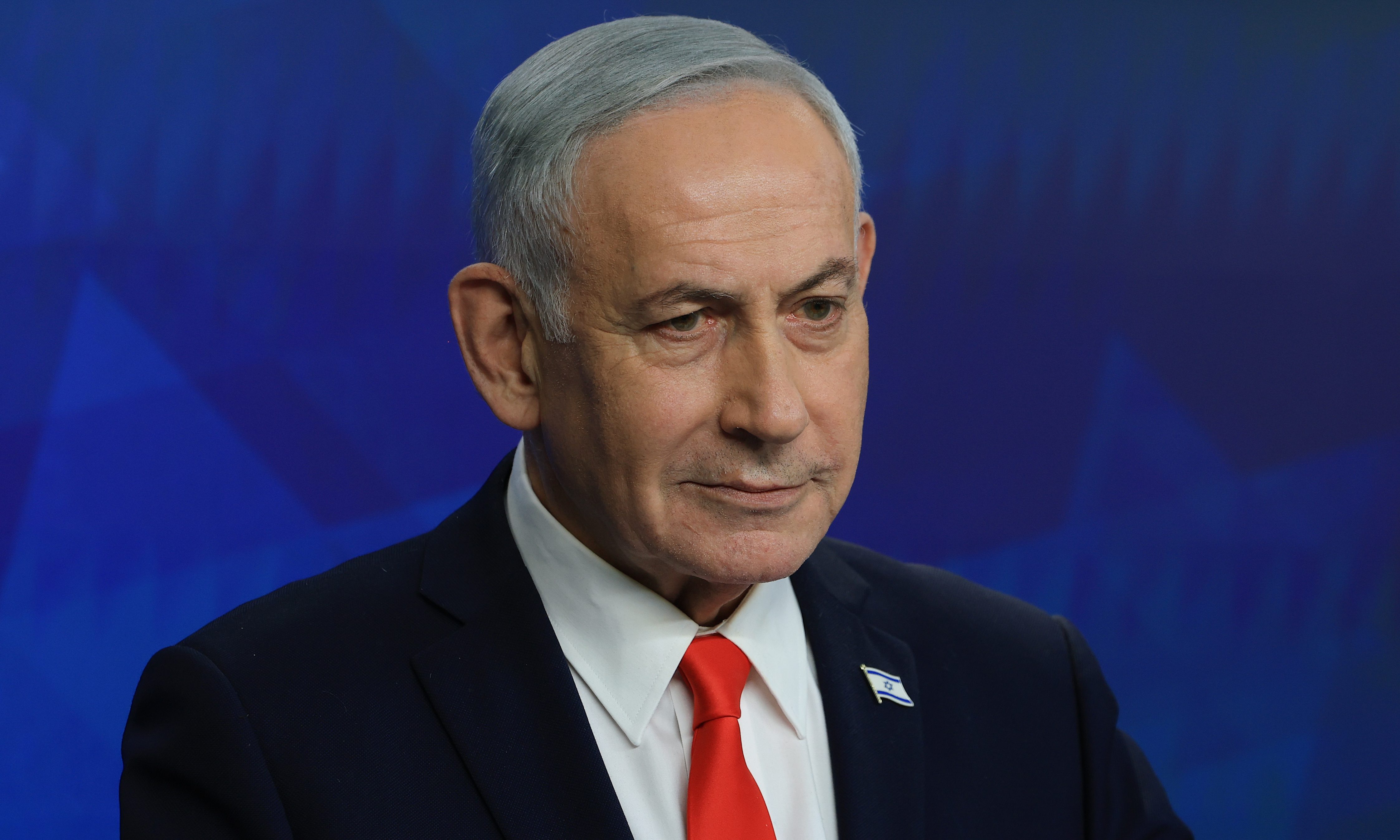
Another aspect that drew attention was the relationship between Washington and Tel Aviv in the final stages of the war. In recent weeks, US and Israeli media reported continuous disagreements between President Trump and Prime Minister Benjamin Netanyahu regarding how to conclude the conflict.
Just before the agreement was reached, Israel conducted airstrikes in Lebanon. Subsequently, Israeli officials reiterated that the country would maintain a military presence in some areas of Lebanon, Syria, and Gaza.
According to the Council on Foreign Relations (CFR), Iran considers ending the conflict in Lebanon an integral part of any agreement with the US. Meanwhile, Israel views its campaign against Hezbollah as a separate objective and did not directly participate in the memorandum talks between Washington and Tehran.
Even after the US-Iran agreement was announced, Israel carried out airstrikes in the Beirut area on 14/6. President Trump criticized Prime Minister Netanyahu's decision, believing it threatened the agreement's progress.
Israeli Defense Minister Katz declared that the country's military would not withdraw from areas it controls in Lebanon, affirming that Israel would respond forcefully if Iran engaged in actions it deemed aggressive. National Security Minister Itamar Ben Gvir also stressed that "Trump's deal does not bind us".
According to Elisa Ewers, a Middle East research fellow at CFR, compelling Israel to end its campaign against Hezbollah is a difficult task, requiring significant political resolve, especially as Israel prepares for elections and Washington continues negotiations with Tehran on outstanding issues.
She believes "significant time and political commitment, including from Washington" will be needed to sustain the ceasefire commitment between Israel and Lebanon.
These developments show that even if the US-Iran agreement reduces the risk of direct confrontation, Washington still faces many challenges in maintaining regional stability and advancing further negotiations.
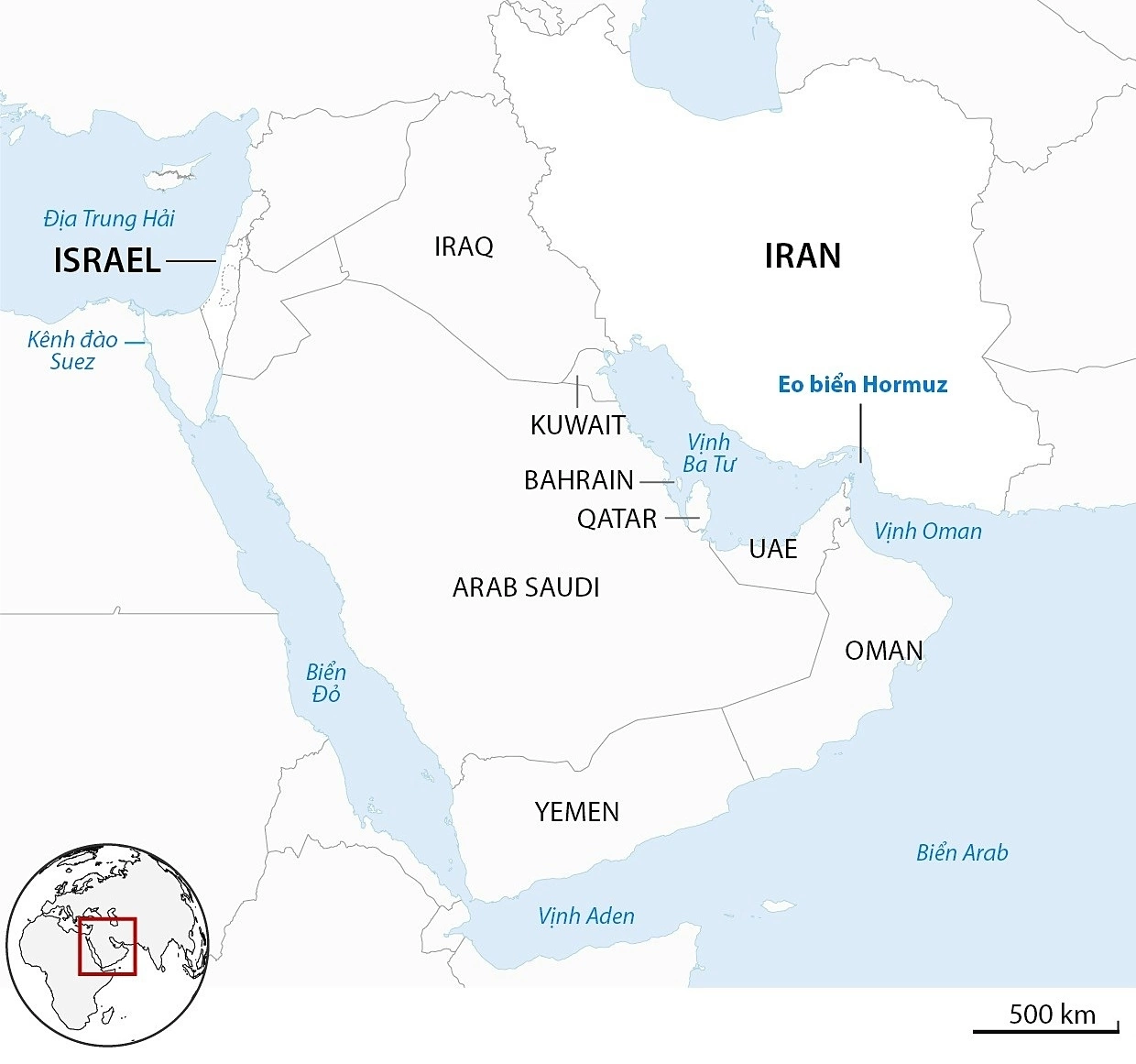 |
Location of the Hormuz Strait. Graphic: Guardian |
Location of the Hormuz Strait. Graphic: Guardian
Many nations view the US-Iran agreement as a positive development. In a joint statement, France, the UK, Germany, and Italy called it a "diplomatic breakthrough" and an "opportunity to restore regional and global economic stability". China also welcomed the agreement and urged all parties to continue resolving differences through dialogue. However, the reactions from Middle Eastern countries, directly affected by the conflict, were more cautious.
"The MoU is a framework to move towards an agreement", Dania Thafer, executive director of the International Gulf Forum, based in the US, told the Washington Post. "This step is very serious, but many unpredictable variables remain".
If Iran cannot restrain Hezbollah from attacking Israel, while the US cannot prevent Tel Aviv from retaliating, the conflict risks flaring up once again, undoing all negotiation efforts and pushing the regional situation back into a stalemate.
"If the war prolongs, the US may not achieve its objectives, while Iran remains resilient but also unable to change the regional order in its favor", Thafer said.
Steven Cook, a Middle East expert at CFR, warned that expectations for the current agreement to quickly lead to lasting peace might be premature.
"We have been in this situation before only to realize the parties could not bridge remaining differences. Negotiations on outstanding issues, especially Iran's nuclear program, will be protracted and difficult", Cook stated.
Nhu Tam (According to BBC, Reuters, Washington Post)