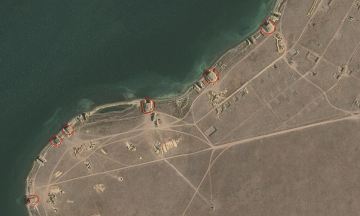
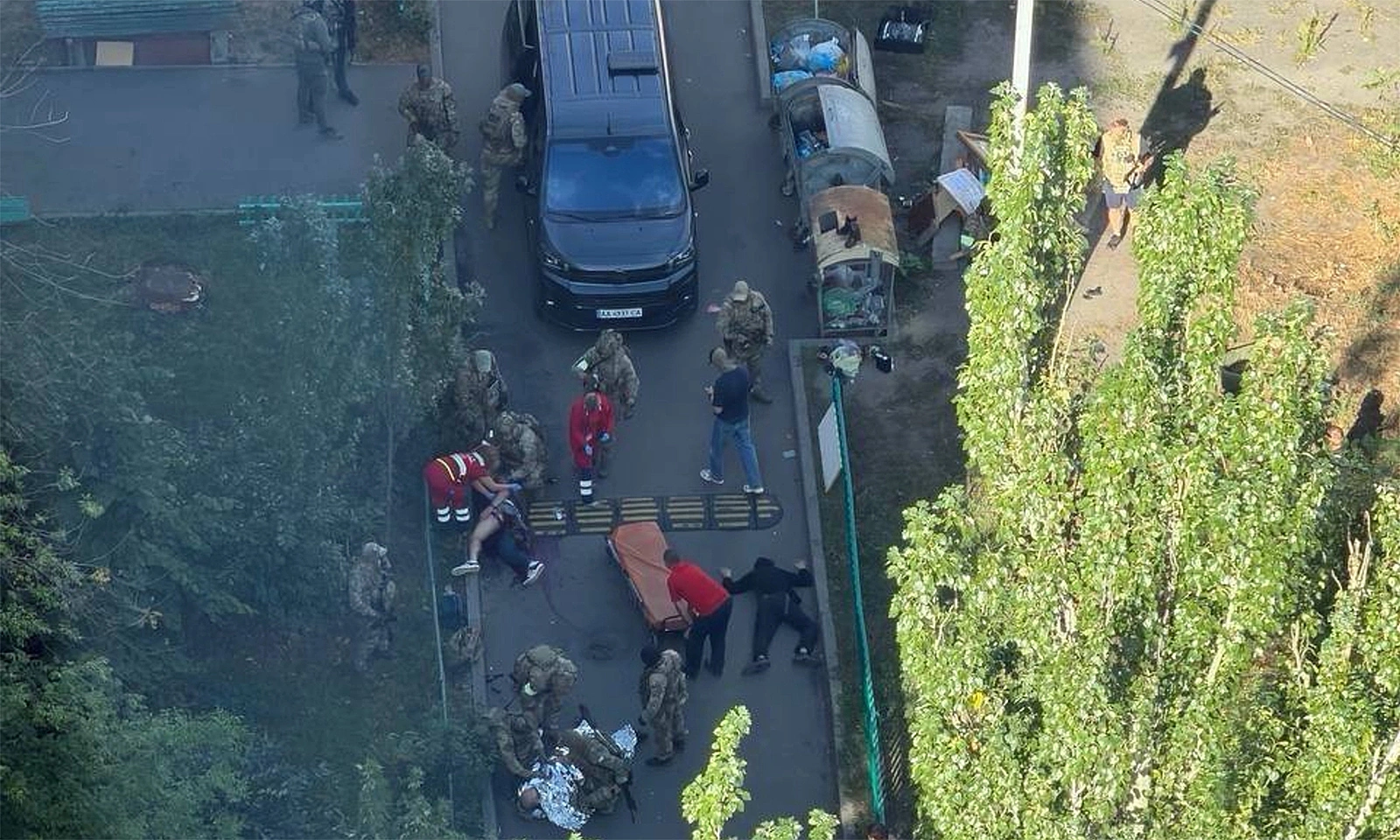
The Russian Ministry of Defense released a video on 19/7, recorded by a reconnaissance unmanned aerial vehicle (UAV) during nighttime operations. It showed what were identified as vehicles belonging to Ukraine's Neptune coastal defense missile battery, deployed in a forested area near Rybakovka village, Mykolaiv province.
The battery included a launcher vehicle positioned within a fortified emplacement, one TZM-360 transport-loader vehicle, one TM-360 ammunition carrier, and at least one Humvee light armored vehicle and a pickup truck.
Russian forces launched an Iskander-M ballistic missile at the area. The missile struck near the TZM-360 loader vehicle. Its warhead detonated mid-air, maximizing damage, with shrapnel also showering the fortified position of the launcher vehicle.
The Russian Ministry of Defense stated that its units also deployed a Geran-4 Siker UAV, equipped with an AI-powered target recognition system, to conduct follow-up strikes, but no footage from this drone was provided.
Daylight footage from a Russian reconnaissance UAV showed the missile launcher and TZM-360 loader vehicle on fire, with a recovery vehicle and a fire truck nearby. "The strike destroyed the launcher vehicle and the transport-loader vehicle," the Russian Ministry of Defense reported.
Ukrainian officials have not yet commented on the information.
The Neptune anti-ship missile system, also known as "Sea God", was developed by Ukraine's Luch Design Bureau. It is based on the Soviet-era Kh-35 missile but features improved range and electronics. Ukraine has previously used Neptune to strike Russian targets, including the cruiser Moskva, the flagship of the Black Sea Fleet.
A Neptune battery typically consists of one USPU-360 launcher vehicle, one TZM-360 loader vehicle, an RCP-360 command vehicle, and one missile transport vehicle. A battery can carry a maximum of 12 missiles: 4 ready for launch on the launcher and 8 on support vehicles.
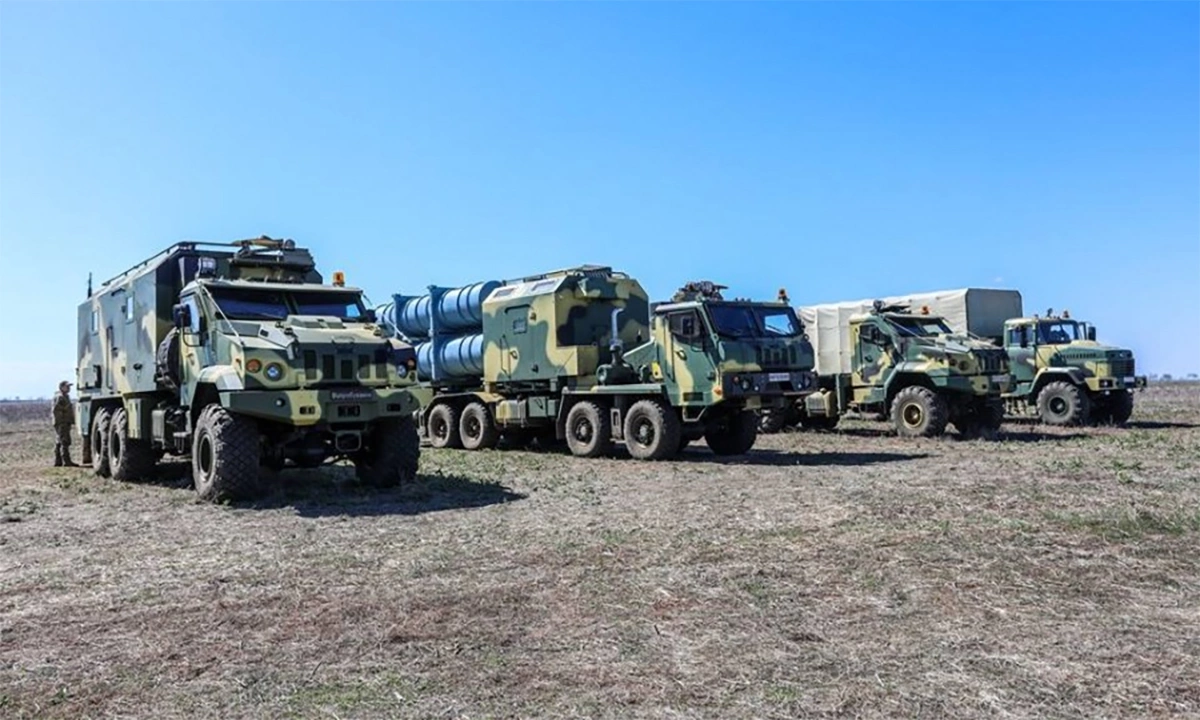 |
From left: Command vehicle, launcher, loader vehicle, and transport vehicle of the Neptune system. Photo: Naval News |
The original Neptune missile is over 5 m long, weighs 870 kg, and carries a 150 kg warhead, achieving a range of approximately 300 km. The extended-range Neptun-D variant can fly up to 1,000 km, carrying a 260 kg warhead.
The anti-ship version of Neptune uses an inertial guidance system to fly to a designated area, then activates its active radar seeker to locate and engage targets. The land-attack variant is equipped with a GPS satellite navigation system and infrared sensors.
Nguyen Tien (According to AFP, Zvezda, RIA Novosti)