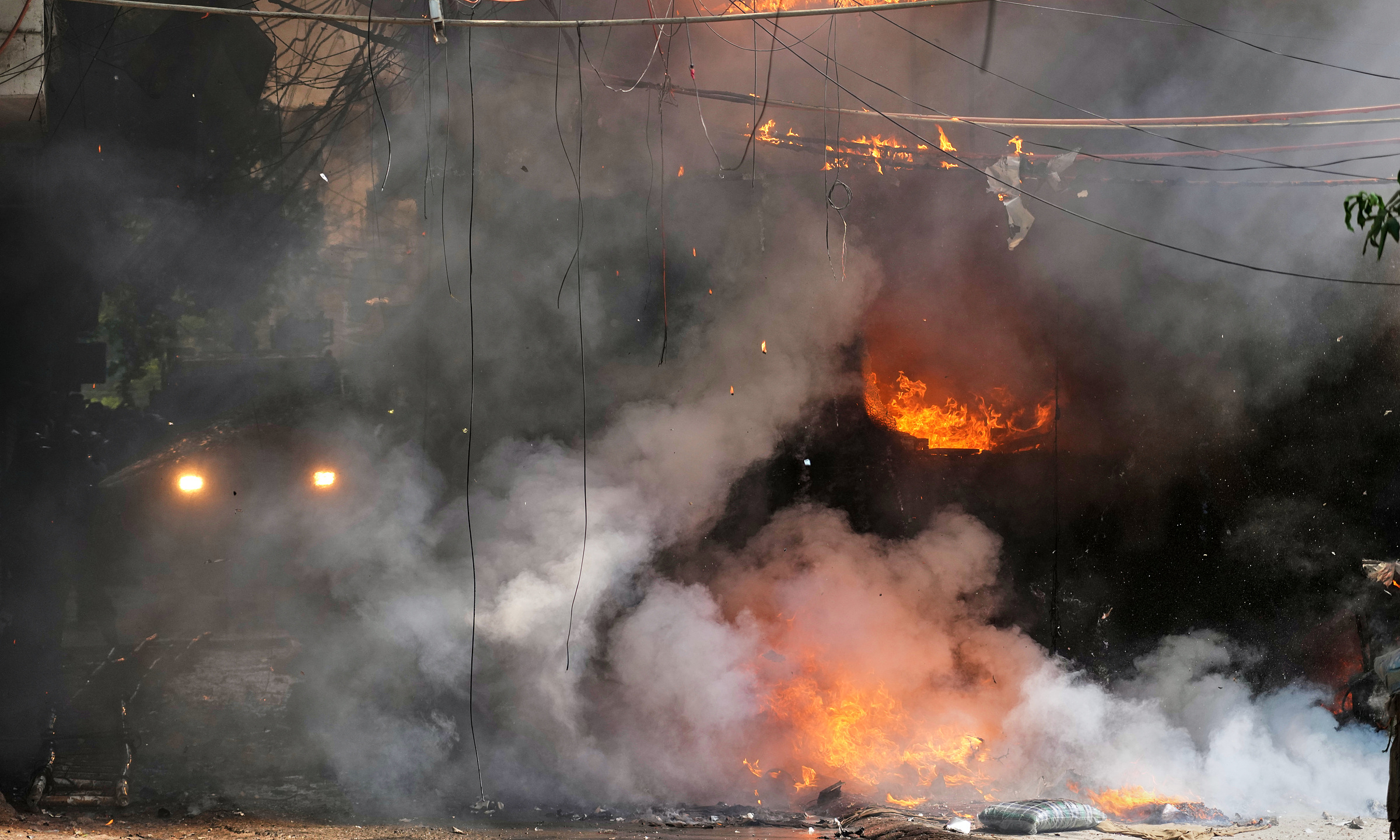
On 21/5, the Russian Ministry of Defense announced that sea, land, and air combat vehicles launched a series of ballistic, hypersonic, and cruise missiles. The agency stated, "All missions were fully completed. The missiles hit their targets, confirming their designed technical and tactical characteristics."
The released video showed an RS-24 Yars intercontinental ballistic missile (ICBM) launching from Plesetsk Cosmodrome. The missile targeted the Kura testing range on the Kamchatka Peninsula, nearly 7,000 km away. Simultaneously, at the Kapustin Yar testing range, Belarusian military personnel practiced launching Iskander-M tactical ballistic missiles.
Russian forces fired during nuclear drills on 21/5. Video: Russian MOD
Further launches included the frigate Admiral Gorshkov firing a Zircon hypersonic missile in the Barents Sea, and a strategic nuclear submarine launching an R-29RMU Sineva ballistic missile. A Tu-95MS bomber launched a cruise missile, while a MiG-31 fighter also fired a Kinzhal hypersonic missile.
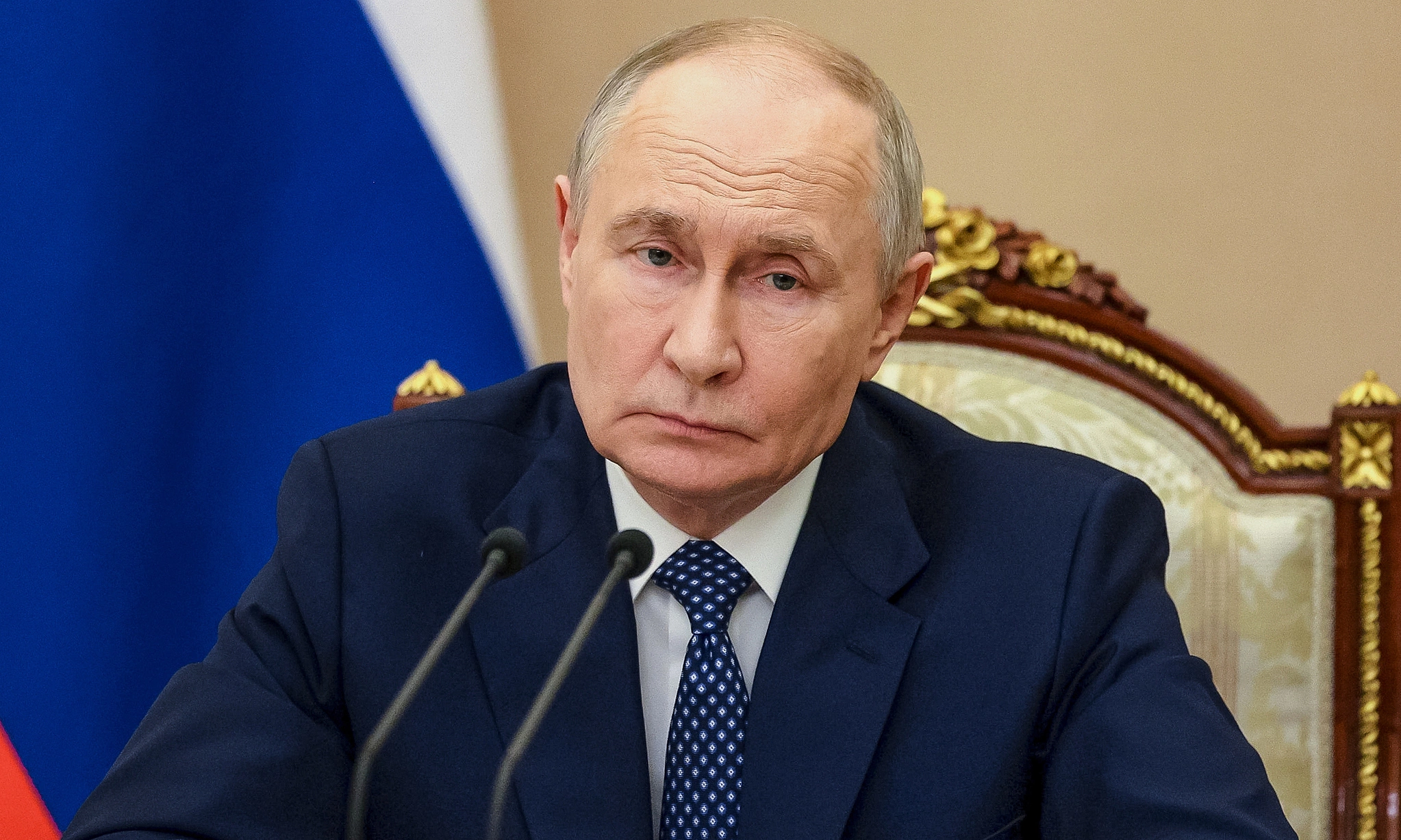
Russian President Vladimir Putin and his Belarusian counterpart Alexander Lukashenko monitored the exercise via video link. Putin emphasized that using nuclear weapons to ensure national security is "a drastic measure, only considered in grave situations."
He added, "However, with increasing international tensions and new risks emerging, our nuclear forces must remain a firm guarantee for the sovereignty of the Russia-Belarus Union State, contributing to strategic deterrence, global balance, and stability."
The nuclear triad comprises three components: ground-launched intercontinental ballistic missiles, submarine-launched ballistic missiles, and nuclear-capable aircraft. Maintaining these three nuclear pillars limits the risk of strategic forces being eliminated in a first strike, ensuring retaliation capability and credible nuclear deterrence. Currently, 4 countries possess a nuclear triad: Russia, the US, China, and India.
The Russia-Belarus nuclear forces exercise took place from 19-21/5. Participants included the Strategic Missile Forces, Northern Fleet, Pacific Fleet, Strategic Air Command, and units from the Leningrad Military District and Central Military District.
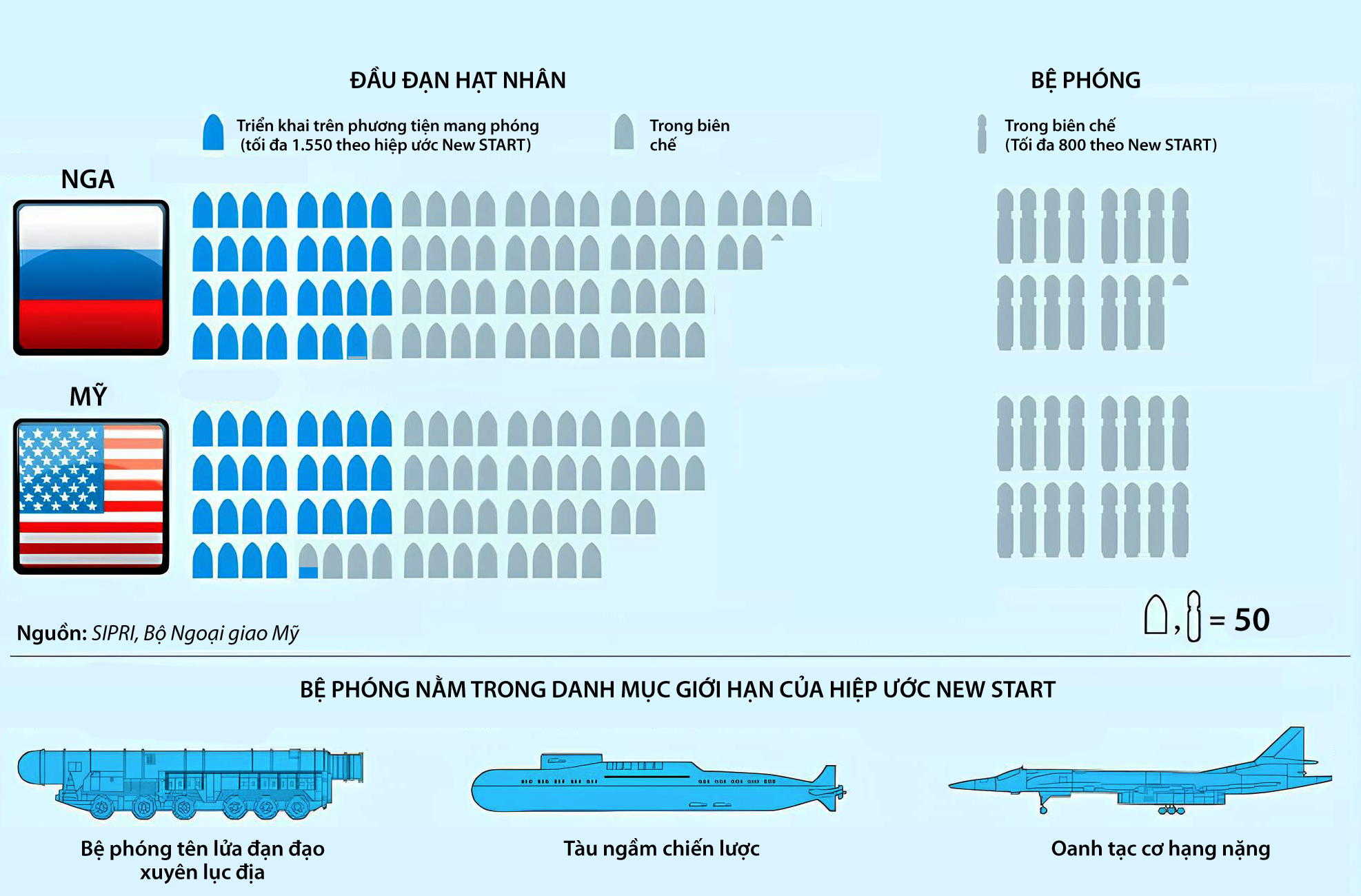 |
Nuclear arsenals of Russia and the US, exceeding 8,000 warheads. Graphics: RIA Novosti
The Russian Ministry of Defense reported that over 64,400 military personnel and 7,800 pieces of equipment participated in the drill. This included over 200 missile launchers, 140 aircraft, 73 surface warships, and 13 submarines.
The exercise aimed to enhance command and staff skills, test combat readiness, provide practical training for command agencies and operational units, and assess the capabilities of participating forces.
This marked the first exercise of Russia's "nuclear triad" since the country announced the suspension of its obligations under the New Strategic Arms Reduction Treaty (New START) in February. New START is the last nuclear arms control treaty between Russia and the US.
Nguyen Tien (According to TASS, Zvezda, AP)