The Korean Central News Agency (KCNA) reported that a missile launch drill was conducted on 4/1 under the supervision of leader Kim Jong-un. Hypersonic missiles struck targets in the waters east of the Korean peninsula, about 1,000 km from the launch site. KCNA stated the activity aimed to assess "war deterrence capability and combat readiness of hypersonic weapons" but did not disclose the weapon's name.
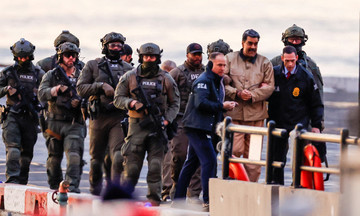
Kim Jong-un declared the drill demonstrated the combat readiness of North Korea's nuclear forces, affirming the country's recent progress in preparing its military for a "real war" scenario. "The clear purpose of such activities is to gradually elevate nuclear deterrence capabilities to a high level of development", Kim stated. He added, "The urgency of this effort is evident in recent geopolitical crises and complex international events," seemingly referencing the US attack and arrest of Venezuelan President Nicolas Maduro on 3/1.
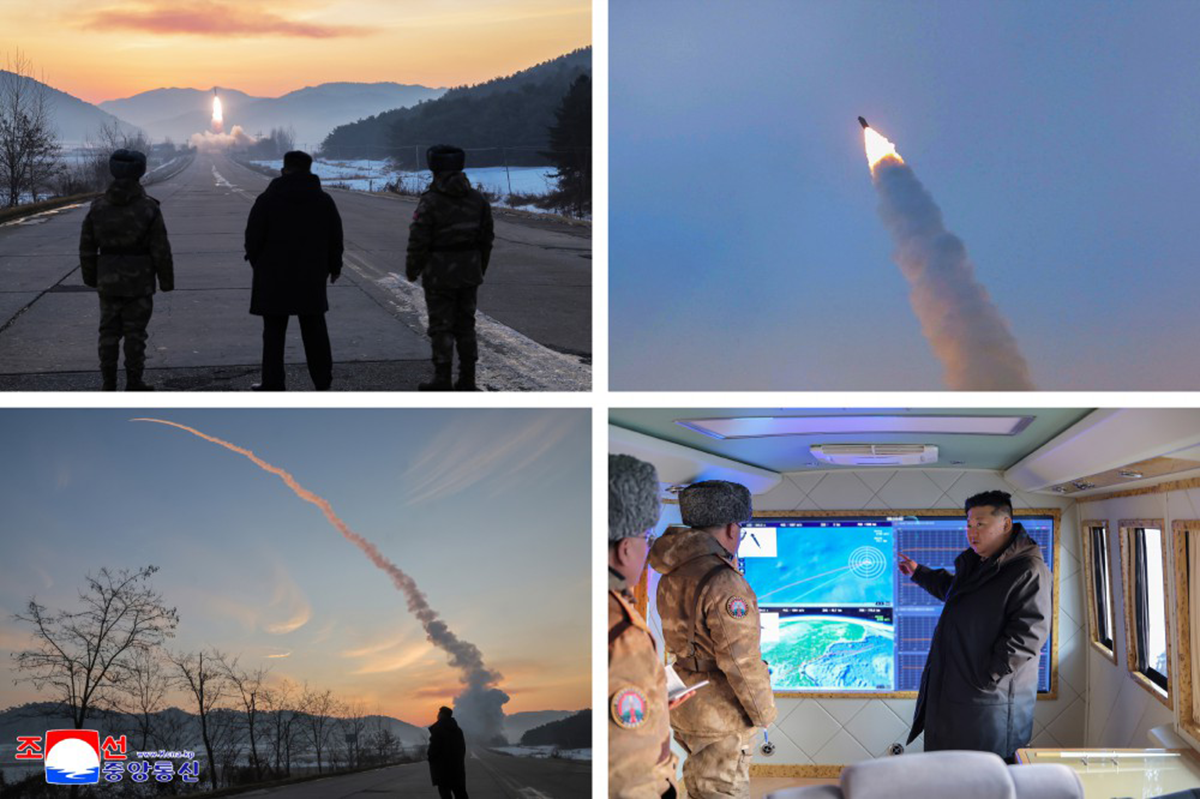 |
North Korea's hypersonic missile launch on 4/1. *Photo: KCNA* |
North Korea strongly condemned the US actions, accusing the Donald Trump administration of "flagrantly violating Venezuela's sovereignty". Hong Min, an expert at the Korea National Unification Institute, suggested the missile launch was North Korea's response to the US operation. Based on images released by KCNA, he identified the tested weapon as the Hwasong-11Ma hypersonic missile, which first appeared in 10/2025.
Hypersonic weapons travel at least 5 times the speed of sound and possess in-flight maneuverability, making them harder to intercept than conventional ballistic missiles. The Hwasong-11Ma was developed from the Hwasong-11 tactical ballistic missile platform, equipped with a hypersonic glide vehicle (HGV) instead of a traditional warhead, with an estimated range of 800-1,500 km.
Pham Giang (According to KCNA, AFP, Reuters)