Pentagon spokesman Sean Parnell stated on 8/8 that the agency is focusing on increasing ammunition procurement to "provide the weapons soldiers need, at a pace commensurate with the threat level."
This statement followed the Washington Post's publication of a memo in which Deputy Secretary of Defense Steve Feinberg demanded that leaders of defense corporations submit plans within 21 days "to drive faster and more aggressive delivery, as well as enhance the production of critical equipment."
Technicians assemble a patriot PAC-3 missile at a Lockheed Martin factory. Video: Lockheed Martin
Feinberg stated, "multi-year development programs are unacceptable. We must significantly accelerate program progress and expand production capacity immediately."
Parnell confirmed Feinberg's memo, adding that it will serve as the basis for the fiscal year 2028 budget bill presented to the US Congress and aligns with the Pentagon's efforts to reindustrialize the defense sector.
The US defense spending bill is stalled in Congress, as lawmakers are displeased with the campaign against Iran launched by President Donald Trump. They also oppose the White House's proposal for a budget of up to USD 1,500 billion, a significant increase from last year's approximately USD 900 billion.
Deputy Secretary Feinberg issued the memo amid conflict with Iran, which has depleted significant quantities of US military air defense missiles and short-range ballistic missiles. Concerns over dwindling weapon stockpiles led President Trump to cancel an unprecedented large-scale attack on Iran.
In research published on 27/7, the Center for Strategic and International Studies (CSIS) reported that the US military currently holds no more than 827 patriot missiles and 278 THAAD interceptors in its stockpiles. On 8/4, when the US ceased fire with Iran, these figures were 1,030 and 232-262 interceptors, respectively. Before the conflict erupted, the US military possessed 2,330 patriot missiles and 452 THAAD interceptors.
According to CSIS, the shrinking stockpiles of patriot and THAAD missiles could expose the US and its Middle Eastern allies to greater risks in an effort to conserve ammunition. Studies indicate that the US might launch fewer air defense missiles when countering Iranian unmanned aerial vehicles (UAVs), increasing the risk of targets slipping through.
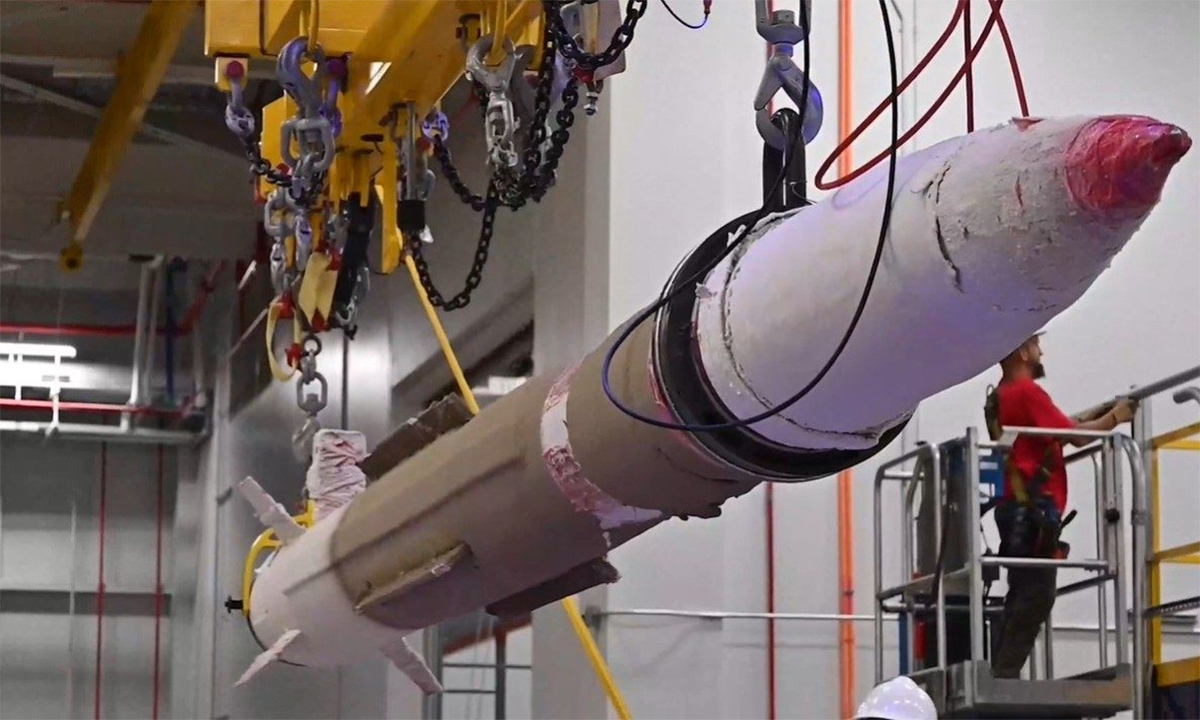 |
A patriot PAC-3 MSE missile at a factory in an image released in 3/2025. Photo: Lockheed Martin
President Trump stated on 5/8 that the US "possesses a huge amount of ammunition," with a large quantity more being manufactured and to be transferred to the country when needed. However, just one day later, he admitted that the supply of some weapons was "tighter" after months of conflict.
This appears to be the first time President Trump publicly confirmed a shortage in the supply of advanced weapons. Nevertheless, he asserted that less advanced weapons still have abundant reserves, while defense corporations are building additional facilities to accelerate the production of patriot and tomahawk missiles.
Nguyen Tien (According to AP, AFP, Reuters)