At the memorial ceremony today at the Chinese Embassy in Hanoi, Prime Minister Le Minh Hung conveyed profound condolences from General Secretary, President To Lam; National Assembly Chairman Tran Thanh Man; Permanent Member of the Secretariat Tran Cam Tu; and other Vietnamese leaders to General Secretary, President Xi Jinping, Chinese leaders, and Zhu Rongji's family, the Ministry of Foreign Affairs stated.
The Prime Minister affirmed that the Party, State, and people of Vietnam deeply appreciate Zhu Rongji's dedication, sentiments, and significant contributions to the relations between the two Parties, the two nations, and the people of Vietnam and China.
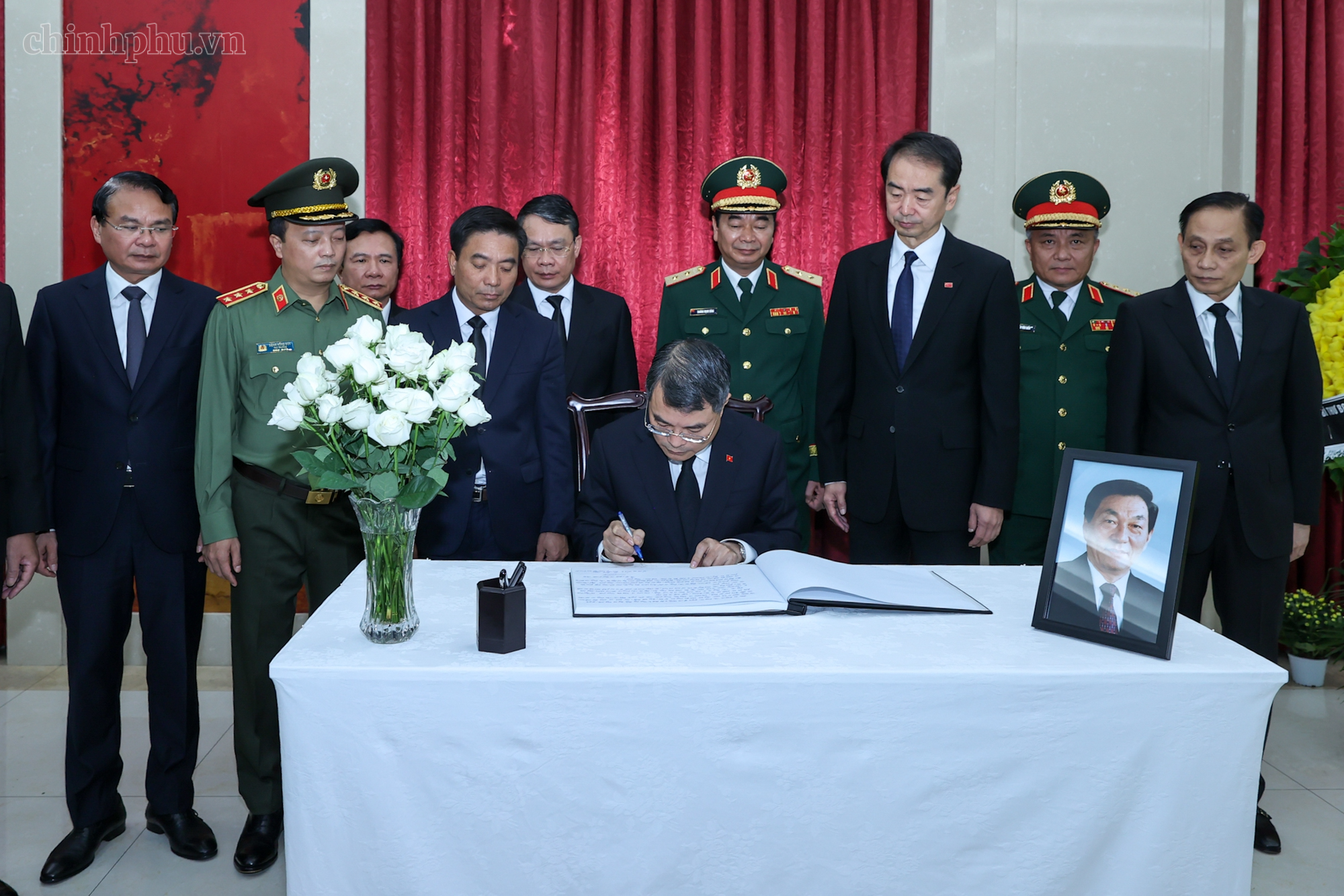 |
Prime Minister Le Minh Hung signs the condolence book for former Chinese Prime Minister Zhu Rongji at the Chinese Embassy in Hanoi on 18/8. *Photo: chinhphu.vn* |
The head of government urged both sides to continue close coordination, enhance high-level and other exchanges, and promote substantive cooperation based on their high-level common understanding, bringing tangible benefits to the people of both nations.
Chinese Ambassador Ha Vi conveyed the gratitude of General Secretary, President Xi Jinping and Chinese leaders to General Secretary, President To Lam and key Vietnamese leaders for their messages and wreaths of condolence. Ambassador Ha Vi also thanked Prime Minister Le Minh Hung for his visit and for signing the condolence book.
Ambassador Ha Vi affirmed China's commitment to prioritizing and strengthening the friendly relations, comprehensive strategic cooperative partnership, and the strategically significant Vietnam-China Community of Shared Future.
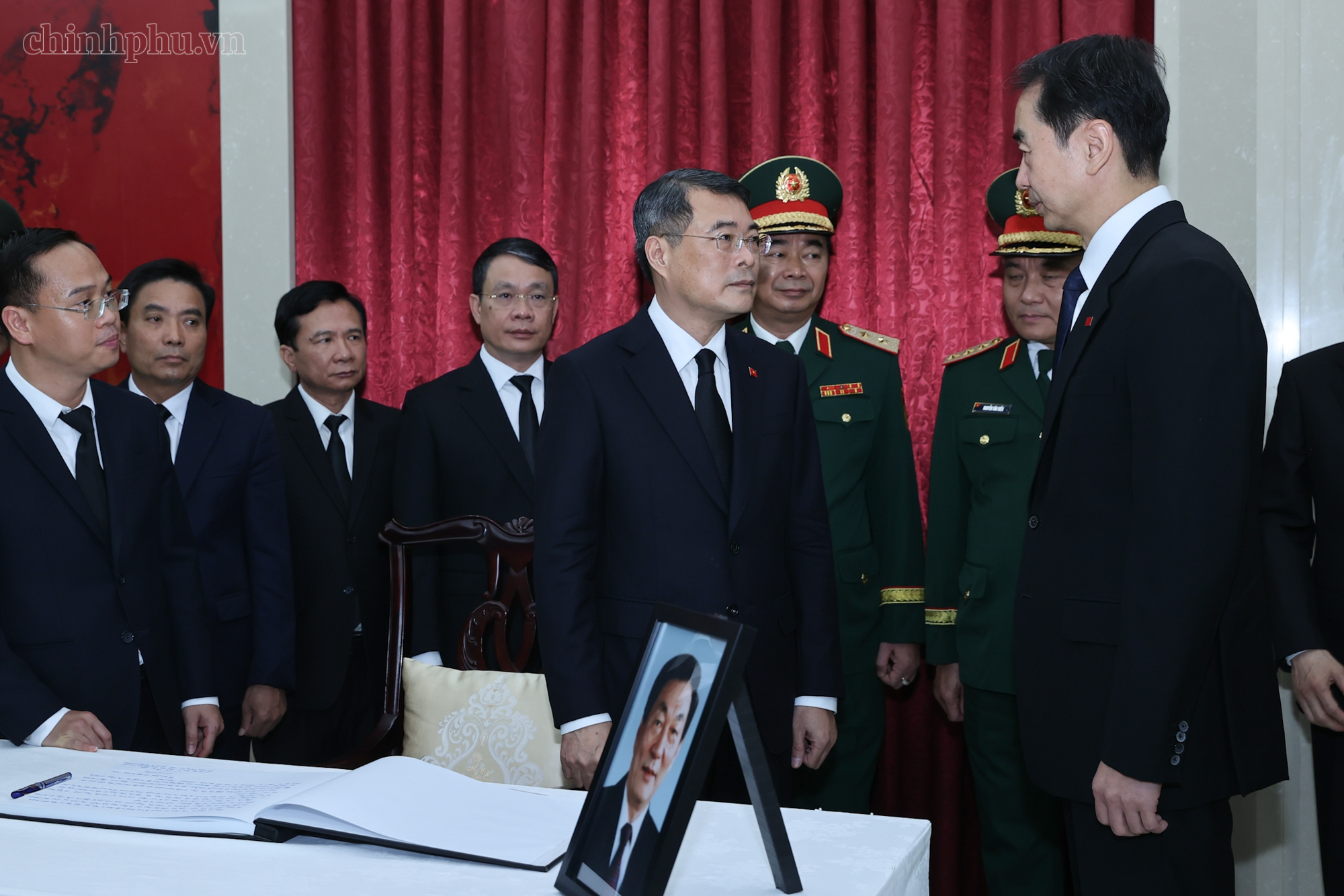 |
Prime Minister Le Minh Hung offers condolences to officials of the Chinese Embassy in Vietnam. *Photo: chinhphu.vn* |
Former Chinese Prime Minister Zhu Rongji passed away from a serious illness in Beijing on 12/8, at 97. Zhu, who served as prime minister from 1998 to 2003, is remembered for his anti-corruption efforts, reforming the centrally planned economy, and restructuring China's state-owned enterprise sector.
He was also the chief architect of the negotiations that led to China's accession to the World Trade Organization (WTO) in 2001, a move that opened its market to the world and marked a significant turning point for the nation's economy.
Ngoc Anh